
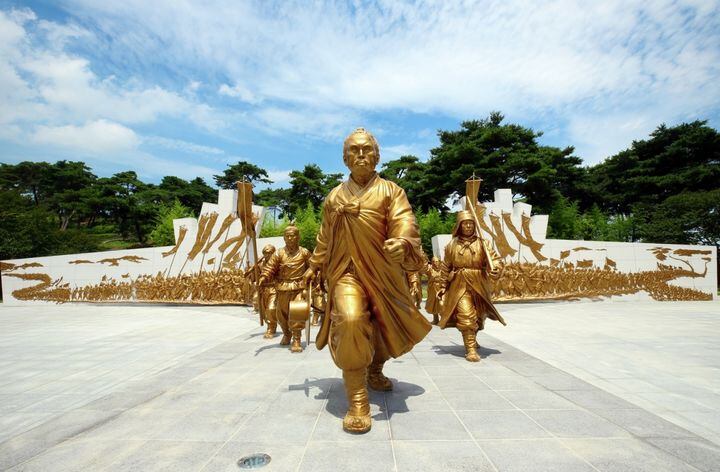
Jeollabuk-do is set to become the first metropolitan autonomous region in the nation to offer financial support to the families of those involved in the Donghak Peasant Revolution.
On the 25th, Jeollabuk-do stated that it will provide an annual grant of 1.2 million South Korean won per individual to 723 family members living within the province for more than a year, as outlined in the ‘Ordinance on Support for Commemorative Projects for the Donghak Peasant Revolution.’
The overall budget for this year’s projects amounts to 868 million South Korean won, to be distributed between Jeollabuk-do and local cities and counties in a 3:7 proportion. Those who qualify include children, grandchildren, and great-grandchildren officially acknowledged and registered as family members under the ‘Special Act on the Restoration of Honor for Participants in the Donghak Peasant Revolution and Others.’ They mainly live in regions such as Jeonju, Jeongeup, Imsil, Iksan, and Buan.
Applications for the allowance can be submitted from September 4 to 22 at the Community Service Centers in the eup, myeon, and dong where the family members live. The actual distribution is planned to occur between November and December, although the exact dates may vary slightly based on the conditions in each city and county.
The implementation of the family allowance sparked debate. Throughout the initiative’s promotion, supporters claimed that “Jeollabuk-do, where the Donghak Peasant Revolution initially started, should be the first to restore the dignity of the families,” whereas critics questioned, “shouldn’t we also recognize and provide compensation to the families of those affected by the Imjin War, the Hong Gyeong-rae Rebellion, the Mangyi and Mangsoi Rebellion, and the Manjeok Rebellion?”
Local authorities also expressed resistance. Iksan City previously presented a disagreement with Jeollabuk-do, arguing, “It is practically impossible to verify all family members of participants from 131 years ago, and claims could emerge for compensation related to other historical events as well.” Nevertheless, the city has recently shifted its position to endorse the project, recognizing the greater importance of the historical significance of the Donghak Peasant Revolution and the respectful treatment of the families involved.
Governor Lee Won-taek from Jeollabuk-do said, ‘The distribution of the family allowance marks a significant step in recognizing the contributors and preserving their heritage for coming generations,’ and he added, ‘We will keep working to make sure they get the national recognition they merit.’


Leave a Reply