
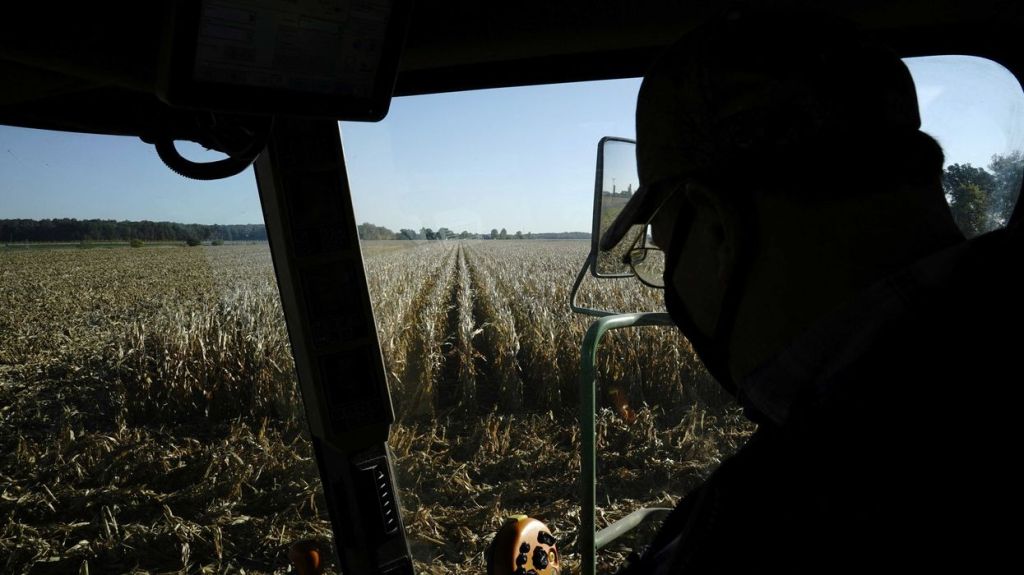
American farmers are preparing for two years of hardship as the consequences of President Donald Trump’s conflict with Iran intersect with an ongoing trade war and a severe Midwest drought, six months into a dispute that has significantly increased the expenses of operating a farm.
A report from the American Farm Bureau Federation indicates that farmers growing the country’s nine main row crops are projected to suffer losses exceeding $31 billion this year and $32 billion in 2027 – representing the sixth consecutive year of financial setbacks for their primary crops – despite receiving government assistance,reported the Financial Times.
The [Iran] conflict has caused a lot of uncertainty for us as farmers,” said Pam Johnson, who operates a farm in northern Iowa and previously served as president of the National Corn Growers Association. “It is expected that farmers will not earn any profit over the next two years.
Economist Faith Parum from AFBF predicts that corn farmers will experience a loss of $131 per acre this year and $167 in 2027, whereas soybean producers are expected to face losses of $80 and $138 per acre.
Looking for additional updates on political developments?Click to view the most recent news updates on Raw Story.
“I fear we are staring into another agricultural crisis,” Wendy Johnson, a fourth-generation farmer,told the Washington Post, “and we all know historically what that did to our … rural communities.”
Following Trump’s initiation of the U.S. strike against Iran in February, reduced tanker movement through the Strait of Hormuz has caused crude oil prices to exceed $110 per barrel. Anhydrous ammonia, the primary nitrogen fertilizer used in the Corn Belt, increased by 36 percent, rising from $828 to $1,123 per ton, according to economists at the University of Illinois. Diesel fuel has reached $5.45 per gallon across the country, compared to $3.81 prior to the conflict.
This is the most terrible financialdownturn“Active in the industry since the 1980s,” stated John Hansen, president of the Nebraska Farmers Union.
Economists note that the comparison is not precise — farms have lower debt levels and crop insurance is more common now — yet Chapter 12 farm bankruptcies increased by 46 percent nationwide in 2025, with a 70 percent rise in Midwest filings.
China has restarted buying soybeans as part of an agreement following a Trump-Xi meeting, yet it made up less than 30 percent of U.S. soybean exports between September and March — approximately half of its previous share before the trade conflict.
“It seems almost like a temporary fix,” said Andrew Muhammad, a University of Tennesseeagricultural economist.
The administration sought $11 billion in emergency funding in June, in addition to a $12 billion support package from December, yet AFBF’s own research indicates that the aid fails to bridge the gap. Republican Senator Thom Tillis (R-NC) recently cautioned that with 71 days until the midterms, “we don’t have a favorable message to present to agricultural communities.”
Trump has also upset ranchers by removing tariffs on 300,000 metric tons of imported beef, a move that Sen. Tim Sheehy (R-MT) claimed would “make it harder for American ranchers to restore our herds.”
The drought has increased the damages. The USDA’s August report reduced corn yield predictions to 180.7 bushels per acre, significantly lower than the 2025 record, causing corn and soybean futures to rise — a surge that has pushed December corn prices up 10 percent this month to $5.15 per bushel, the highest point since 2023.





Leave a Reply