
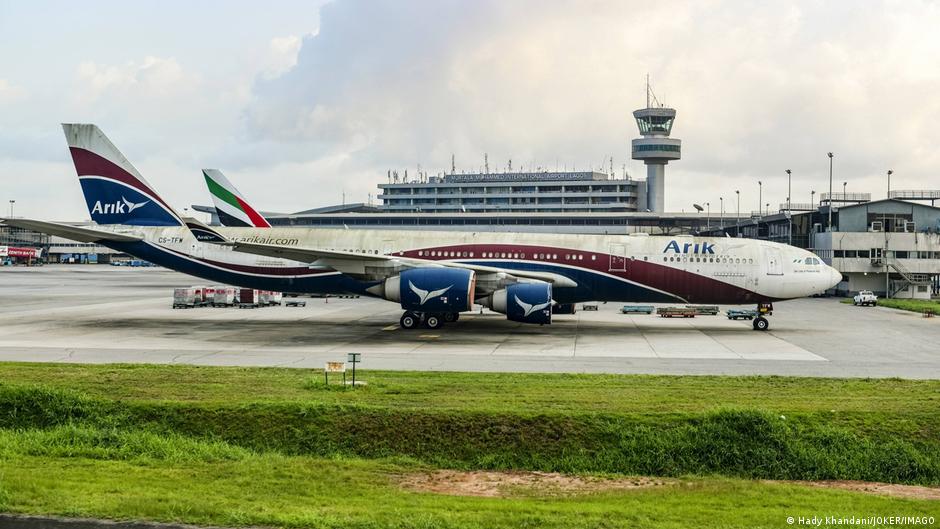
Nigeria is rapidly emerging as Europe’s largest jet fuel provider, as it helps alleviate persistent shortages in other regions. Meanwhile, within the country, airlines in the West African nation are facing challenges in maintaining adequate fuel supplies.
Over the last two months, Nigeria has become Europe’s top provider of jet fuel, surpassing the United States.
The 650,000 barrel-per-day (bpd) large refinery, owned by Africa’s wealthiest individual, Aliko Dangote, near Lagos has developed into agrowing more significant as a source of energyfor the landmass due to supply interruptions resulting from the conflict in Iran.
In the peak summer months of last year, most of these supplies still came from the Middle East.
But since the closing of the Strait of HormuzEarlier this year, Europe depended on imports of approximately 700,000 barrels per day to satisfy the current needs of the aviation sector, as reported by the private global trade intelligence firm Kpler.
Dry fuel tanks in Europe
In reality, in April, the head of the International Energy Agency, Fatih Birol, voiced worry that Europe had “perhaps six weeks or so” of jet fuel left at that time.
Within less than two months, four airports in northern Italy — Bologna, Venice, Treviso, and Milan’s Linate — implemented temporary limitations on jet fuel consumption, setting a maximum of 2,000 liters per aircraft for short-distance flights, as reported by local media, while prioritizing medical and long-haul flights.
Europe, meanwhile, has managed to cope with the closure of the Strait of Hormuz by expanding its resource sources and increasing imports from nations such as Nigeria — but at what price?
Paradox of surplus production
Nigeria is still generating a historic volume of jet fuel via the Dangote refinery, amounting to roughly 24 million liters daily, with a significant portion now being transported to Europe.
However, domestic airlines in the West African nation seem to have difficulty meeting their daily projected requirements due to the rise in costs and the pressures of the free market.
Ikemesit Effiong, a partner at the Africa-oriented SBM intelligence consultancy, stated that “Nigeria has a completely deregulated downstream market, with Dangote setting its prices based on international parity rather than favorable domestic rates.”
Fuel is directed to where the highest payment is,” he said, noting that “at present, this is Europe, not Lagos.
The main takeaway for Nigerian players is that having the ability to produce does not ensure affordability within the country.
Although the Dangote refinery has greatly enhanced fuel supply within the nation, which has faced persistent fuel shortages and extended lines at gas stations for a long time, local prices remain some of the highest on the continent.
Local airlines find it difficult to keep pace
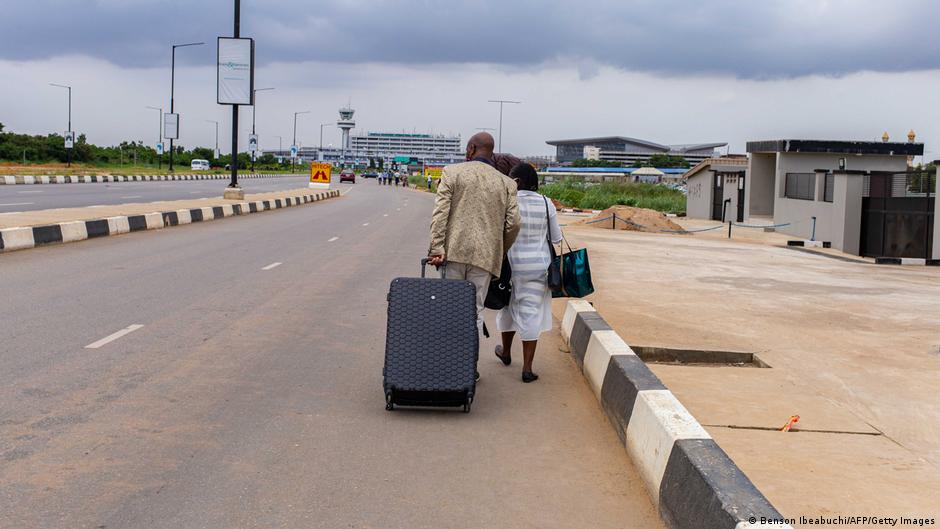
In the completely liberalized Nigerian market, regional airlines also face competition from international buyers, who usually order larger quantities, often directly from the refineries without involving any intermediaries; as Effiong notes, this gives global companies a substantial advantage in negotiations over smaller local firms.
“The outcome is that although domestic airlines may be physically nearer to the refinery, they are economically less competitive when it comes to obtaining its products. They might as well be halfway across the globe,” he added.
Starting from the onset of the crisis, local aviation companies are said to have accumulated more than 60 billion Naira ($45 million; €38 million) in loans from domestic banks in order to be able tomaintain operations and stay afloatduring this increase in costs.
Several operators have had tocut key pathways and increase hiking fees, causing frustration and unhappiness among passengers; additionally, continuous flight cancellations and delays continue to increase the general feeling of discontent among travelers.
At a certain time, the cost of jet fuel increased more than three times following the beginning of the Iran conflict; it has since decreased to a low of approximately 1,600 Naira per liter — this is compared to around 900 Naira before the war.
Hidden costs and mark-ups
The present circumstances are furtherexacerbatedthrough the elimination of government support for oil products, along with crude-backed loans from Nigeria’s state oil company.
This implies that a portion of the nation’s future crude oil production is directed towards settling obligations, resulting in the Dangote Refinery needing to import its crude oil for processing — instead of utilizing Nigeria’s own resources.
However, the issue is not only about the origin of the jet fuel. Charles Victor, an energy expert located in Lagos, stated that “[t]he process from the refinery to the airport involves high costs due to extra layers of expenses. [These challenges include] storage, sea transportation, transferring fuel between tanks, with multiple traders involved — and each one takes a share.”
Victor went as far as stating, “the issue was never about availability. It’s what occurs to the price while it’s being transported to the aircraft.”
Are there no remedies without government involvement?
For Victor, the approach involves setting aside a specific quantity of fuel for Nigerian airlines every month, and then selling it fairly to all stakeholders as a collective.
Purchasing “directly from the refinery, whenever possible, will eliminate most of the intermediaries that add to the cost,” he stated, noting that the wholesale price could then at least remain stable at around 1,200 Naira per liter in this manner.
This strategy would also necessitate enhanced airport storage and distribution systems to “lower logistics expenses that considerably affect the final prices,” Ikemesit mentioned. “Ultimately, the government should implement policies that promote sustainable business partnerships between Dangote and local airlines.”
But would Dangote go along with that? The Dangote Refinery, functioning at its peak capacity of 650,000 barrels per day, was initially constructed to convert the continent’s largest oil producer into a net exporter of refined goods, thereby ending its reliance on fuel imports.
Nevertheless, due to a global crisis situation that has firmly established Dangote as a worldwide supplier, that plan might still be just a fantasy.
Edited by: Sertan Sanderson
Author: Abiodun Jamiu




Leave a Reply