
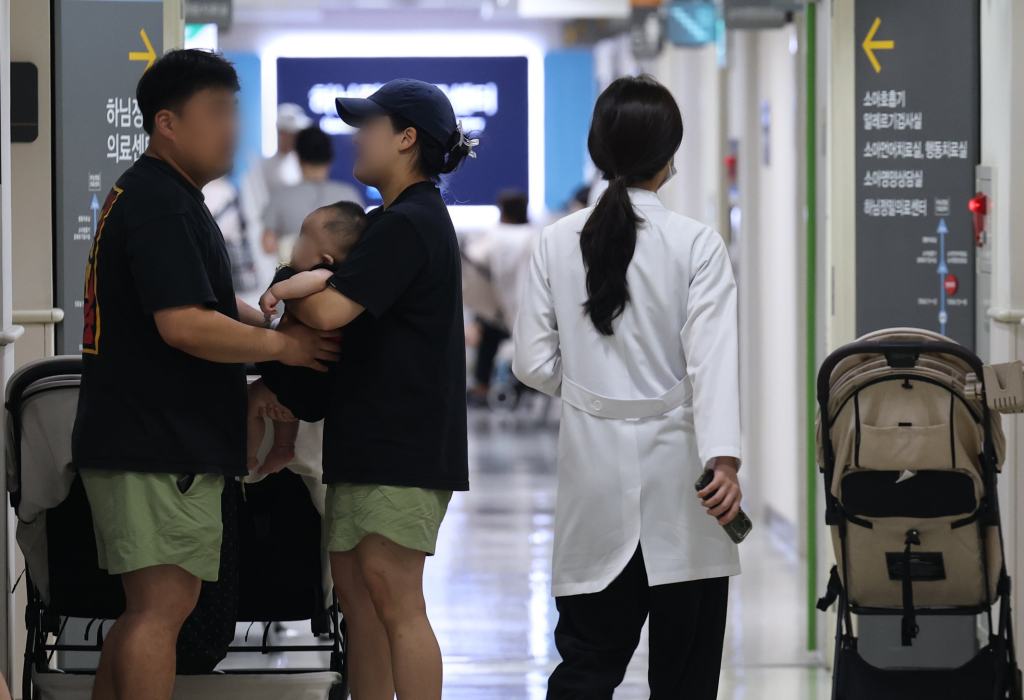
As early as a decade from now, there are projections that even major hospitals in Seoul may no longer have doctors capable of performing high-difficulty pediatric surgeries, such as those for congenital deformities. This is because the next generation of specialists to succeed current surgeons is nearly nonexistent. Due to legal risks from medical lawsuits and poor working conditions, medical professionals are avoiding pediatric surgery, raising concerns that patients may soon face delays in receiving timely surgeries, with severe cases potentially requiring treatment abroad.
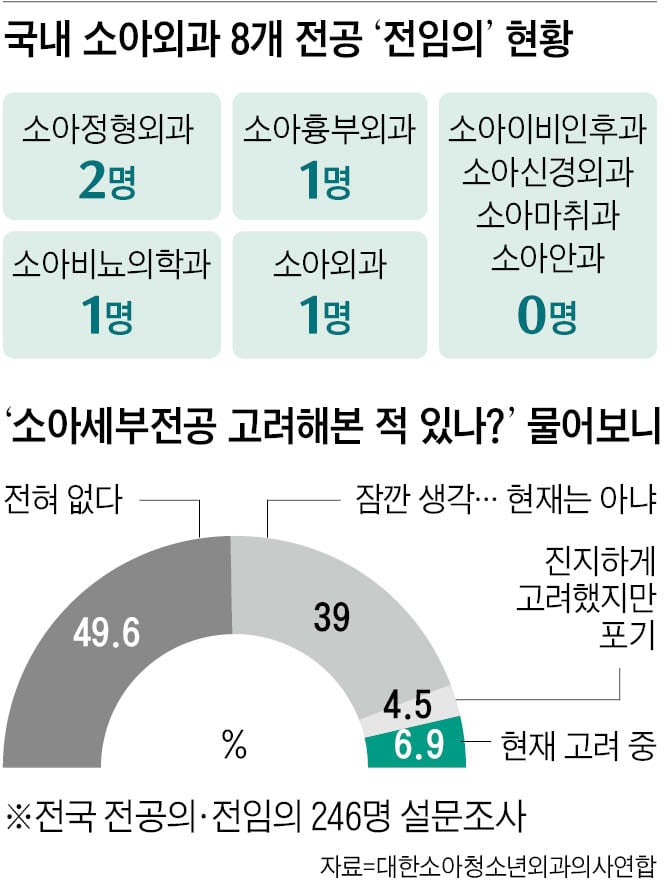
According to the Korean Pediatric and Adolescent Surgeons Association on August 28, there are only 5 fellows nationwide across eight major pediatric surgical specialties. Specifically, pediatric orthopedic surgery has 2 fellows, while pediatric urology, pediatric thoracic surgery, and pediatric surgery each have 1 fellow. No fellows are present in pediatric otolaryngology, pediatric neurosurgery, pediatric anesthesiology, or pediatric ophthalmology. Jung Jae-ho, a professor at Seoul National University Hospital’s Department of Pediatric Ophthalmology, stated, “Pediatric ophthalmology has had zero fellows for three to four years. This is not limited to ophthalmology—all pediatric fields face a crisis where no successors exist once professors retire.”
Fellows are doctors who, after completing residency and obtaining specialist qualifications, undergo 1–2 years of additional training in a specific subspecialty at university hospitals. For example, an orthopedic surgeon must complete a pediatric orthopedic fellowship to treat children’s skeletal conditions and congenital deformities. This is because children’s physical structures, disease patterns, and surgical methods differ significantly from adults, requiring specialized expertise.
The 5 active fellows are reportedly based at Seoul’s “Big 5” hospitals: Seoul National University Hospital (2 fellows in pediatric orthopedic surgery), Severance Hospital (1 fellow each in pediatric urology and pediatric thoracic surgery), and Asan Medical Center, Seoul (1 fellow in pediatric surgery).
The medical community warns that the current shortage of fellows will soon lead to a major crisis in pediatric care. Starting with regional areas, access to emergency and high-difficulty surgeries will disappear, followed by disruptions in Seoul. Additionally, since fellows are the future professors who train the next generation, the lack of successors will hinder education. Fields like pediatric ophthalmology and pediatric anesthesiology, which already have no fellows, will face a complete loss of technical knowledge once current professors retire.
A recent survey by the association found that 54.7% of hospitals “are recruiting pediatric surgical fellows but have no applicants.” 37.9% responded they “do not recruit,” while only 7.5% reported “having applicants.”
The shortage of fellows is a systemic issue across essential medical fields like surgery. However, pediatric surgery faces a uniquely severe crisis. The primary reason is the burden of legal disputes. In a survey of 246 residents and fellows (with multiple responses allowed), 79.8% cited “medical accident and legal dispute risks” as their reason for avoiding pediatric fields. When asked, “What conditions would make you consider pediatric fields?” 82.9% chose “reducing medical accident and legal burdens.” A source from the medical community explained, “Pediatric patients often experience sudden deterioration, and since their life expectancy is long, compensation amounts in medical accidents are significantly higher, leading to avoidance.”
More alarming is the lack of improvement. Only 6.9% of respondents in the association’s survey considered pediatric fields as a subspecialty. 49.6% said they “have never considered it,” 39% “briefly thought about it but no longer consider it,” and 4.5% “seriously considered but gave up.”
The government has attempted to address the issue by increasing reimbursement rates for pediatric surgical procedures. In 2024, it raised age-based surcharges for 281 high-difficulty surgeries and anesthesia fees for children under 6 by 200–1,000%. The following year, this was expanded to over 600 procedures.
However, the medical community argues these measures are insufficient to reverse the trend. In the association’s survey, 67.1% said the reimbursement increase was “slightly positive but not decisive,” while 26% claimed it had “no impact.” Nam So-hyun, a professor at Inje University Busan Paik Hospital’s Department of Pediatric Surgery, stated, “Administering a single intravenous injection to a newborn or infant often requires at least three staff members, and it’s not uncommon to spend over an hour securing a vein for a dehydrated child. We are not asking for special treatment—we simply need fair compensation for the actual labor, time, and risks involved.”
☞ Fellow
A doctor who, after completing residency and obtaining specialist qualifications, continues working at a university hospital to engage in clinical practice and research in a specific subspecialty. Also known as a “fellow.” A subspecialty refers to a focused area within a medical specialty, such as a orthopedic surgeon specializing in pediatric orthopedic surgery.





Leave a Reply