
“U.S. has just reached an agreement with Venezuela on the ‘largest oil deal in world history,’” U.S. President Donald Trump posted on social media Truth Social on the 28th (local time). The deal involves a new company with U.S. participation developing Venezuela’s massive oil fields, the world’s largest oil reserve holder, and securing over half of the oil produced. This comes approximately eight months after the U.S. military arrested then-President Nicolás Maduro in January and transported him to New York.
The framework of the contract is straightforward. According to AP and others, a new company established by the U.S. government and private operators active in Venezuela will hold 100-year development rights to 17 oil fields in Venezuela. The potential reserves of the targeted oil fields amount to 650 billion barrels—over 40% more than the U.S.’s total confirmed crude oil reserves of approximately 46 billion barrels. If developed as planned, the new company could become the second-largest holder of confirmed reserves globally, after Saudi Aramco, according to U.S. authorities.
The U.S. will effectively secure 55% of the new company’s production. This includes ownership stakes and the right to purchase crude oil at cost. Marco Rubio, U.S. Secretary of State, stated that the agreement would bring approximately 100 billion dollars in private investment to Venezuela’s oil industry and create thousands of high-paying jobs. Delcy Rodríguez, Venezuela’s acting president, set an initial goal of raising crude oil production to over 1.5 million barrels per day and projected total tax revenue of 209 billion dollars. While Rodríguez stated the agreement would last 25 years, differing from the “100-year development rights” reported by U.S. media, the full contract has not been disclosed, leaving the relationship between the two periods unconfirmed.
Due to disruptions in crude oil transportation caused by the Iran war, the average U.S. gasoline price on the 29th reached approximately $4.08 per gallon, about 28% higher than a year ago. For Trump, this deal is a card to curb soaring oil prices, but Venezuela’s oil facilities are significantly outdated. Amy Myers Jaffe, a New York University research scholar, told AP, “This deal may help the U.S. in the long term but won’t change gasoline prices at gas stations during the Labor Day weekend.”
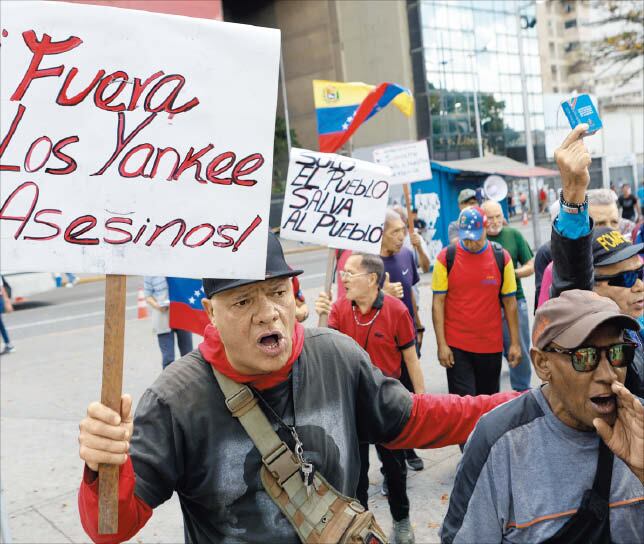
However, backlash over “resource plunder” is growing in Venezuela. Ricardo Hausmann, a Harvard University professor and former Venezuelan planning minister, called the agreement a “shameful contract” in a post on X on the 29th. He stated, “Venezuelans will not respect this illegitimate contract, and major U.S. oil companies won’t take it seriously because they know it won’t last.”





Leave a Reply