
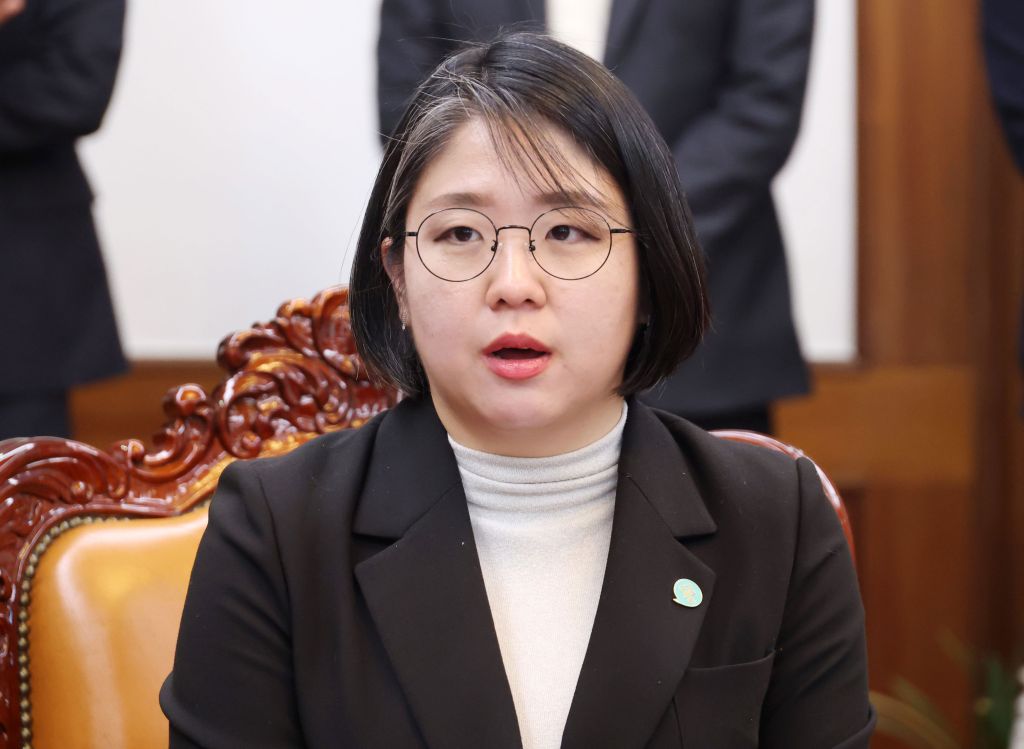
Yong Hye-in, 36, a member of the Basic Income Party and nominated as the Minister of Gender Equality and Family on August 30, is a young politician born in 1990. She has been vocal about expanding the “basic income” policy, a key initiative of President Lee Jae Myung. If she passes the National Assembly’s confirmation hearing, she will become the youngest-ever minister in history.
Born in Bucheon, Gyeonggi Province, Yong graduated from Kyung Hee University’s Department of Political Science and International Relations. She has been active in labor rights movements, including leading the “Silent March” protest against the Sewol Ferry disaster. In the 2016 general election, she ran as the No. 1 proportional representative for the Labor Party but lost. In 2020, she founded the Basic Income Party, which emphasized basic income—a core policy of President Lee, then the Gyeonggi governor. At the time, President Lee visited the party’s preparatory committee and held a meeting with Yong.
Yong has been re-elected as a proportional representative. In the 21st National Assembly election, she was elected as the No. 5 proportional candidate for the “People United for Democracy,” a satellite party of the Democratic Party, while serving as the Basic Income Party’s leader. In the 22nd election, she secured re-election through the “Democratic Alliance,” a satellite party of the opposition bloc. Typically, proportional representatives resign their seats when appointed as ministers, but Yong is reportedly planning to retain her position.
Her vocal stance on key legislative issues has raised expectations for changes in gender equality and family policies. In the 21st and 22nd National Assemblies, she co-sponsored the Comprehensive Anti-Discrimination Act and proposed the “Life Partner Act,” which recognizes cohabiting partners as legal guardians beyond traditional blood or marital ties. She has also advocated for revising the definition of rape from “violence or threat” to “lack of consent,” criminalizing non-consensual sexual acts. For child policies, she proposed a bill to ban “no-kids zones” in public libraries, sports, and cultural facilities by 2030.
Recently, she faced criticism from women’s groups for supporting a revision of the Criminal Procedure Act that abolishes prosecutors’ supplementary investigation rights, with critics arguing, “She supports a law strongly opposed by female victims for political gain.” In 2023, she sparked controversy over using an airport protocol room—reserved for official duties—free of charge while traveling to Jeju with her family.
In May 2021, while serving as a sitting lawmaker, Yong gave birth to a son and held a press conference at the National Assembly two months later, holding her 59-day-old child. After her nomination, she wrote on Facebook, “I received the news while caring for my six-year-old child on a weekend morning. As a working mother in my 30s and a member of the opposition responsible for state affairs, I feel a greater sense of duty and responsibility than ever.”



Leave a Reply