

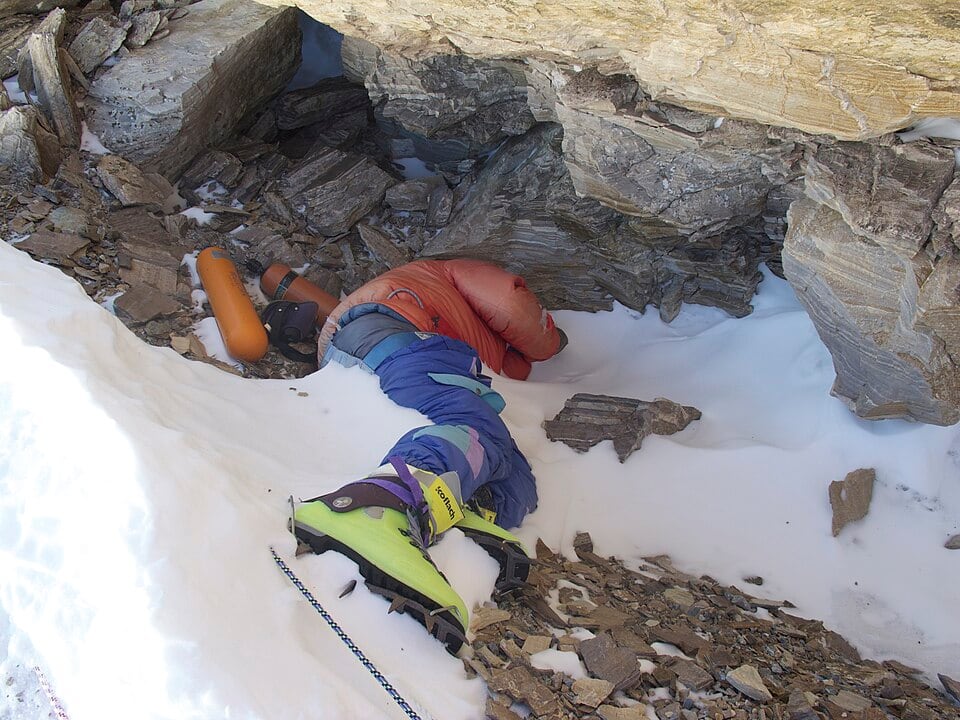
At an elevation of 8,000 meters along the Everest climbing route lies the so-called “Death Zone.” Many high-altitude climbers have lost their lives in this section. However, some deaths have become landmarks. Near 8,500 meters on the Northeast Ridge route, a fluorescent lime-green climbing boot, dubbed the “Green Boots,” has served as a guidepost for climbers for decades. Additionally, the body of a U.S. female mountaineer nicknamed the “Sleeping Beauty” at 8,600 meters on the Northeast Ridge is widely known. Buried in ice for years, these remains acted as compasses for climbers until melting glaciers exposed them.
The recent catastrophic floods in Nepal are also consequences of global warming. Human desires for conquest have been shattered by nature’s fierce retaliation. The “Death Zone” of the Himalayas, dubbed the “Roof of the World,” has preserved the last breaths of hundreds of victims over decades within its ice. A cleanup team composed of Nepalese military police and Sherpas recently retrieved some remains, but their efforts marked not the end of a tragedy but the beginning of a greater one.
As permafrost melts due to global warming, deaths once concealed beneath ice are emerging into the world. This is not all. In upstream areas, collapsing glaciers are sweeping away massive debris and forgotten remains, while downstream, roads carved into mountainsides are expanding the stage for disaster. Nepal battles dual crises: the collapse of mountain peaks and the destruction of valleys, driven by greed-blinded commercial climbing and reckless development.
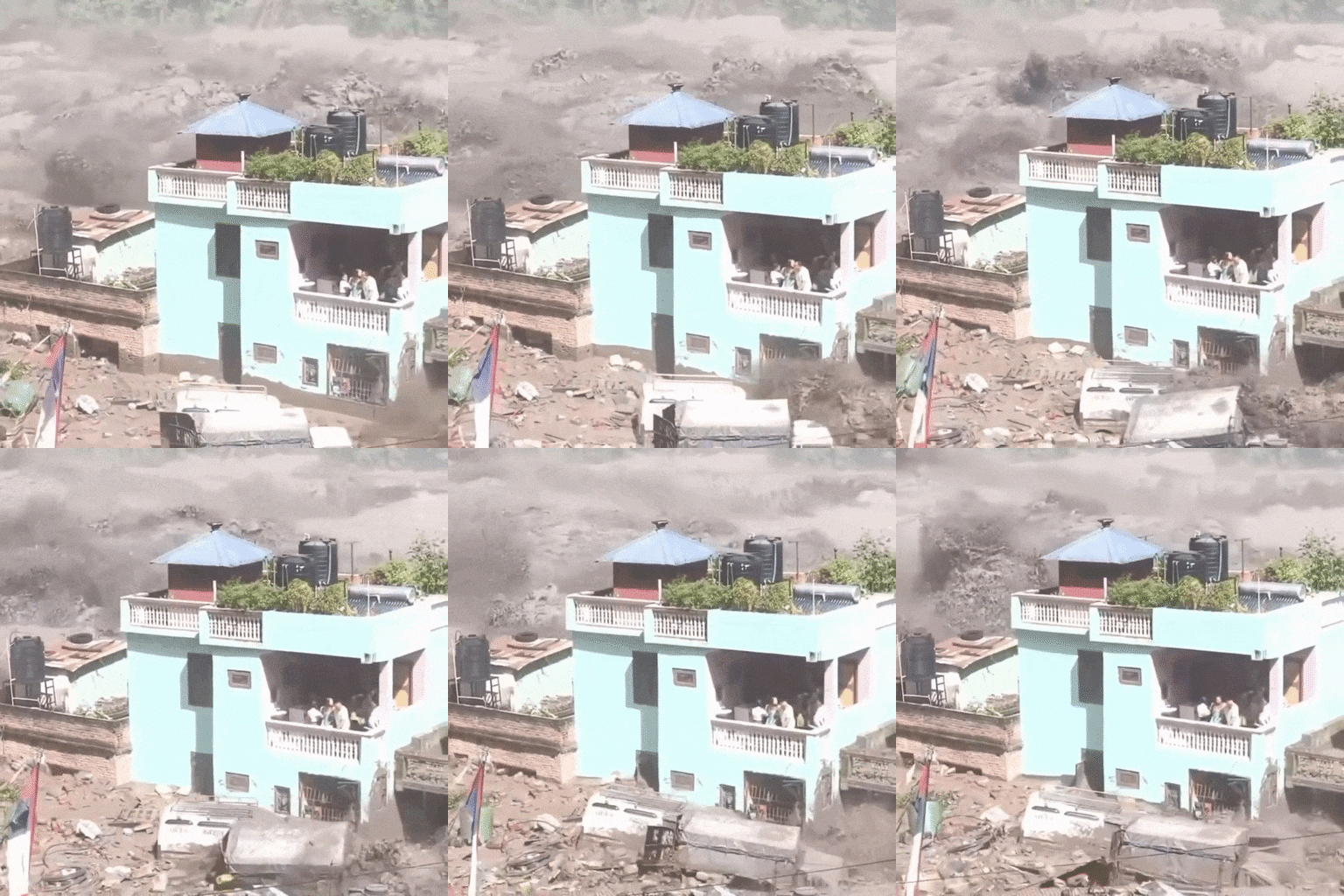
These upstream and downstream dangers culminated in the recent devastating floods and landslides that struck South Asia near the Nepal-China border. The rapid melting of the Himalayas’ once-permanent snow and glaciers triggered massive “glacial lake outburst floods,” causing mountain slopes to collapse and bury villages under mudslides.
Carbon dioxide emitted by humans has caused disasters like glacial collapse and floods, claiming countless lives. Looking back, the bodies emerging from Everest’s ice are not merely remains of the lost—they are cold, ominous warnings from nature.
The Himalayas were once sacred and untouched by human footsteps. Humans erected ghostly guideposts there, proclaiming conquest, but now they face the end of their desires amid mudslides caused by climate-induced melting glaciers and floods. This is nature’s retaliation—a crisis that is merely the “tip of the iceberg” and will persist.
Some deaths become landmarks. Glaciers worldwide continue to melt. Without collective human efforts to reduce greenhouse gases and halt global warming, the Himalayas’ tears could return as a catastrophe that engulfs humanity.





Leave a Reply