
Global bond yields surged to multi-year highs as the U.S. launched additional large-scale airstrikes on Iran, triggering a spike in international oil prices and a wave of selling in global bond markets. Long-term government bond yields in major economies, including the U.S., Japan, the U.K., and Germany, climbed to their highest levels in years.
◇ **Shock in Treasury Yields Drives New York Stock Decline**
On September 1 (local time), the yield on the 10-year U.S. Treasury note rose to 4.798% during trading, marking the highest level since January of last year. The yield on the 30-year U.S. Treasury bond also reached 5.272%, nearing its highest level since 2007.
Japan’s 10-year government bond yield climbed to 3% during trading, the highest level in approximately 30 years since October 1996. Concerns over Japan’s large-scale government spending plans and expectations of additional interest rate hikes by the Bank of Japan contributed to the rise.
The U.K.’s 30-year government bond yield rose to 5.919% during trading, the highest level since 1998. The 10-year yield also reached 5.224%, the highest level since 2008.
Germany’s 10-year government bond yield climbed to 3.339% during trading, the highest level since 2011.
Global bond yields jumped simultaneously due to renewed inflation concerns from rising oil prices, expectations of additional interest rate hikes by the Federal Reserve, and worries over the U.S. government’s fiscal deficit.
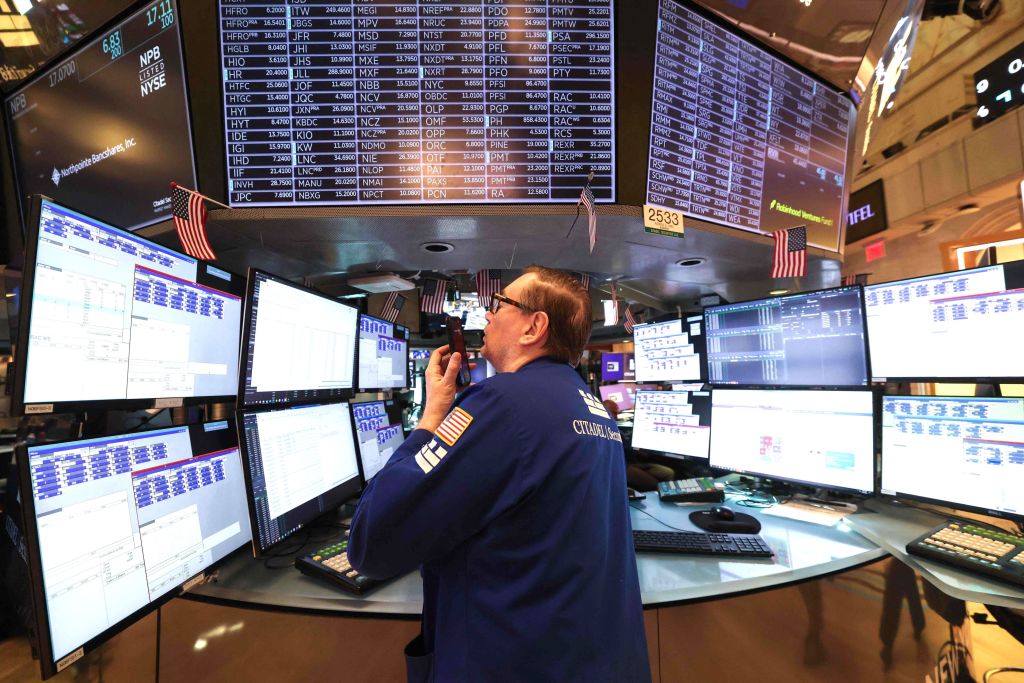
The surge in bond yields drove all three major New York stock indices to close lower. On the day, the S&P 500 fell 0.71% to 7,631.47, while the tech-heavy Nasdaq Composite dropped 1.03% to 26,099.77. The Dow Jones Industrial Average closed 0.79% lower at 52,766.88.
◇ **Rising Expectations for Fed Rate Hikes**
U.S. Treasury Secretary Scott Bessent attempted to calm market anxieties in an interview with Fox Business, stating, “We do not believe we are in a serious situation.” However, U.S. Treasury yields continued to rise.
Andrew Lilley, chief interest rate strategist at Australian investment bank Barrenjoy, said, “Most of this bond sell-off stems from a reassessment of Federal Reserve policy,” and projected that the Fed would raise rates by at least 0.25 percentage points starting in September.
According to the CME’s FedWatch tool, the probability of a 0.25 percentage point rate hike by the Fed in September rose to 68%.
Ulrike Hofmann, chief investment officer of UBS Americas, noted that inflation concerns remain high due to uncertainties over the resumption of navigation in the Strait of Hormuz, adding that bond yield volatility is likely to persist in the short term.
◇ **U.S. Long-Term Bond ETF Returns Plummet**
Returns for individual investors in U.S. Treasury bonds have fallen to their lowest levels in 52 weeks.
According to data from the Korea Exchange and others, U.S. long-term bond exchange-traded funds (ETFs) have declined by 4–5% over the past month, the worst performance among all bond ETFs.
KODEX U.S. 10-Year Treasury Futures (-4.6%), TIGER U.S. 10-Year Treasury Futures (-4.79%), RISE U.S. 30-Year Treasury Covered Call (Synthetic, -4.97%), ACE U.S. 30-Year Treasury Active (-5.16%), PLUS U.S. 30-Year Treasury Active (-4.79%), and RISE U.S. 30-Year Treasury Active (-4.87%) all hit 52-week lows.
Bonds pay fixed interest, so when market interest rates rise, the price of existing bonds falls. Longer-maturity bonds are more sensitive to interest rate fluctuations, leading to larger valuation losses.






Leave a Reply