
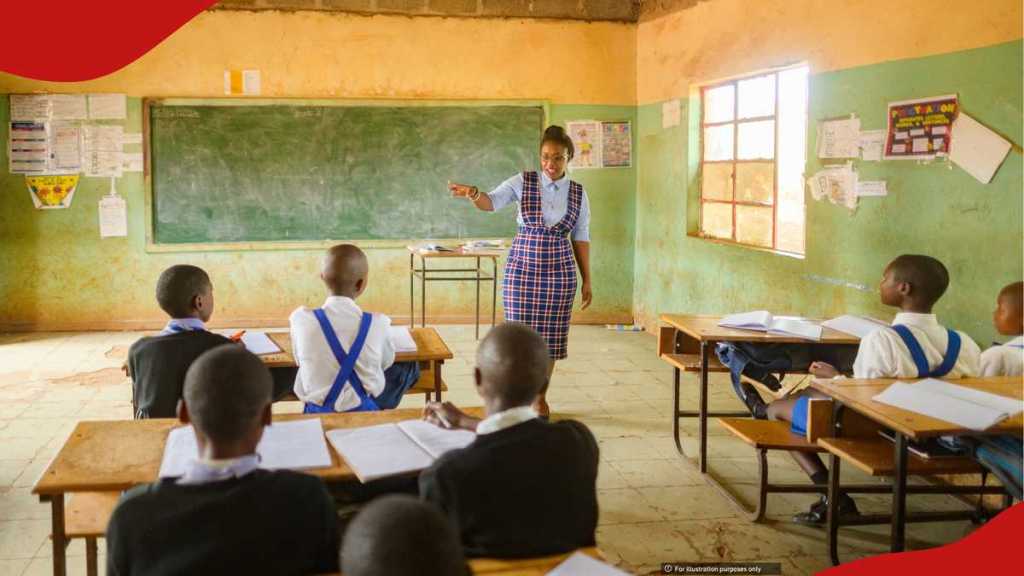
- The Basic Education Bill 2026 proposes fines of up to KSh 20 million or three years in prison for operating unregistered private schools
- Private school applicants must prove financial ability, disclose governance structures, and ensure their head teacher holds TSC registration
- The bill is undergoing public participation before the National Assembly, with hearings extended to October 2, 2026
Elijah Ntongai is an experienced editor at .co.ke, with more than four years in financial, business, labour and technology research and reporting. His work provides valuable insights into Kenyan, African, and global trends.
Private school owners and founders in Kenya could face fines of up to KSh 20 million, a three-year prison sentence, or both if they operate without registration under the Basic Education Bill, 2026, which is currently before the National Assembly.
The bill, sponsored by the Leader of the Majority Party, establishes a comprehensive registration and regulatory framework for all basic education institutions in Kenya.
Penalties for operating unregistered schools
Section 25(1) of the bill requires every institution, whether public or private, to be registered before offering basic education.
Should an operator skip that process, Section 28(10) is unambiguous:
“A person who engages in the promotion or management of basic education institution without a registration certificate, commits an offence and shall, on conviction, be liable to a fine not exceeding twenty million shillings or a term of imprisonment not exceeding three years, or to both.”
The penalty does not end with the individual. Under Section 28(11), any institution found operating without a valid registration certificate shall be closed immediately.
What do operators need for registration?
Prospective private school operators face a rigorous five-point compliance test under Section 26(1), covering adequate staffing with registered teachers, appropriate teaching and learning facilities, suitable premises for learners, compliance with occupational health and safety standards, and the necessary infrastructure for the programmes on offer.
|
Requirement |
What It Means |
|
|
1 |
Sufficient registered teachers and non-teaching staff |
Adequate staffing with proper registration |
|
2 |
Appropriate teaching and learning facilities |
Physical infrastructure for education delivery |
|
3 |
Suitable premises for learners |
Accommodating the number, age, gender and security of learners |
|
4 |
Compliance with occupational health and safety regulations |
Premises and accommodation must meet prescribed safety standards |
|
5 |
Necessary infrastructure and adequate equipment |
Appropriate for the programmes applied for |
Beyond the physical requirements, Section 27 demands disclosure of governance and management structures, membership of the institution, and the academic qualifications and experience of promoters and managers.
Section 27(2) also requires proof of financial ability, meaning founders must demonstrate they can sustain the school well beyond its opening day. The proof is often bank statements to show the available finances.
The County Education Board holds the authority under Section 28(1) to inspect and assess the resources of any applicant before making a recommendation to the Cabinet Secretary.
Even upon approval, permanent registration is not immediately granted. Section 25(2) provides that all newly registered institutions operate on a provisional basis for one year, renewable for one further year, until the Ministry completes a quality assurance assessment.
Regarding school leadership, Section 46(2) states that every private comprehensive and senior school must be headed by an individual duly registered under the Teachers Service Commission Act, closing off any shortcut for private operators to appoint unqualified heads.
The bill also draws a firm line on ownership conversion. Section 23(3) prohibits any public school from being converted into a private institution, while Section 23(4) permits the reverse, subject to stakeholder consultation.
Public participation is underway
The Basic Education Bill, 2026, is one of six education reform bills currently undergoing public participation before the National Assembly Departmental Committee on Education, chaired by Tinderet MP Julius Melly.
The committee completed the first phase of hearings across 31 counties on September 25, 2026, and subsequently extended engagements by five days to October 2, 2026, to cover 16 additional counties.
The extension followed objections from stakeholders, including the Kenya Union of Post-Primary Education Teachers, which argued that the original two-week schedule was insufficient for meaningful public engagement on the proposed laws.




Leave a comment