
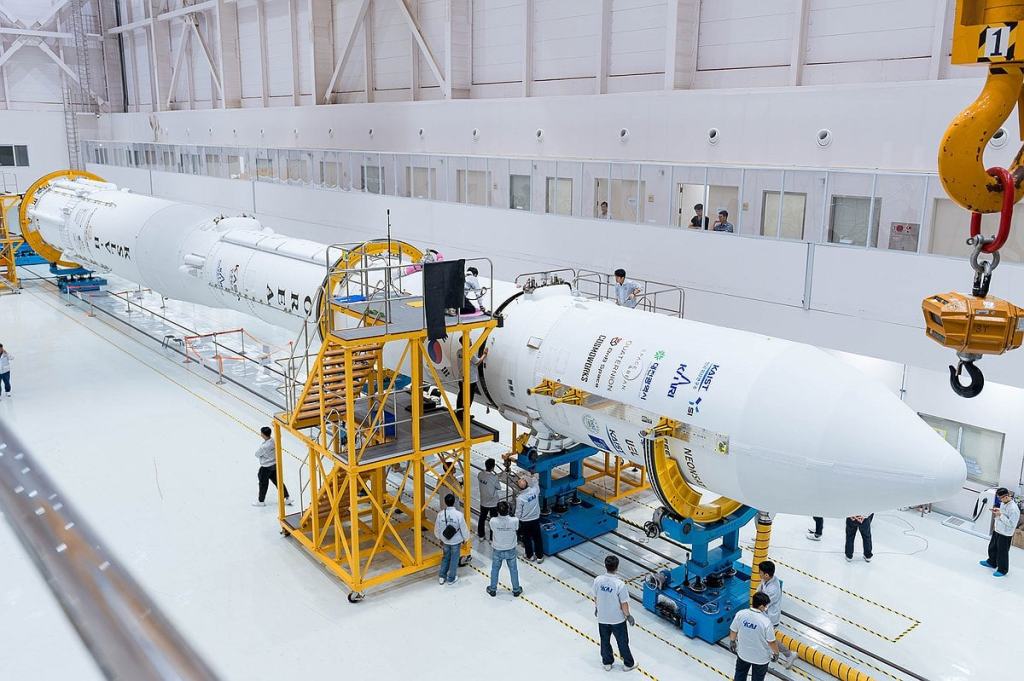
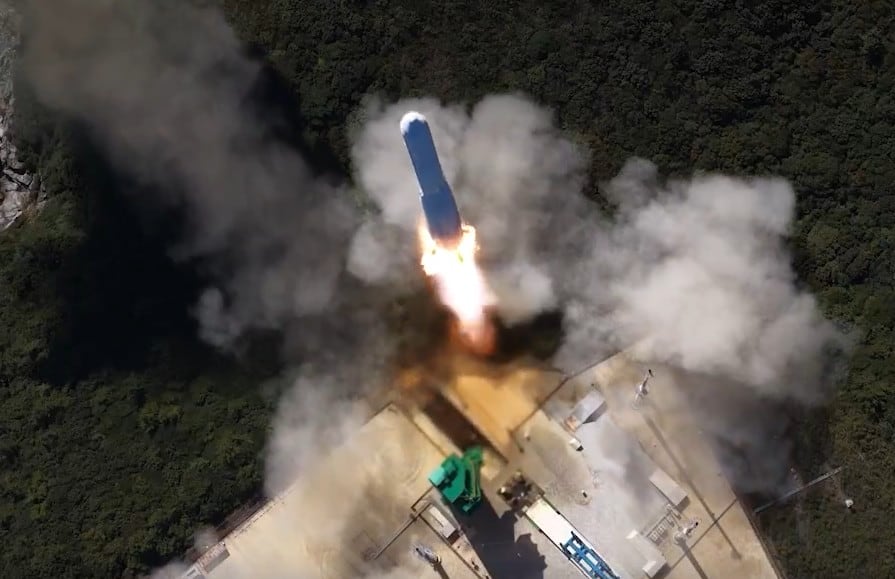
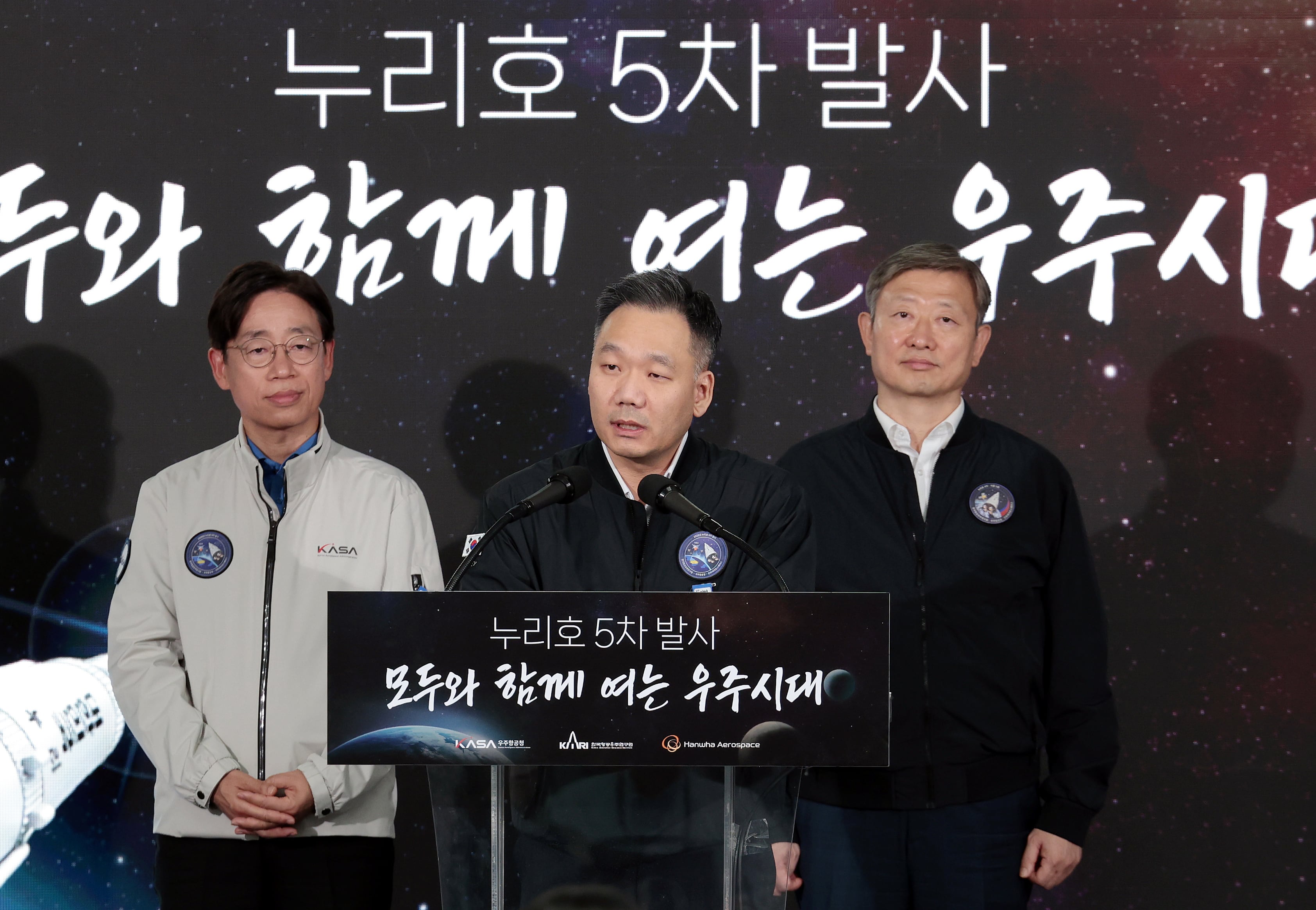
South Korea’s domestically developed launch vehicle Nuri successfully completed its fifth launch on the 7th, marking a new phase in the country’s space development. Nuri was launched from the Naro Space Center in Goheung, South Jeolla Province, and deployed five microsatellites into their target orbit. This success follows four consecutive successful launches from the second to the fifth attempt since the first launch failed in 2021. Nuri has now evolved beyond proving that “we can build rockets” to becoming a “space transportation system” capable of delivering necessary satellites to desired orbits.
Interest in space development has grown following this successful launch. Korea AeroSpace Administration Administrator Oh Tae-seog unveiled several plans during a press forum on the 30th of last month, a week before Nuri’s fifth launch, outlining the country’s space development roadmap for the next 10–20 years.
**“More important than cost is launching when we need to”**
Administrator Oh emphasized “space sovereignty” in relation to Nuri. He stated that South Korea’s need for an independent launch vehicle is not merely to save costs by avoiding foreign rockets. The critical factor is the nation’s ability to access space whenever necessary. “We must be able to launch when needed. Cost is secondary. The question is whether we can do it when required,” he stressed.
He noted that the Multi-Purpose Practical Satellite 6 has been delayed for four years, as has the Compact Advanced Satellite (CAS) 500-2. He compared the situation to a now-defunct taxi-sharing system.
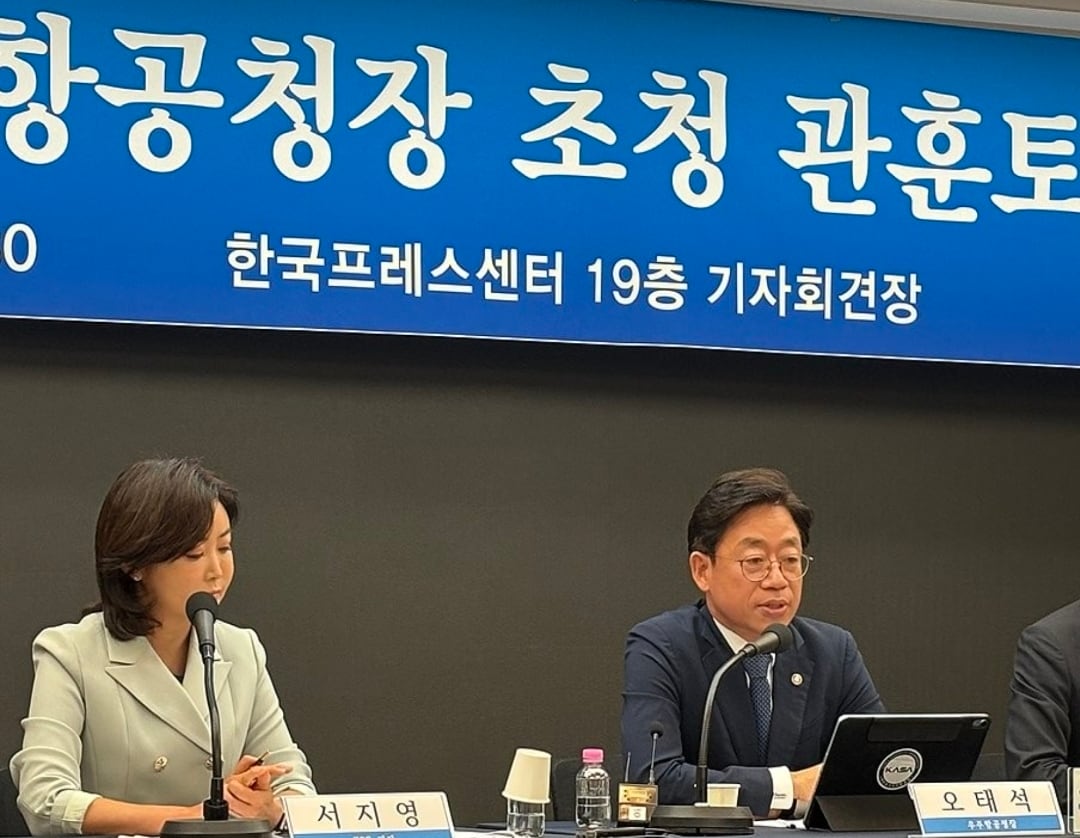
“In the case of the Multi-Purpose Practical Satellite 6, we contracted to share a ride with another country’s satellite. So, we agreed to share a ride with another passenger (nation). However, the issue arose when the co-passenger (nation) could not meet the deadline. We could have chartered our own ride, but it would have been expensive. ”
**‘Second space gateway’ to be decided in November**
Launch infrastructure is crucial for immediately deploying satellites when needed. Currently, the Naro Space Center in Goheung is the hub of South Korea’s space launches. However, with increased Nuri launches, private companies’ small-to-medium launch vehicles, and future reusable next-generation launch vehicles, existing facilities will be insufficient. Administrator Oh revealed at the forum that the selection of the second space center would be announced “by around November.” Goheung and Jeju are currently competing as candidates.
The second space center will require more than just launch pads. It must include facilities for private companies’ launches, landing sites for reusable launch vehicles, and even offshore droneships to receive returning launch vehicles, similar to SpaceX.
Administrator Oh stated, “Launch demand will explode in the future,” and emphasized that constructing the second space center quickly is essential to meet the schedule for reusable next-generation launch vehicles. When asked if Jeju had an advantage, he replied, “It’s too early to say.” The decision on the second space center in November will establish another foundation to support South Korea’s space transportation system post-Nuri.
**KAI and other space companies must lead the way**
Another key task for the Korea AeroSpace Administration, established in 2024, is transforming “government-led space” into “profit-driven space for companies.”
The global aerospace industry is growing rapidly. Administrator Oh projected that the global aerospace market will reach approximately $2 trillion by 2035, but South Korea’s share is only about 0.7%. The government aims to increase this to over 3% by 2035. The national aerospace budget has also significantly increased to approximately 1.6491 trillion Korean won by 2027.
However, increasing government budgets alone cannot make South Korea a global aerospace leader. Domestic companies like KAI and Hanwha Aerospace must generate revenue in the global market. South Korea has achieved significant progress in military aircraft, securing platforms like the KF-21 and T-50.
In contrast, the civil aviation sector remains weak. Administrator Oh mentioned past attempts, such as a joint medium-sized aircraft development project with China that was halted and discussions with Canada’s Bombardier in the 2010s that also failed.
The government’s realistic approach is not to compete with Boeing or Airbus by developing passenger aircraft from scratch. Instead, the strategy is to participate in global companies’ next-generation aircraft development from the early stages, increasing the supply share of key components, wings, and equipment. The goal is to raise the current 1–2% procurement share to over 10%. Domestic aviation companies, including KAI, aim to become major partners in the global civil aviation industry, moving beyond mere component suppliers.
**Samsung and SK Hynix semiconductors go to space**
A particularly interesting topic from the forum was sending South Korean semiconductors into space. The idea is to connect the country’s global semiconductor competitiveness with the space industry. The small satellite K-RadCube, part of the U.S. Artemis project, carried commercial semiconductors from Samsung Electronics and SK Hynix. The goal was to test whether Korean semiconductors could withstand the intense radiation of deep space. Unfortunately, normal communication was not established, and sufficient data was not obtained.
Administrator Oh emphasized that space semiconductors will become a vital industry. As satellite-generated data explodes, transmitting all data to ground stations for processing has limitations. For example, many Earth observation satellite images are unusable due to cloud cover. Currently, these images are transmitted to ground stations and filtered, but in the future, satellites will use AI to discard unnecessary data and send only essential information. This requires semiconductors capable of AI operations in space.
Future space data centers will increase demand for GPUs and memory semiconductors. Administrator Oh repeatedly stressed, “Companies that make semiconductors in our country must enter the space semiconductor market.” Experts note that semiconductors functioning well on Earth cannot necessarily operate in space due to intense radiation. Testing in actual space environments is essential. Fortunately, this Nuri launch included satellites to test domestically developed space-grade materials, components, and semiconductors.
**Low Earth orbit satellites are ‘communication sovereignty’**
Space is now inseparable from national security. The Russia-Ukraine war demonstrated the importance of satellite communication networks in modern warfare.
The government is considering deploying 100–300 low Earth orbit satellites by 2035. Administrator Oh stated that the military will be a key demand driver for low Earth orbit communication networks. In case civilian communication networks fail, alternative means are necessary. Thus, low Earth orbit communication networks are both an industrial project and a “communication sovereignty” project.
**Will there be a second Yi So-yeon?**
Another notable topic was South Korea’s astronaut program. Since Dr. Yi So-yeon visited the International Space Station in 2008, the country has not had an independent human spaceflight program.
Administrator Oh shared his concerns: “As the head of the space agency, the most challenging issue is how to develop a human spaceflight program.” He emphasized that sending a Korean to the space station is not just an event but part of a broader strategy. Questions include whether to use domestic launch vehicles for crewed missions, build long-term space habitats, and conduct research and industrial activities there.
Currently, only the U.S., Russia, and China have independent crewed space capabilities, with India pursuing them. Japan, Canada, and Europe collaborate with the U.S. Administrator Oh cited Japan’s example of installing its own module on the International Space Station for microgravity research.
South Korea will eventually need personnel to manage facilities and conduct experiments in space for bio, semiconductor, and new material research, or “space manufacturing.” Thus, the upcoming space development basic plan must include a roadmap for a human spaceflight program. Depending on the Korea AeroSpace Administration’s discussions, the lineage of Korean astronauts, which ended with Dr. Yi So-yeon 17 years ago, could resume.
The aerospace sector, like nuclear energy, is directly linked to national security, the economy, and boosting national pride. The Korea AeroSpace Administration, barely two years old, is expected to enrich the nation through space resource development and elevate the morale of its people.




Leave a Reply