
As New World Development returns control of the struggling project to the Airport Authority, experts examine the legal and economic ramifications
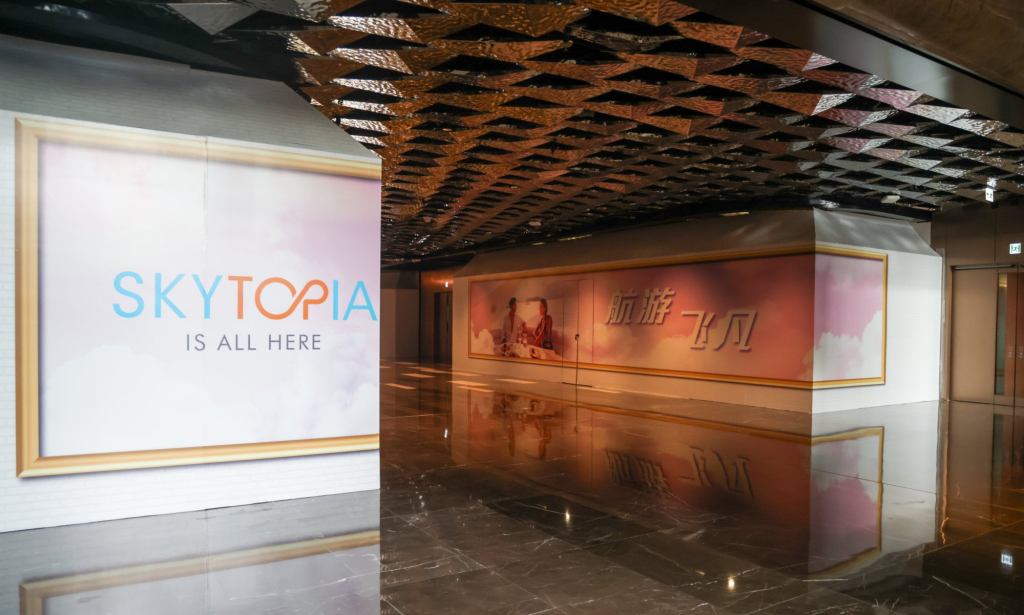
The roar of plane engines and the hustle and bustle at Hong Kong International Airport’s Terminal 2 present a stark contrast to the pin-drop silence at the adjacent 11 Skies commercial complex.
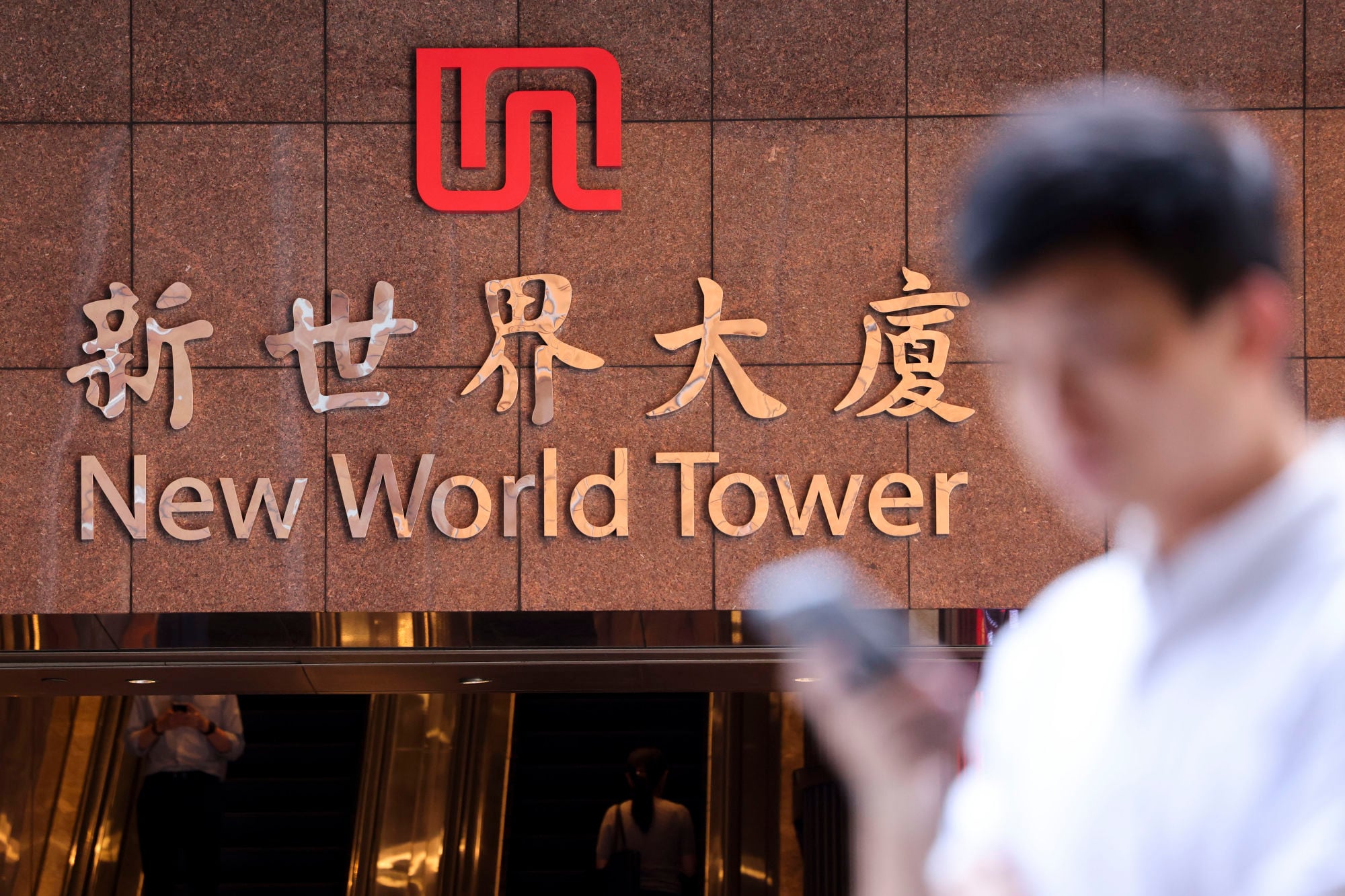
A South China Morning Post reporter who travelled between the two places in early October found minimal footfall at the shopping centre, with the bright and airy environment of the airport terminal replaced by dim, stuffy and boarded-up corridors, and poor air conditioning amid the simmering outdoor heat.
Occupying a gross floor area of 3.8 million square feet, 11 Skies is a mammoth project at the airport. Seventy per cent of the space was originally earmarked for a mall with 800 stores and 120 food and drink concepts, and the rest equally divided between experiential entertainment facilities and grade A office spaces.
Do you have questions about the biggest topics and trends from around the world? Get the answers with SCMP Knowledge, our new platform of curated content with explainers, FAQs, analyses and infographics brought to you by our award-winning team.
But only one of its three office towers currently houses some companies running businesses at the airport.
The rest of the space sits in gloomy darkness.
After months of market speculation, the fate of 11 Skies was decided in early October when Hong Kong’s Airport Authority and developer New World Development signed an agreement to end the latter’s nearly 50-year contract for the project.
With the authority back at the helm, the mall’s management plans to tear down the existing 11 Skies signature logo, reconfigure the retail space into an entertainment hub, bring in tenants and investors, and relaunch the project under a new name and identity.
New World, which has been mired in a debt crisis since 2023, relinquished its control of the property and paid a HK$2.3 billion (US$293 million) break-up fee. It will spend an additional HK$1.05 billion on works and services before handing operations over to the authority by April next year.
The majority shareholder, the Cheng family’s private investment vehicle Chow Tai Fook Enterprises, will grant the authority an option to buy New World shares. Although the call option gives the authority the right to buy 750 million shares at HK$3 each from Chow Tai Fook Enterprises within the next three years, it comes with conditions that call its feasibility into question.
This rare break-up in Hong Kong’s public works sector raises questions of moral hazard and the risks of setting a precedent.
Wei Lai, head of Lingnan University’s department of finance, said the surrender appeared to be a negotiated restructuring involving a substantial termination payment, asset transfer and other contractual obligations.
“On the question of moral hazard, I would be cautious about characterising the arrangement as allowing a private developer to return a project ‘at will’,” Wei said, stressing that the arrangement was different from an unconditional exit option.
“From an economic perspective, the more relevant moral-hazard question is whether this arrangement changes the ex ante incentives of developers in future projects.”
Debt-ridden partner in an ambitious project
New World’s exit had been under discussion for months.
As a key step in taking over, the authority set up a new subsidiary, IEC Holdings, to spearhead the Skytopia project, a HK$100 billion megadevelopment that will turn the airport into a destination for yachting, shopping, dining, wellness, culture and entertainment. The 11 Skies project is part of it.
The authority’s executive director for commercial, Cissy Chan Ching-sze, became CEO of IEC on October 1.
“We will soon rename 11 Skies and change its style in a cost-effective way to reflect a new identity so that we can go recruiting for tenants and investors,” Chan said shortly after New World announced the deal on September 30.
On the same day, the developer’s financial results and debt levels were also a focal point.
In 2023, signs of New World’s financial distress prompted it to seek ways to reduce or refinance its debts to boost liquidity.
The 11 Skies project was also a factor in the debt crisis. Under the original terms of the contract, the developer was required to pay a guaranteed rent or a revenue rent representing 20 per cent of the gross revenue from the project, whichever was higher. New World was due to pay the rent from 2027 until the end of the contract in 2066.
The early termination allowed the developer to shed the contract’s financial obligations.
As of June 30, the developer’s total debt stood at HK$143.3 billion. Net debt amounted to HK$126.3 billion, an increase of HK$6.2 billion during the financial year.
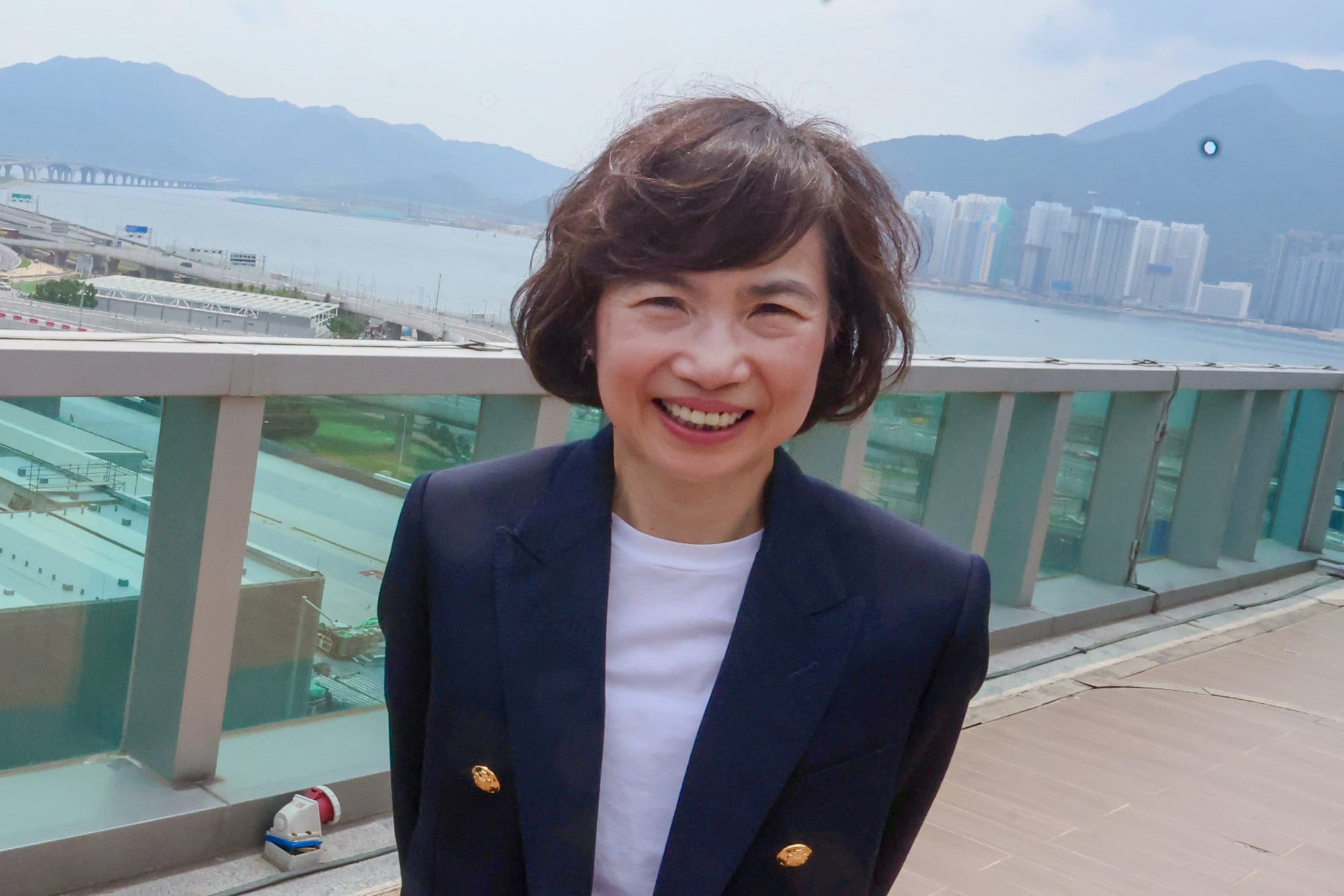
To ease its financial burden, the developer implemented seven measures to reduce debt, including asset disposals, capital expenditure optimisation and a decade-long suspension of dividend payments that ended last year.
Julian Lee Pui-hang, the authority’s executive director for finance, conceded that it had to bring forward the 11 Skies project by parting with the “debt-ridden partner”.
“How can we work with a debt-ridden partner going forward?” he said. “The deal represents the best efforts of the controlling shareholder.”
Exit deal triggers moral hazard?
Wei of Lingnan University said she did not think the existence of one exceptional and costly exit mechanism by itself established an expectation for developers to bid more aggressively or take greater risks.
“Where difficulties arise partly from unusually adverse market conditions rather than simply from poor project execution, an orderly restructuring may in some circumstances preserve more economic value than allowing the situation to deteriorate further,” she said.
Market financing introduced an additional layer of market discipline because lenders and institutional investors would assess the financial position, risk exposure and expected returns of the authority.
“That market discipline can reduce, though not eliminate, governance and moral-hazard concerns,” Wei said.
Ervi Liusman, senior lecturer at the hotel and tourism management school at the Chinese University of Hong Kong Business School, said allowing a private developer to surrender a contracted commercial property would theoretically constitute a moral hazard if the developer could avoid the commercial risks it originally agreed to bear without facing a penalty.
“Allowing a developer to exit at will without penalty will encourage aggressive bids, knowing that there is an exit option if the market conditions deteriorate,” she said.
Liusman said that, based on what was revealed to the public, the developer had to bear significant financial losses upon returning 11 Skies, which meant the project was not surrendered at will and therefore did not constitute a moral hazard or set a bad precedent.
The surrender of the infrastructure, the break-up fee and other related expenses dealt a blow to New World’s balance sheet.
It resulted in HK$18.32 billion in net impairment losses and provisions relating to 11 Skies in the year ending June 30, contributing to New World’s HK$26.8 billion net loss. The net loss widened from HK$16.35 billion a year ago.
“Because the Airport Authority remains accountable to lenders and investors, it has strong incentives to ensure that any decision to take back the development is commercially justified and capable of generating long-term value,” Liusman said.
If the developer incurred substantial losses and contractual penalties, the focus shifted from who absorbed the loss to which party was best placed to unlock the future value of the asset, she explained.
“The Airport Authority’s intervention may then be seen as a realistic restructuring of a strategically important asset rather than a transfer of risk from private sector to the public sector,” Liusman said.
Despite being wholly owned by the government, the authority has primarily funded its infrastructure, such as the HK$141.5 billion three-runway system, through issuing debt, charging departure taxes and drawing on internal resources. The authority also retained the dividend payments the government agreed to forgo for a decade until last year.
It rarely directly taps the public coffers.
Ken Ip Man-hon, associate director of Saint Francis University’s Innovative Incubation Centre, said whether private developers should be allowed to exit large public-facing projects when commercial assumptions deteriorated was a legitimate policy question.
“The bigger lesson is that long-term projects need both accountability and flexibility,” Ip said.
He said a long-term project could not realistically be based on the assumption that its original business model would remain optimal for decades.
The project was tendered in 2018, a record year for tourist arrivals in the city before unexpected disruptions arose amid the social unrest of 2019 and the Covid-19 pandemic between 2020 and 2023.
After the borders reopened, another unexpected trend emerged, with mainland Chinese visitors – the city’s largest group of inbound travellers – spending less and Hongkongers choosing to cross the border for leisure spending.
Chan of the authority said her team would reposition and reconfigure the 11 Skies retail space into an entertainment hub, offer more unique experiences for visitors and bring in new features from overseas.
Win-win arrangement?
Ip said the authority was moving in the right direction by expanding the project beyond conventional retail to include aviation activities, arts and culture, tourism and experiential entertainment.
“The more important question remains – that is, what activities benefit most from being next to an international airport?”
Tourism and entertainment were part of the answer, but Ip suggested that the site could also include higher education, executive education, professional training, research and innovation.
“If 11 Skies can become a mixed-use international gateway rather than simply a better shopping and entertainment complex, the new strategy could give the project a much stronger foundation,” he said.
Li King-king, a professor at Hang Seng University of Hong Kong’s department of economics and finance, said the early termination was a very special case and was potentially a win-win arrangement.
The break-up was driven by factors such as location, airport design, trends in the Hong Kong retail market, changes in consumer behaviour due to the internet and residents travelling to the mainland for leisure, he said.
“The focus is whether the whole of society, the entire Airport Authority, the whole of Hong Kong, benefits from this agreement,” Li said.
Delaying the project could incur costs and affect overall airport planning, and the parties had to make a choice, taking society’s overall interests into consideration, he added.
The authority is now racing to reconfigure and relaunch the 11 Skies complex in 2028, with plans to align the project with the ambitious Skytopia megadevelopment at the airport.
Skytopia is a strategic blueprint that aims to create a new landmark for Hong Kong that will serve as a major growth engine for the economy.
The ecosystem will include a 20,000-seat arena for world-class performances at AsiaWorld-Expo next to the airport, a yacht bay providing 500 berths, a water recreation area, art galleries and storage facilities.
It will also feature a promenade with leisure facilities and an autonomous transport system connecting Skytopia, the Hong Kong border crossing of the Hong Kong-Zhuhai-Macau Bridge and Tung Chung railway station.
“We expect the entertainment hub to serve as a platform for mainland companies to market their products to an international audience, and for international businesses to make inroads into the mainland market,” Chan of the authority said.
The authority aims to recruit top-notch entertainment operators and business partners globally to be a part of major Skytopia components in the 2028-29 financial year.
“It will be an attraction for locals, transit passengers and visitors,” she said.
Additional reporting by Lo Hoi-ying and Denise Tsang
More Articles from SCMP
Huawei, once hobbled by US sanctions, passes 100 million Kirin chip milestone
Schools urged not to make pupils with special educational needs repeat grades
Is this the best time for US strategists to push for abandoning ambiguity on Taiwan?
China sentences 3 more Myanmar crime bosses to death in scam centre crackdown
This article originally appeared on the South China Morning Post (www.scmp.com), the leading news media reporting on China and Asia.
Copyright (c) 2026. South China Morning Post Publishers Ltd. All rights reserved.




Leave a Reply