

A few days ago, I witnessed a striking scene at a baby fair exhibition hall. A young couple expecting a child was intently practicing cardiopulmonary resuscitation (CPR) and airway obstruction first aid using an infant emergency response mannequin placed on their lap. The sweat-drenched expectant mother’s eyes, as she adjusted her hand movements under the instructor’s guidance, reflected both an earnest desire to “protect my child in an emergency” and anxiety about potential accidents.
In an era of low birth rates, each child’s life has become more precious than ever, and parents’ interest in their children’s safety has never been higher. In particular, there is a strong demand for the ability to respond immediately in real-life emergencies, beyond theoretical knowledge. However, paradoxically, the “home”—where children spend the most time and should be safest—is where infant and toddler accidents occur most frequently.
The Korea Consumer Agency has warned of the risks of household accidents involving infants and toddlers, urging caregivers to exercise special caution. According to emergency room data from the Korea Disease Control and Prevention Agency, the mortality rate of infants and toddlers who suffer respiratory-threatening injuries, such as airway obstructions, at home is 10.2%. This highlights how everyday accidents can escalate into life-threatening situations. For instance, if a toy fragment or food blocks the airway, even a few minutes of delay can be fatal. Before the 119 emergency rescue team arrives, immediate first aid from caregivers can determine the child’s survival. This underscores the urgent need for systematic hands-on and practical education to help parents react calmly and effectively in emergencies.
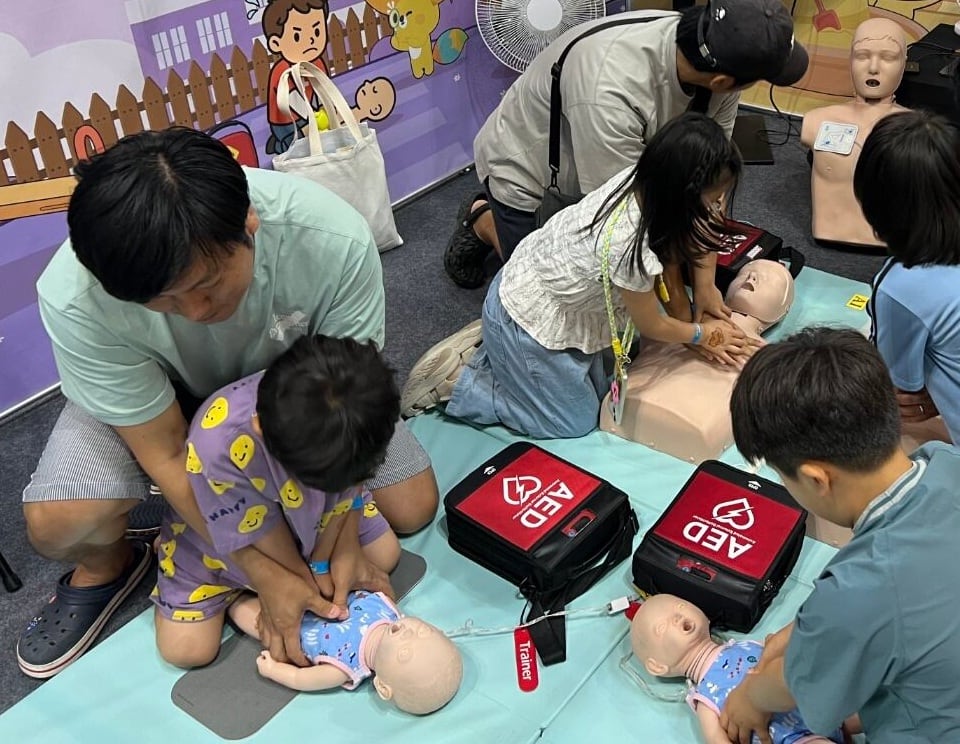
The problem is that practical first aid training for parents—who have high demand and need for such education—is severely lacking. The Korea Institute for Child Care and Education conducts practical first aid training for workers at childcare facilities under the *Act on the Safety Management of Children*. However, this training targets facility staff, excluding parents, who are often heard grumbling, “Why aren’t they offering this to us, the ones who need it most?” Many parents are eager to learn but struggle to find accessible, professional hands-on training.
Simple guidelines or audiovisual materials are insufficient. Parents raising young children need to practice with mannequins, receive corrections on posture and movements from experts, and build the ability to respond to emergencies. Learning once is not enough; repeated practice is essential to translate knowledge into action during a crisis.
It is no longer acceptable to leave parents’ first aid education solely to individual interest and effort. The state must prioritize this as a core task of child safety policy, ensuring everyone can access professional hands-on training nearby. Utilizing regional education hubs like Comprehensive Childcare Support Centers, integrating first aid practice into prenatal and childcare facility parent education, and expanding weekend/evening classes for dual-income parents and mobile education for underserved areas are necessary.
Supporting parents to give birth and raise children must go hand in hand with safeguarding the lives of those already born. The nation must now respond to the earnest plea of the expectant mother I met at the fair. Preparing parents so that their hands can become the ones to save their child during the “critical four minutes” that could determine life or death—this is why the state must guarantee first aid education for parents.



Leave a Reply