

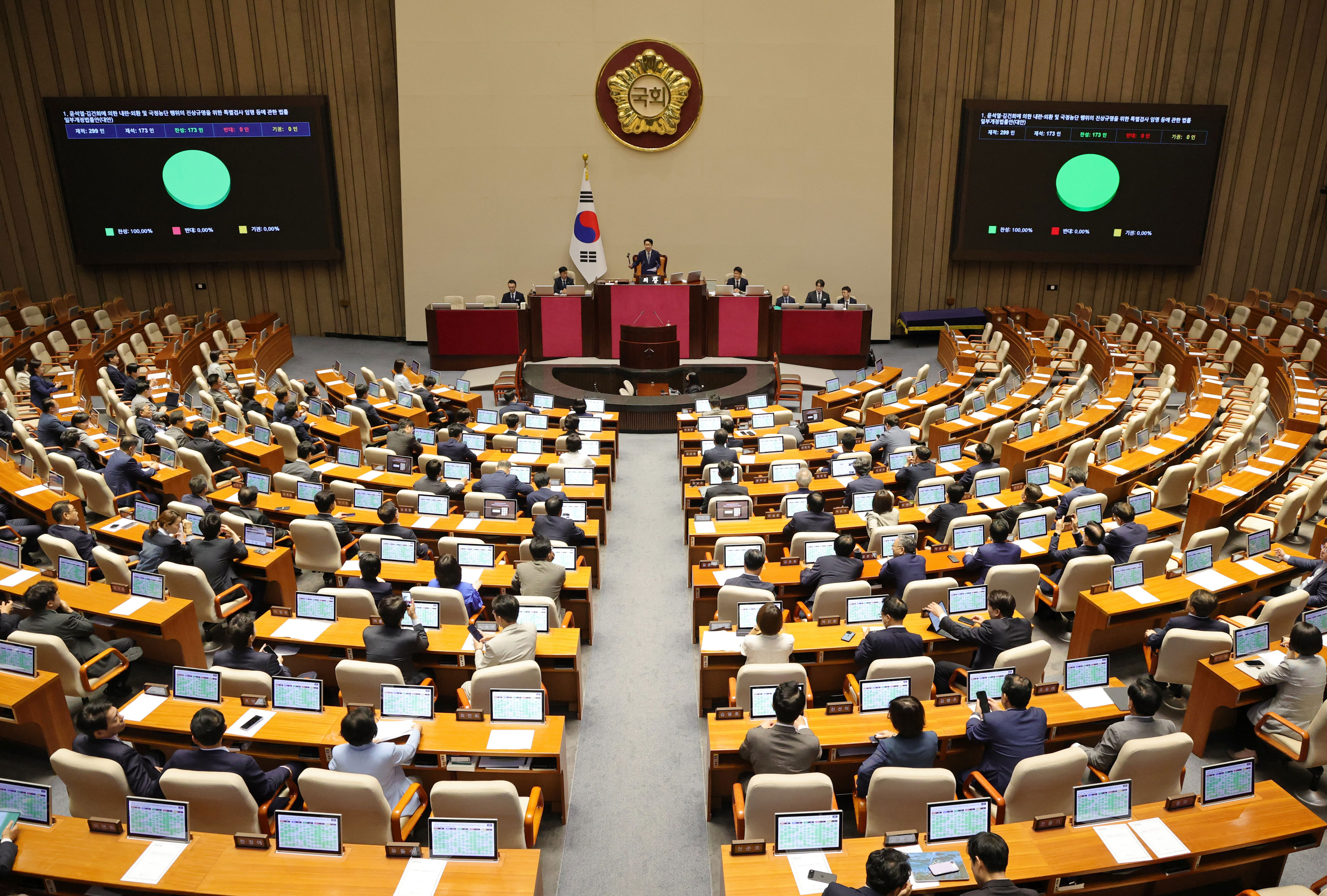
The word “parliament,” meaning “assembly,” originates from the French verb “parler” (to speak). The Latin word “parabola,” meaning “speech” or “discourse,” evolved into the French “parlement” (assembly, official meeting) in the 11th century. By the 13th century, it was adopted into English during meetings of nobles, clergy, and knights summoned by the king, becoming the term “parliament.” It later formalized as the official name for the national assembly system under King Edward I, when the first parliament including commoners took shape. Today’s parliament, a core institution of democracy with legislative and oversight functions, began as mere “speech.”
As the term “house of speech” suggests, parliament is a place where people with differing views communicate and mediate conflicts through words, not guns or swords. Thus, the technology that sustains human society without mutual destruction is “speech.” According to myth, Zeus, who granted humans only one skill, could not bear to watch society collapse and gave everyone the skill of “speech.” Aristotle called it “political skill,” while the Roman orator Cicero described it as a “companion of peace.” Speech is a weapon that brings peace. The “parliamentary debate format” has long been a model for discussion classes due to the social mastery of speaking accumulated alongside the institution.
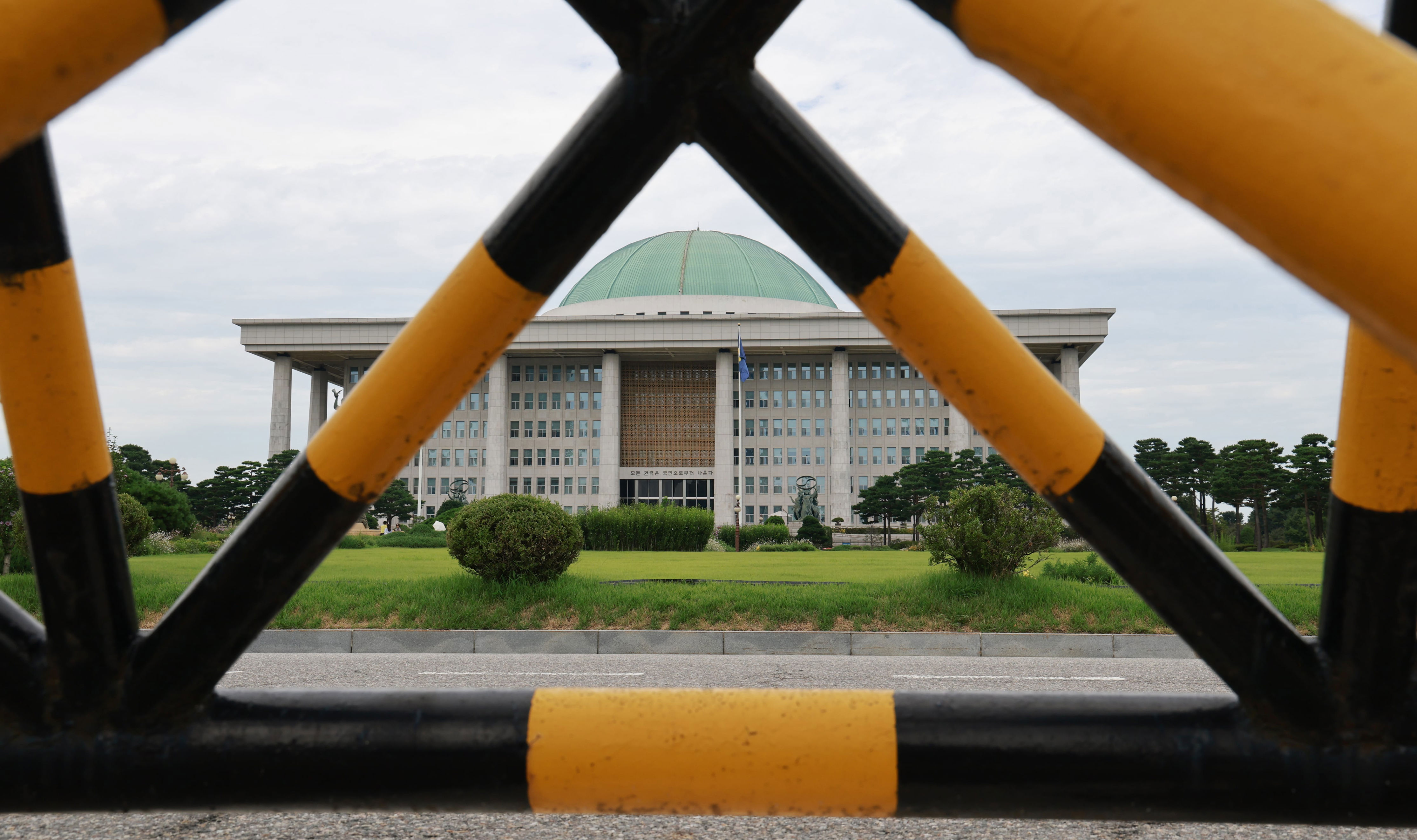
Though South Korea’s democratic history is short and speech education is lacking, the speaking level in its parliament is unbearable to watch or listen to. If politicians did not learn to speak in school, they should at least diligently learn “political skill” as speech to resolve conflicts and seek compromise. Yet, for some reason, even those who spoke decently elsewhere become zero in dignity, uncompromising, and steeped in speculation and illogic the moment they enter politics. This is because the political landscape itself is defined by zero dignity, uncompromising attitudes, speculation, and illogic.
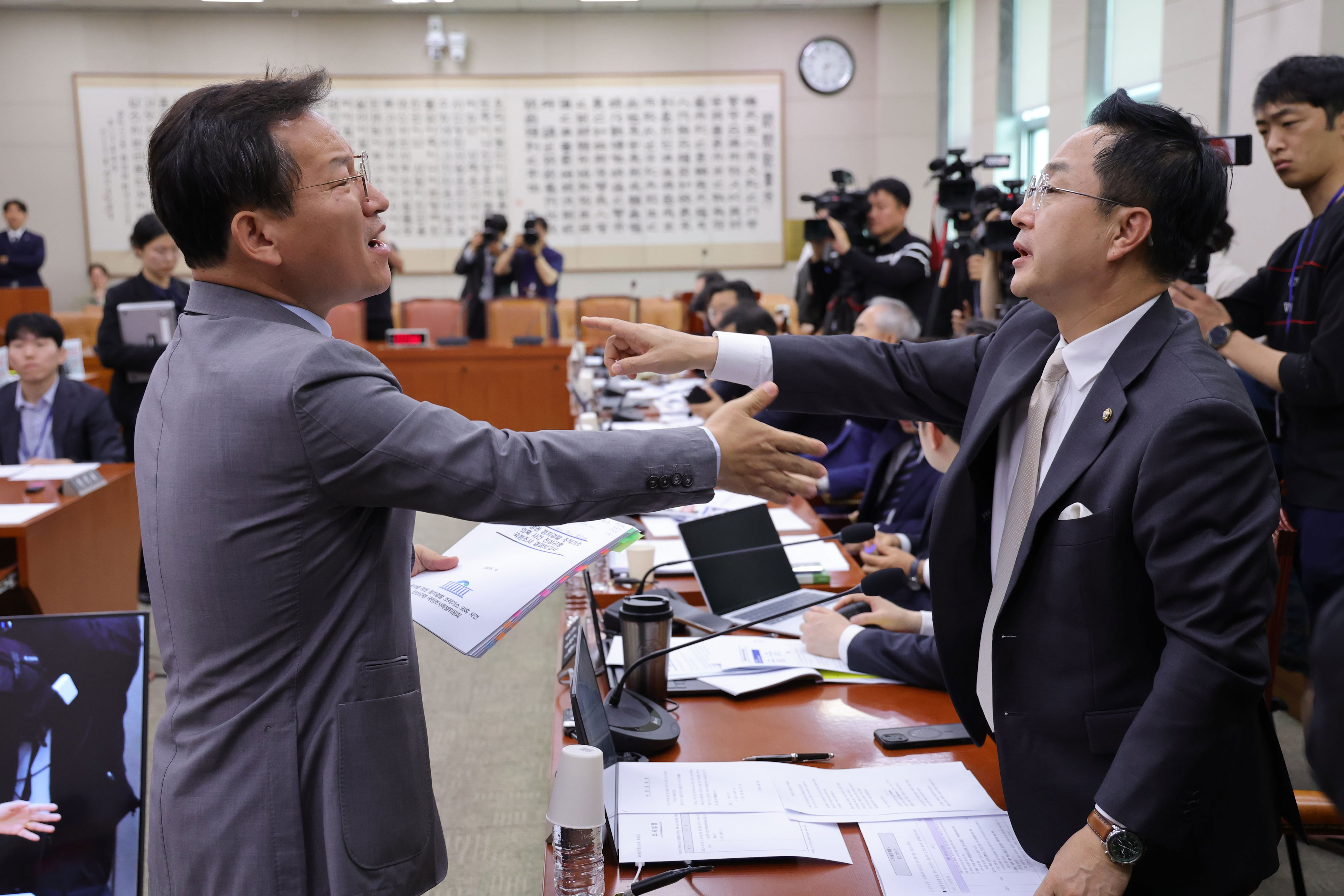
When a controversial issue arises, politicians first try to obscure or eliminate the topic before engaging in evidence-based debates based on their positions. They build walls and drive nails to prevent dialogue or discussion. Instead of responding to or refuting opponents’ criticisms, politicians who suck the topic into a black hole employ a strategy of deflecting criticism by citing similar wrongdoings by the other side. This logical fallacy—called “tu quoque,” “whataboutism,” or “false equivalence”—is one of the errors to avoid in debates. It is, in short, a “foul.” In a debate arena where rules should prevail and fouls are expelled, we see fouls dominating.
When a ceiling collapsed in an old building in Daegu, a politician criticized the president for playing golf at Taereung Country Club at the time. Cheong Wa Dae stated, “The president received reports on-site and instructed follow-up measures,” but the opposition leader commented, “If staying at the official residence for seven hours during the Sewol incident was ‘dereliction of duty,’ then playing golf would be ‘abandonment of duty.’” The ruling party attacked, asking if the president was a fortune-teller, and countered by questioning why Daegu Mayor Choo Kyung-ho failed to predict the collapse. An incident that should have focused on the safety of old buildings devolved into discussions about the president’s golf, the Sewol incident, and the mayor’s foresight, bouncing around like a rugby ball and disrupting the debate.

In the case of the film *The Assassin(s)*, which sparked controversy for distorting history, politicians immediately shifted the debate to the cliff where former President Roh Moo-hyun died, squabbling. The topic of historical truth versus cinematic imagination transformed into a fight over “your dead president,” escalating into emotional battles and futile retaliations. Politicians are also keenly interested in their opponents’ children’s high school years. During a parliamentary audit, the ruling party reignited suspicions about false credentials in the case of Rep. Han Dong-hoon’s daughter, which had been cleared by police, demanding an investigation as thorough as that of former Justice Minister Cho Kuk. In response, Rep. Han criticized the “daddy chance” of Democratic Party leader Kim Min-seok, whose son’s high school proposal became actual legislation by Democratic Party members. This is a “false analogy” fallacy, where the content differs despite apparent similarities.
As the term “fallacy” implies, such debates have no winners or losers. In these arguments aimed at creating villains, even if one temporarily seems ahead, all ultimately lose. Debate classes teach us not to get entangled in such arguments.
During World War II, there was a debate that “the Nazis did many bad things, but the Allies were not innocent either.” Debate textbooks teach that if attacked this way, one should first acknowledge their own mistakes and then systematically refute how their mistakes differ qualitatively and quantitatively from the opponent’s. However, the more desirable approach is to foster a healthy debate environment where such topics cannot take root. To avoid being dragged into illogical attacks by politicians, one must cultivate competence and dignity.
Another key factor in determining the outcome of a debate is the audience watching it. Even if one successfully paints the opponent as a villain, if the method is underhanded or inappropriate, the audience will inevitably issue a red card. Thus, debates riddled with fallacies ruin both the proposer and the responder, ultimately becoming a game where everyone destroys each other. Today, South Korean politicians continue to play this reckless and foolish game.





Leave a Reply