
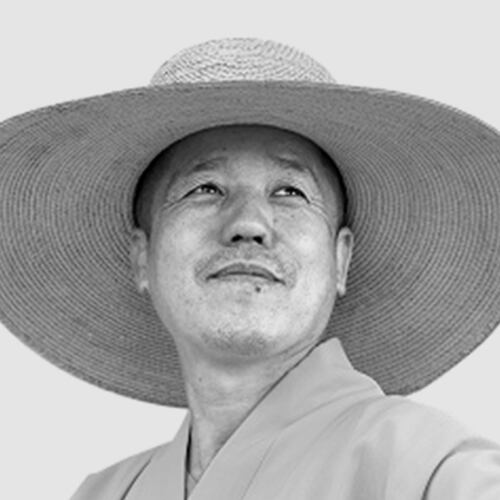
Staying for a few days on Jeju Island with fellow practitioners I had met while working together on a magazine, we also celebrated the 60th birthday of one of them. However, the logistical arrangements fell to the island’s residents, as always. A native monk took charge as the *yusa* (有司), a role traditionally responsible for managing affairs and practical matters in groups like associations, family gatherings, or clubs.
The monk’s final guided stop was near Jeolmul Village and Woldaecheon. Walking through the well-preserved natural forest was enjoyable, and the private garden cultivated from barren land was impressive, but the historical humanities site offered a uniquely profound experience.
A stream from Jeolmul Village’s *Napssemi* (衲泉) feeds into Woldaecheon. *Nap* refers to a monk’s robe, and *ssemi* means spring, so the name translates to “monastic spring.” At its peak, over 130 people worked at the temple, excluding monks, indicating its scale. Excavations revealed the foundations of 12 buildings. The village’s name, Jeolmul (meaning “temple water”), suggests significant water usage.
The temple’s sturdy vessels were even borrowed by the Jeju Governor during rough weather when sea routes were unsafe. The manager of the requisitioned vessel would have accompanied the journey. Such duties sometimes fell to reluctant *yusa*.
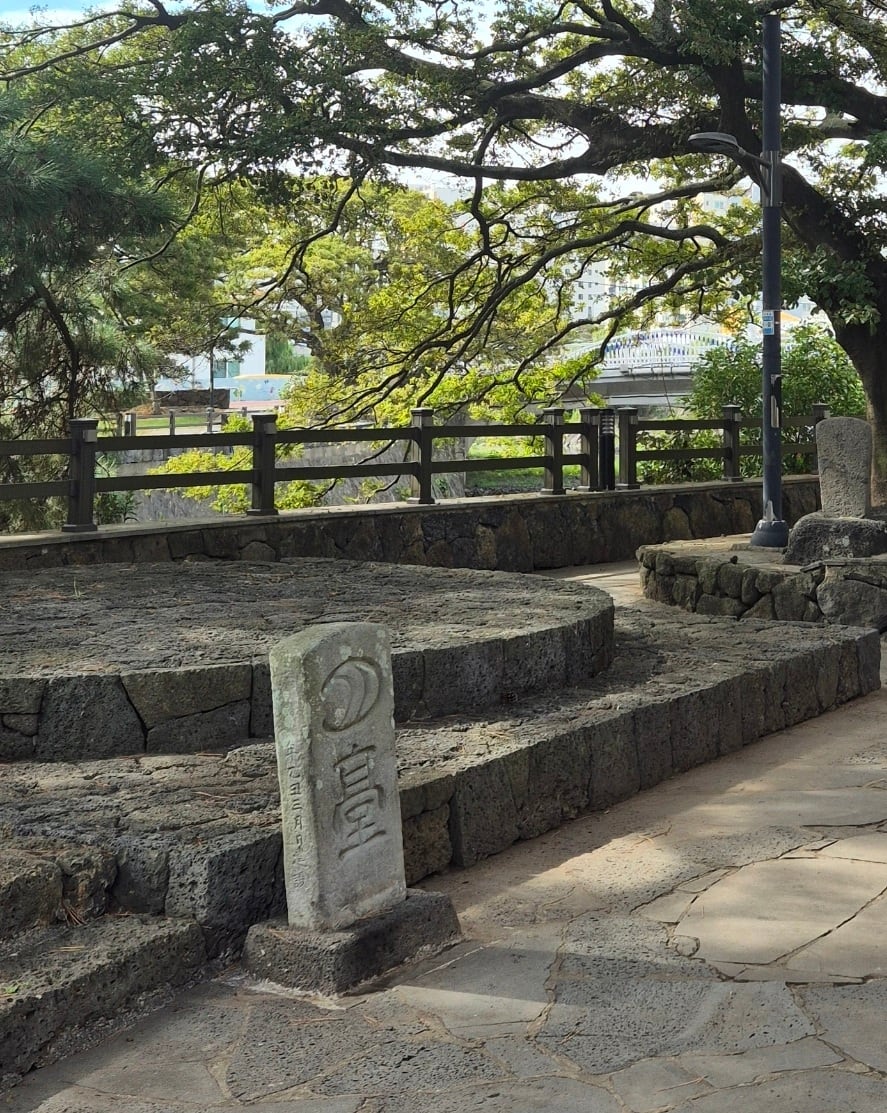
Woldaecheon marks where several streams from Hallasan converge before reaching the sea. Unlike most dry streams on the volcanic island, this area boasts abundant water, earning the nickname “Oedo Mullil 20ri.” A marker stone and basalt altar (photo) were installed, with the character for “moon” (月) written in pictographic style. This 1925 work by Hong Jong-si (1857–1936), a former Jeju county head, reflects his efforts to emulate the calligraphy of Kim Jeong-hee, the exiled scholar Chusa, who had lived on Jeju 80 years earlier. Locals frequented this auspicious spot for water, moon viewing, and gatherings.
From the late Joseon period through Japanese occupation, regular poetry meetings with 30 participants were held here. The group included exiles, mainlanders residing on Jeju, and locals—a pan-Korean assembly. Hong Jong-si, skilled in literature, calligraphy, and painting, and financially capable, willingly served as *yusa*. Kim Yun-sik, a forced exile and member of the reformist faction, noted in his diary *Sok Eumcheongsa* (Continuation of the History of Cloudy and Clear Days): “Hong Jong-si possessed countless fine calligraphies and paintings, truly a man of refined taste. The tenth poetry meeting was held at his home.”
Residents of this beautiful, exotic tourist destination have always had an additional duty beyond their main work: welcoming, guiding, and seeing off visitors from the mainland. The endless stream of guests made it a recurring sentiment: “Glad when they come, gladder when they leave.” In a way, every islander was a *yusa*. Perhaps a monument should be erected to honor the efforts of all past, present, and future *yusa*.


Leave a Reply