
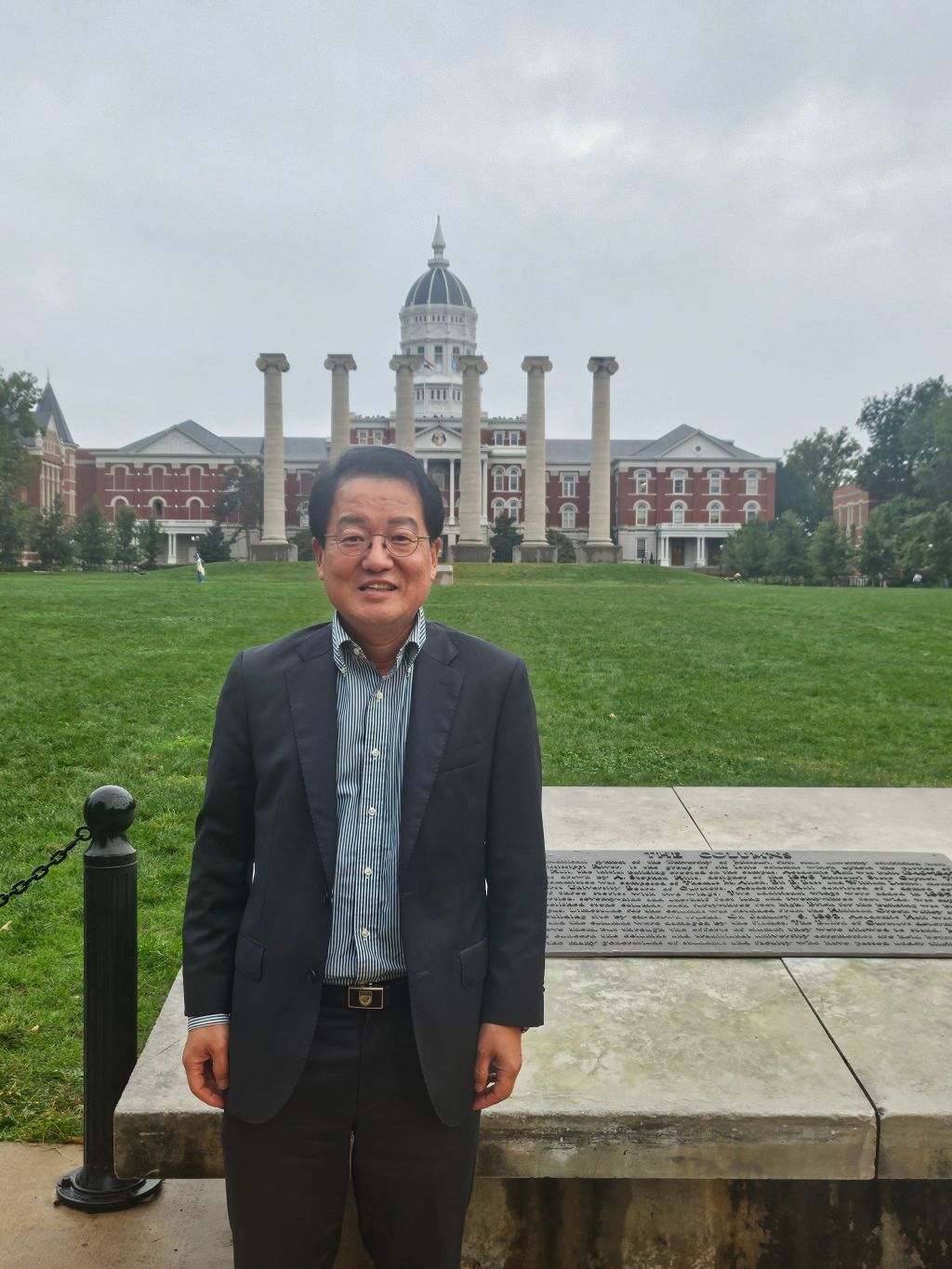
Nam Suk-woo, Sookmyung Women’s University distinguished professor, argued that if North Korea’s possession of nuclear weapons is accepted as a fait accompli by the international community, the effectiveness of existing sanctions against North Korea could vanish. He emphasized that South Korea must prepare a new response strategy, including the development of nuclear-powered submarines and the limited deployment of tactical nuclear weapons, through cooperation with the United States.
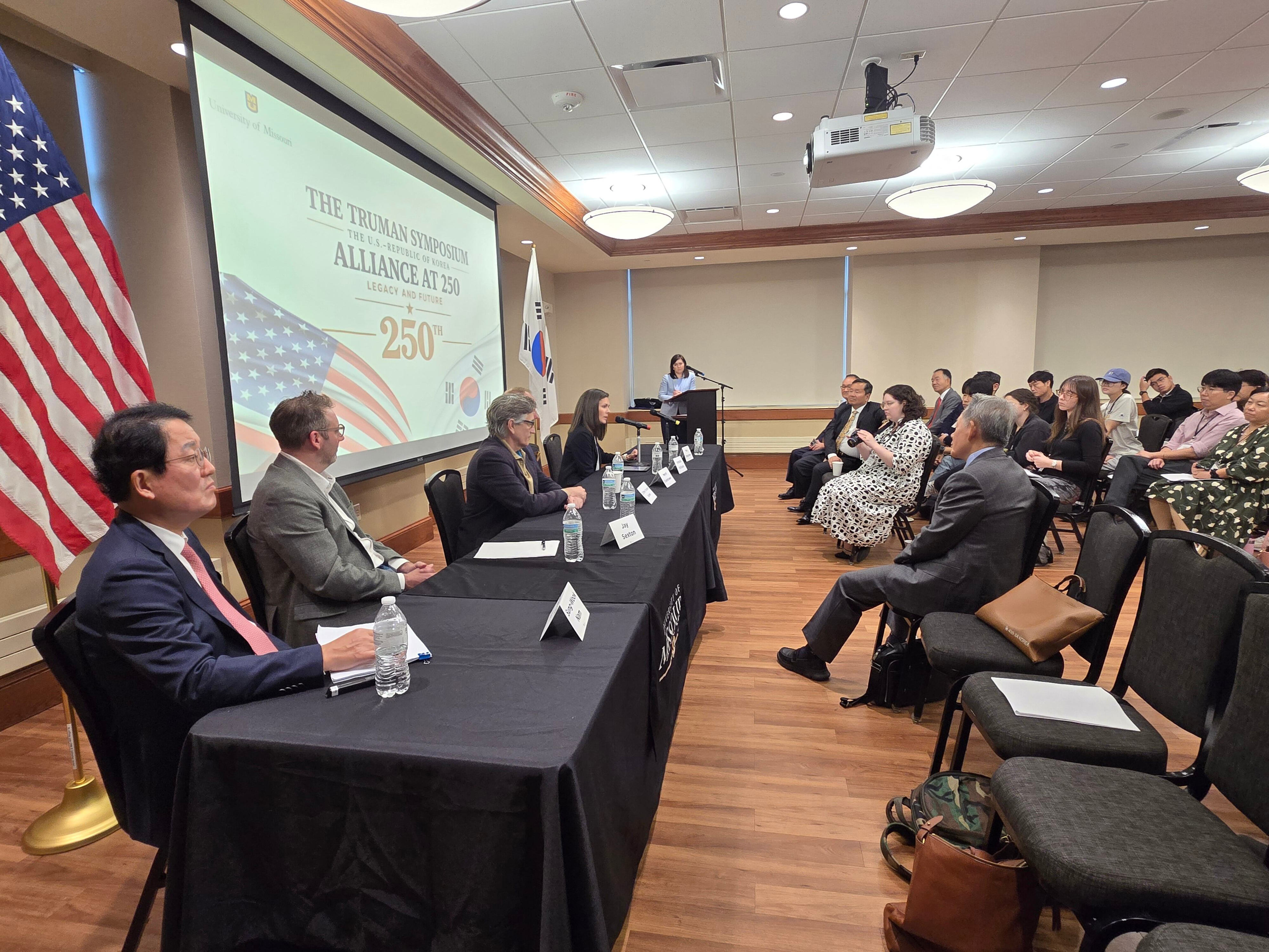
Professor Nam made this statement during a symposium on the “70-Year Legacy and Challenges of the ROK-U.S. Alliance” held at the University of Missouri in Columbia, Missouri, on the 15th (local time). Co-hosted by the University of Missouri’s Asia Center and the Korea Ocean Federation to commemorate the 250th anniversary of U.S. independence, the event was attended by descendants of former U.S. Presidents Harry S. Truman, who decided to intervene in the Korean War, and Dwight D. Eisenhower, who led the armistice negotiations.
Professor Nam estimated that North Korea already possesses approximately 57 nuclear weapons and diagnosed that the North’s nuclear threat has surpassed a critical threshold. He stated, “If the international community tolerates North Korea’s nuclear weapons possession, a ‘Plan B’ including new countermeasures will become inevitable. International sanctions against North Korea will also become meaningless.”
He particularly expressed concern that if the international order shifts toward officially recognizing North Korea’s nuclear status, the Nuclear Non-Proliferation Treaty (NPT) regime could weaken, triggering a chain reaction that stimulates nuclear development by other countries such as Iran and Saudi Arabia.
Professor Nam categorized South Korea’s response into “Plan A” and “Plan B.” Plan A involves strengthening the credibility of the U.S. nuclear umbrella and extended deterrence commitments based on the ROK-U.S. alliance. Plan B entails combining South Korea’s shipbuilding and defense industry capabilities with U.S. nuclear technology to secure additional strategic deterrence.
He stated, “South Korea should pursue a phased strategy to strengthen strategic deterrence, including the development of nuclear-powered submarines and the limited deployment of low-yield tactical nuclear weapons through close cooperation with the United States.” Given significant constraints on South Korea’s independent nuclear weapons development, he argued that both strategies should be pursued within the framework of the ROK-U.S. alliance.
Professor Nam also called for a cautious approach to the transfer of wartime operational control (OPCON). He pointed out that even if formal conditions for OPCON transfer are met, the practical effectiveness could be limited without independent nuclear deterrence against North Korea’s nuclear weapons. He added that hastily transferring OPCON under the pretext of self-reliant defense would not benefit South Korea’s security interests or the long-term stability of the ROK-U.S. alliance.
He also addressed the issue of “strategic flexibility” for U.S. forces in South Korea, a point of contention between the two countries. While the U.S. seeks to expand the role of U.S. troops in South Korea to counterbalance China and respond to contingencies in the Taiwan Strait, South Korea maintains that the primary mission of U.S. forces should remain deterrence against North Korea.
Professor Nam assessed that the difference in strategic priorities has not been fully resolved. However, he emphasized close policy coordination between the two countries, stating that in the context of deepening military cooperation between North Korea and China, a simple division of roles—South Korea focusing solely on North Korea and the U.S. on Taiwan—would not effectively address security threats in Northeast Asia.
In the economic sector, he proposed expanding cooperation centered on the shipbuilding industry. Citing Hanwha Ocean’s acquisition and investment in the U.S. Philly Shipyard and HD Hyundai’s cooperation with U.S. Serverse, he evaluated the shipbuilding industry as a representative example of ROK-U.S. economic and security collaboration.
Noting that President Donald Trump expressed support for South Korea’s pursuit of nuclear-powered submarines during last year’s summit, he urged the swift revision of the ROK-U.S. nuclear cooperation agreement and follow-up technical discussions on submarine projects to materialize related agreements.
Professor Nam stressed that the role of the ROK-U.S. alliance must also evolve amid intensifying U.S.-China strategic competition and North Korea’s growing nuclear capabilities. He stated, “Viewing the ROK-U.S. alliance today solely through the lens of 1953 would inevitably distort understanding of the alliance’s reality. The future vision of the ROK-U.S. alliance should evolve from a traditional military treaty to a global comprehensive strategic alliance.”
The event was attended by Clifton Truman Daniel, grandson of former U.S. President Harry S. Truman, who decided to intervene in the Korean War, and Merill Eisenhower, great-grandson of former U.S. President Dwight D. Eisenhower, who led the armistice negotiations. Daniel recalled, “My grandfather felt deep pain over the sacrifice of countless young Americans in the Korean War but believed his decision to intervene was correct.” He also shared that his son worked as an English teacher in Mungyeong, North Gyeongsang Province, for two years, expressing pride in South Korea’s transformation from war ruins to an economic powerhouse.
Merill Eisenhower evaluated, “The two presidents, despite differing political stances, shared a common belief in defending Korea’s freedom and stability. Truman’s decision to intervene and Eisenhower’s efforts to achieve an armistice each contributed to peace on the Korean Peninsula.” Amanda Williams, director of the MacArthur Memorial, emphasized, “Rather than highlighting only the political conflict between President Truman and General MacArthur, we should evaluate the historical contributions and limitations of both figures in a balanced manner.”



Leave a Reply