
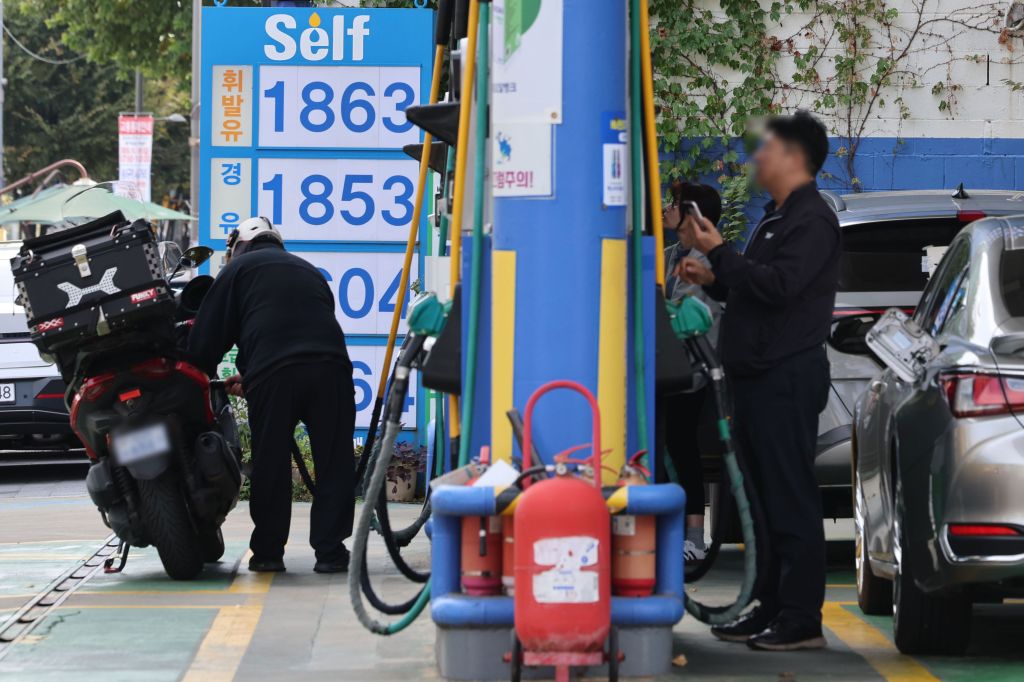
As international oil price volatility surged following the outbreak of the Middle East war earlier this year, the South Korean government has implemented measures such as fuel tax reductions and petroleum price caps. Against this backdrop, the International Monetary Fund (IMF) released an analysis concluding that “targeted cash support for vulnerable groups is more effective than price controls.” This is because price control policies could exacerbate government debt and allow high-income earners to capture most of the benefits.
According to the IMF’s “October World Economic Outlook” report released on the 19th, advanced economies responding to energy price spikes with universal policy tools—such as “consumer subsidies (e.g., fuel tax reductions)” and “producer subsidies (e.g., support for refiners)”—would see their government debt-to-GDP ratios increase by 0.41 percentage points and 1.35 percentage points, respectively. These increases are 5 times and 15 times higher than the 0.09 percentage points rise observed under targeted support for vulnerable groups. The IMF stated, “While subsidies may temporarily stabilize prices, they ultimately weaken welfare for vulnerable groups by increasing national debt burdens.”
The concentration of benefits among high-income earners was also highlighted as a problem. High-income groups, who consume more energy, were found to receive a significant portion of the benefits. The IMF’s analysis of 18 European countries’ responses to inflation caused by the Russia-Ukraine war revealed that for every 1 euro (100 cents) spent on gasoline price suppression policies, the top 20% income bracket received 40 cents in benefits, while the bottom 20% received less than 10 cents.
The IMF also raised concerns about the unintended consequences of universal price controls, such as reduced incentives for voluntary energy conservation. In a free market, high prices naturally encourage consumers to reduce demand, restoring balance. However, government subsidies or price controls diminish this demand reduction. The IMF added, “Once introduced, subsidies are politically difficult to repeal, potentially worsening fiscal burdens and price distortions.”





Leave a Reply