
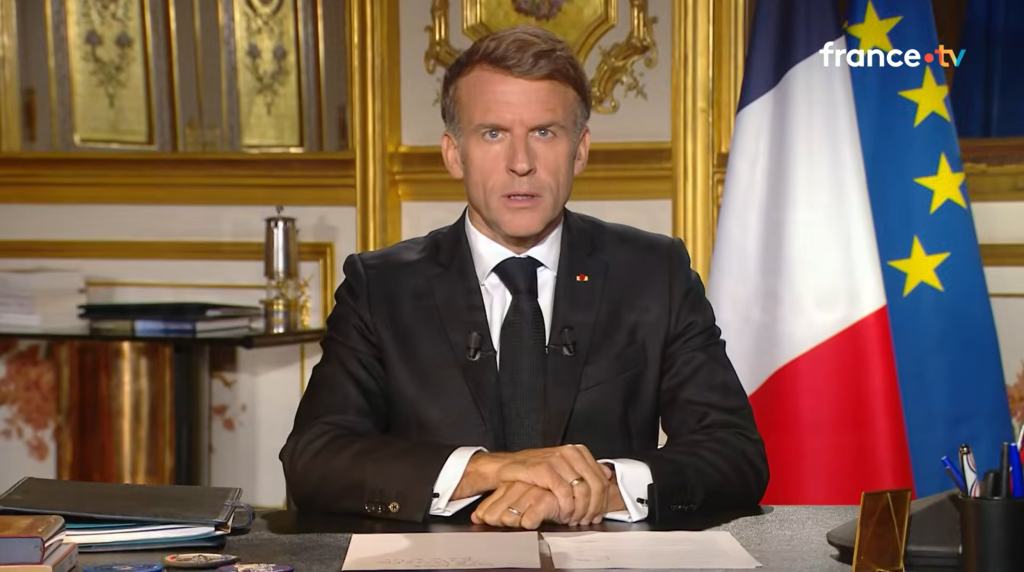
French President Emmanuel Macron said on October 18 regarding the increasingly violent protests and the looting and arson that occurred during them, “I feel anger and shame.” In his national address that day, Macron presented measures such as granting local governments the authority to ban specific gatherings, stating, “Nothing can justify, explain, or be forgiven for any reason.” However, Macron’s remarks became the subject of public ridicule, and his approval rating dropped to the low 20% range.
Macron, who emerged like a comet as an “icon of reform,” now faces a political downfall as protests have led to a government paralysis. In 2017, Macron, shouting “Neither left nor right, but progress,” was elected as France’s youngest president at the age of 39. Just one year after founding the centrist party “La République En Marche!” (LREM), he overthrew the long-standing bipartisan system divided between conservatives and progressives. At the time, Europe was reeling from the Brexit decision, and the U.S. was led by U.S. President Donald Trump, who championed “America First.” French daily Le Monde and others described Macron’s election as a “miraculous revival of European centrism,” a “victory for European integration,” and a “brake on rampant populism.”
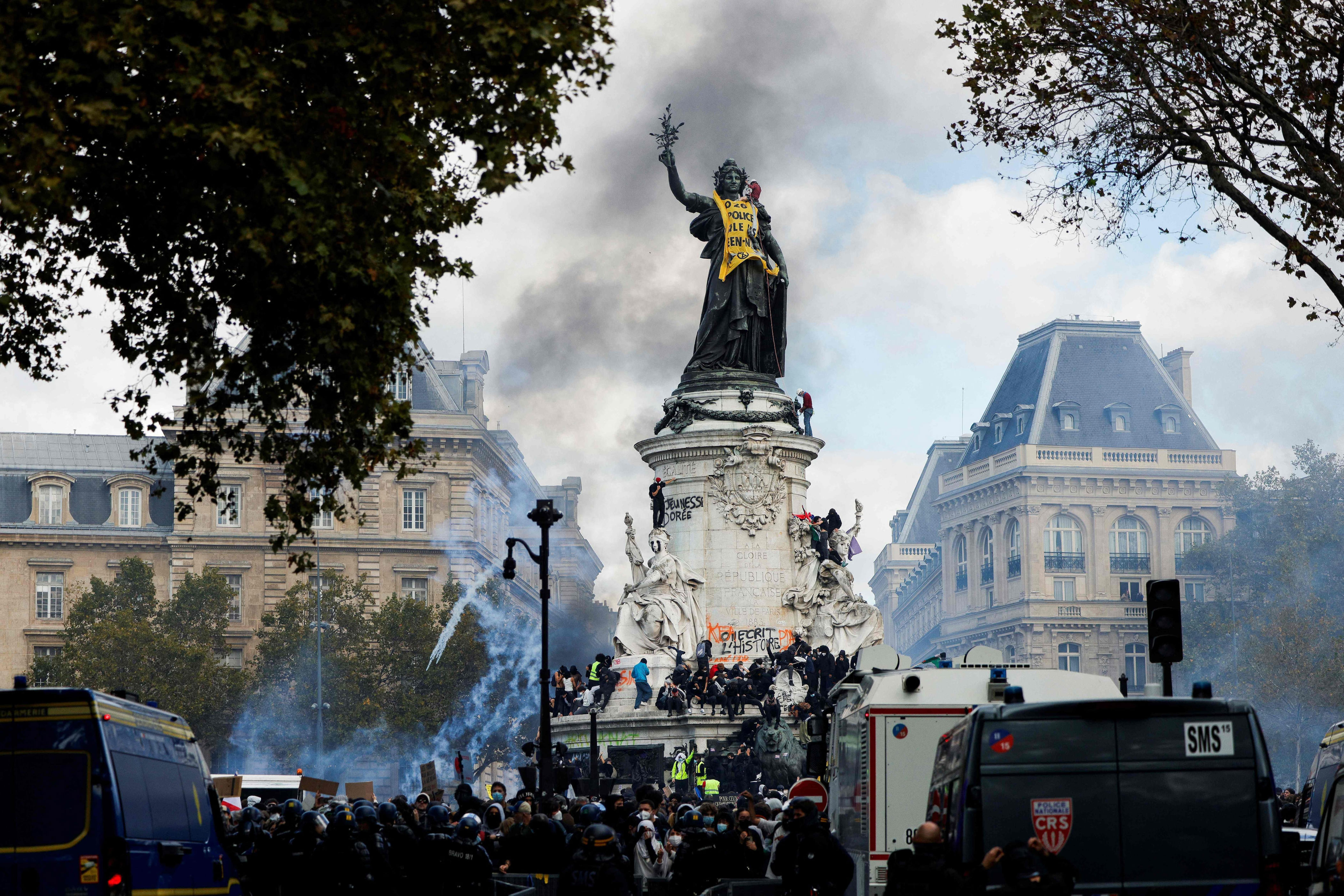
Macron aimed to overhaul France’s chronic high-cost, low-efficiency structure and shift toward pro-business, market-oriented policies. His first political test was the reform of the wealth tax and fuel tax hikes. The Macron government abruptly abolished the wealth tax, which was imposed on individuals with annual assets exceeding 1.3 million euros (approximately 1.7 billion Korean won), and replaced it with a reduced real estate wealth tax (IFI) targeting only property assets. To offset the lost tax revenue from abolishing the wealth tax and under the pretext of transitioning to green energy, fuel taxes were raised by 15–23% in the second half of 2018.
However, the two policies pushed by Macron sparked fierce backlash from the working class. Angry citizens, donning yellow vests, held large-scale protests on Paris’ Champs-Élysées, denouncing, “Taxes for the rich were cut, while taxes for the poor were raised.” Macron was labeled the “president of the rich,” and his approval rating, which had exceeded 65% immediately after his inauguration, plummeted to the low 20% range. Reuters evaluated the incident as a “fatal surrender by Macron” that exposed a severe class divide between the working class and the elite politician.
In 2020, Macron attempted to unify France’s fragmented pension system but faced the longest public transportation strikes in French history since 1995, led by railway workers, Paris Transit Authority employees, teachers, and medical staff. With the COVID-19 pandemic erupting, Macron was forced to indefinitely postpone the reform. Although Macron won the 2022 presidential election against Marine Le Pen, he failed to secure an absolute majority in the National Assembly two months later, losing momentum in his leadership.
The following year’s pension reform proved decisive. The reform aimed to raise the retirement age from 62 to 64, but despite opposition from over 70% of the public, Macron’s government bypassed parliamentary voting to pass the bill. Over 1 million protesters took to the streets, chanting “Macron is a dictator” and demanding the regime’s resignation.
Ultimately, in the 2024 European Parliament elections, Macron’s pro-government coalition’s vote share (14.6%) was less than half of Marine Le Pen’s far-right National Rally (RN) party’s share (31.4%). Immediately after the election, Macron dissolved the National Assembly and announced a snap election to break the political deadlock, but he failed to secure a majority, resulting in a “minority government, divided opposition, and three-way gridlock.” The New York Times criticized Macron’s decision to hold an early election as a “historic miscalculation that plunged France into extreme political uncertainty and government paralysis.”
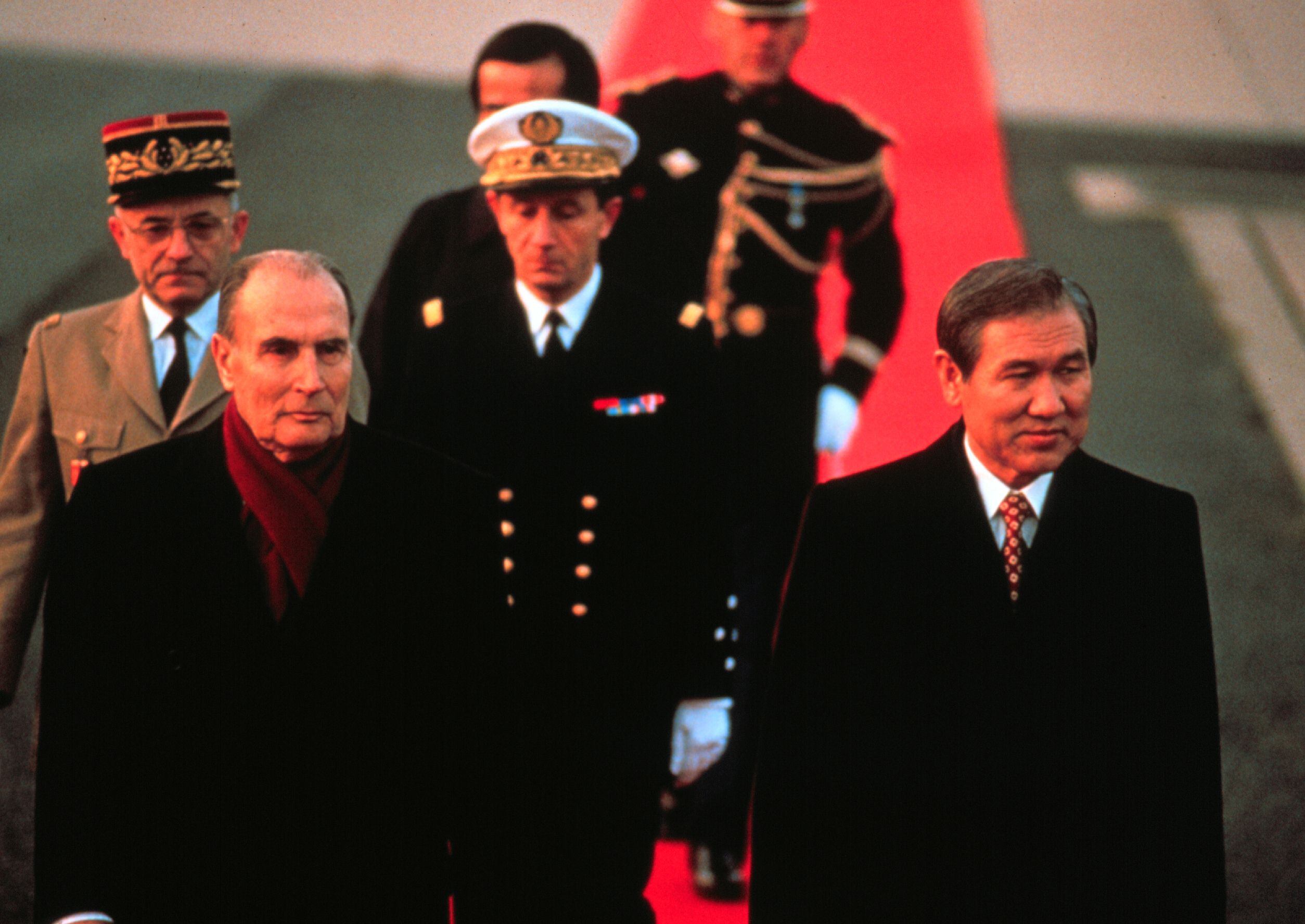
Analysis suggests Macron self-destructed by attempting to forcibly overhaul the “high-cost welfare state” established by former left-wing President François Mitterrand. Mitterrand, who ruled for 14 years from 1981, reduced the retirement age from 65 to 60, introduced a 39-hour workweek, and raised the minimum wage, ushering in an era of high welfare. During Mitterrand’s 14-year tenure, France’s social welfare expenditure as a percentage of GDP surged from 16% to 28%. However, this also led to chronic fiscal deficits and high unemployment. Foreign media, including the Financial Times (FT), analyzed that Macron’s downfall and the protests stemmed from his attempt to alter the welfare system expanded and entrenched by Mitterrand without consensus, thereby igniting public anger.




Leave a Reply