
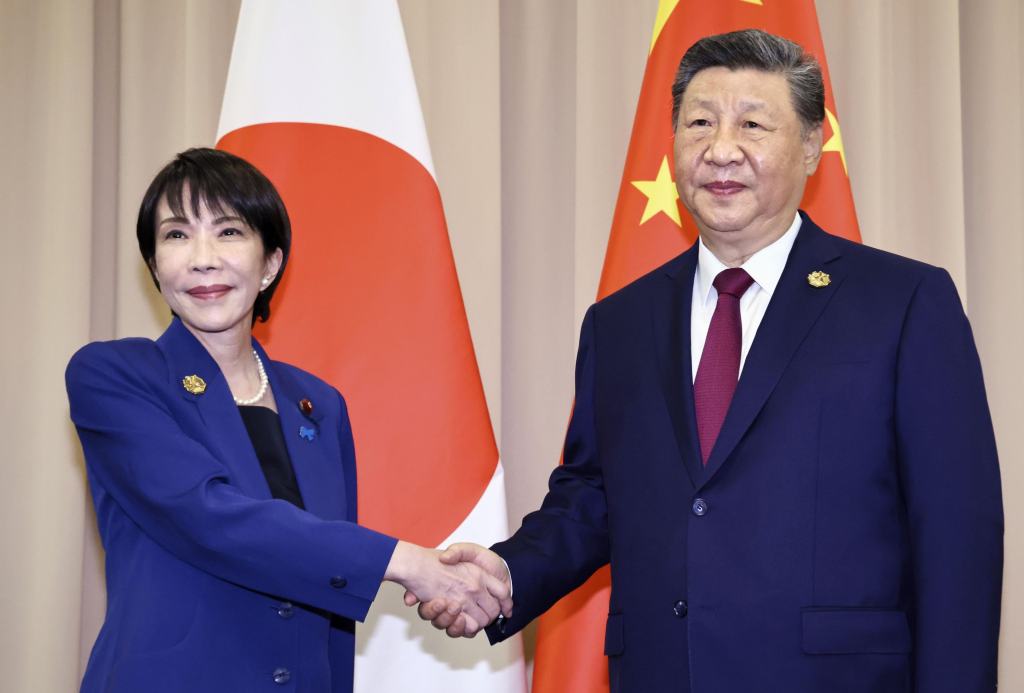
On the 8th, it emerged that Japanese Prime Minister Sanae Takaichi had sought to declare Xue Jian, China’s Consul General in Osaka, a “persona non grata” and expel him following a post X where he wrote, “That filthy neck that intruded on its own must be severed without hesitation.” The plan was delayed after China issued a warning of retaliatory action “twofold.”
Prime Minister Takaichi’s tensions with China began in November when she suggested potential military involvement should a Taiwan crisis arise. In response, Consul General Xue Jian posted on his X account: “That filthy neck that intruded on its own must be cut off without hesitation.”
As reported by the Yomiuri Shimbun on the 8th, around that time, Prime Minister Takaichi summoned Chief Cabinet Secretary Kihara and senior Foreign Ministry officials, directing them to inform China: “Please convey that we will designate him as a ‘persona non grata.’” She instructed that if he were not swiftly recalled, he would be expelled.
Masaaki Kanai, Director-General of the Asian and Oceanian Affairs Bureau at the Foreign Ministry, conveyed Japan’s consideration of expulsion to Liu Jinsong, then head of the Asian Department at China’s Ministry of Foreign Affairs, during a meeting in Beijing. Liu reportedly responded with a warning: “If you expel one person, we will expel two,” specifically naming Japanese consuls stationed in China.
Although Japan expected a reciprocal expulsion of one individual, Prime Minister Takaichi ultimately paused the expulsion after China threatened retaliation “in kind,” fearing escalation could further strain bilateral ties.
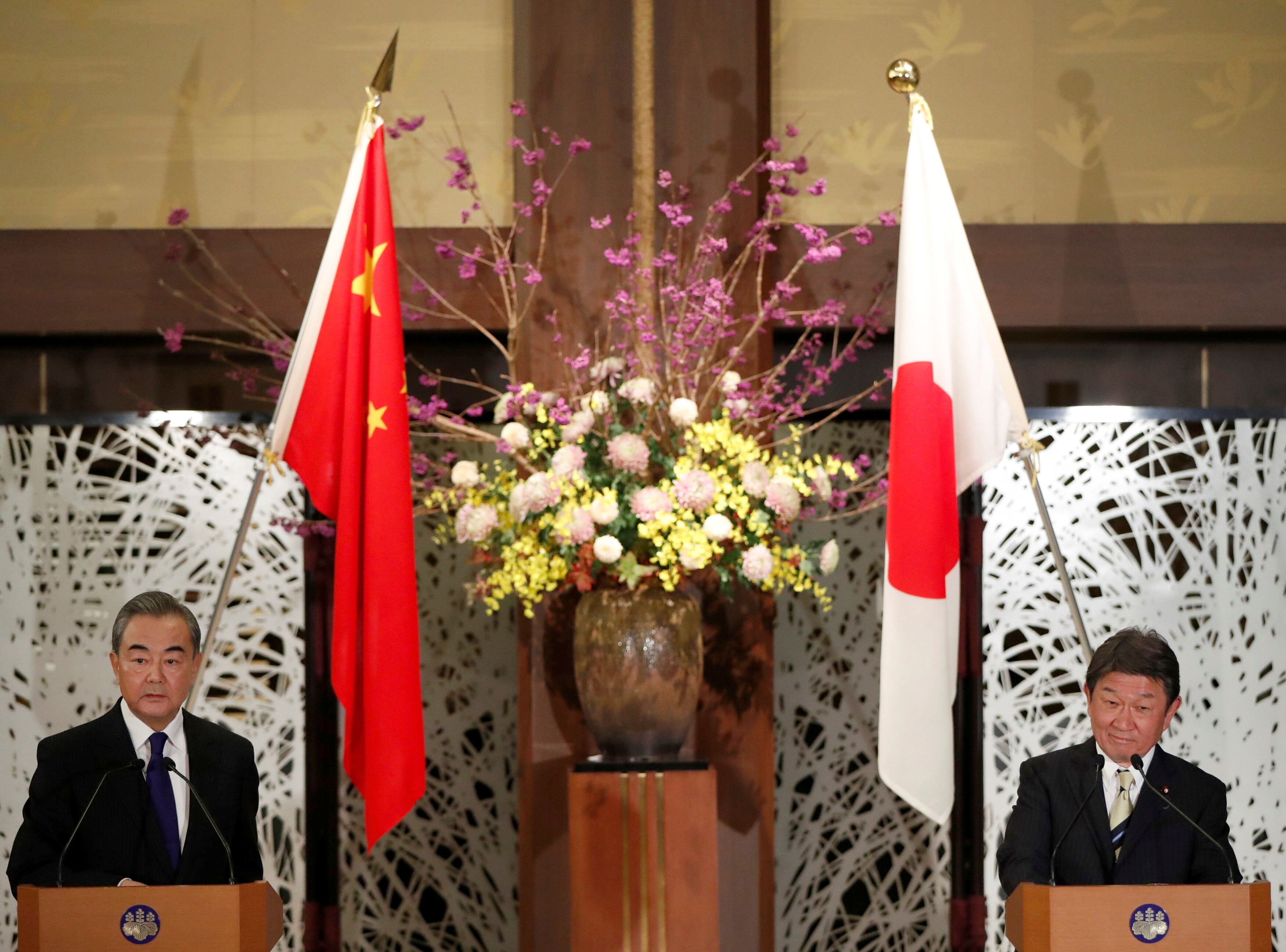
Since then, Japan has consistently pursued diplomatic engagement with China. In late July, Foreign Minister Toshimitsu Motegi reportedly attempted to arrange an informal encounter with Chinese Foreign Minister Wang Yi during an ASEAN-hosted foreign ministers’ meeting in Manila, Philippines.
In a corridor at a Manila conference venue, Motegi waited for Wang Yi’s arrival. After verifying Wang Yi’s schedule, he feigned a chance meeting and tried to initiate a brief conversation. When Wang Yi appeared, Motegi greeted him in Japanese, saying, “Long time no see.” Known for his fluency in Japanese from his previous role as ambassador to Japan, Wang Yi avoided eye contact and walked past. Motegi continued speaking while walking beside him, but Wang Yi remained silent.
At the time, the Japanese side stated, “We exchanged a brief greeting and discussed bilateral relations,” while the Chinese Ministry of Foreign Affairs denied any meeting, asserting, “No meeting was scheduled.” This episode epitomized Japan’s pursuit of dialogue and China’s refusal to engage.
Japan has tried multiple approaches to keep communication open, yet China remains firm in its position: no dialogue will occur unless Prime Minister Takaichi withdraws her comments.
In September, China permitted a visit by Takeshi Iwaya, former Foreign Minister and head of the Japan Intertrade Promotion Association—a private body—and held a meeting with him lasting more than an hour. This move was viewed as a signal that China is willing to engage with Japanese non-governmental groups, possibly to foster internal divisions within Japan.
At present, the sole official channel for communication between the two governments is a monthly meeting between Takehiro Funakoshi, Vice Minister of Foreign Affairs of Japan, and Wu Jianghao, Chinese Ambassador to Japan. Reports indicate that China continues to insist on a retraction during these talks.
Prime Minister Takaichi aims to reach out to Chinese President Xi Jinping on the sidelines of the APEC Leaders’ Meeting in Shenzhen, Guangdong Province, scheduled for mid-month. However, prospects for a formal summit are slim, with even a brief handshake seen as a possible spark for improvement, according to the Yomiuri Shimbun.
Meanwhile, subtle shifts are taking place inside China. Faced with economic challenges including sharp declines in consumption and rising youth unemployment, there is increasing demand for economic collaboration and investment from Japan. In late October, a joint economic forum was organized in Beijing by JETRO (Japan External Trade Organization) and a Chinese policy think tank. A Chinese organizer emphasized at the event, “China and Japan should enhance regional trade cooperation.”
These statements are interpreted as indicating China’s deeper interest in Japanese investment and economic partnership, especially as its domestic economy grapples with weak consumer demand and high youth joblessness.
During a September meeting in Beijing with former Foreign Minister Takeshi Iwaya, Chinese Vice Premier He Lifeng criticized Japan regarding the Taiwan issue but also recognized, “China and Japan are vital economic and trade partners.”




Leave a Reply