
China is showcasing a massive space-based aircraft carrier as a potential superweapon through Luanniao. Is this a glimpse into future space warfare — or merely science fiction?
The airborne aircraft carrier is bigger than any warship currently in service and heavier than a supertanker: China’s Luanniao aims to influence future combat — from space. However, experts view the superweapon as high-tech spectacle with a political statement.
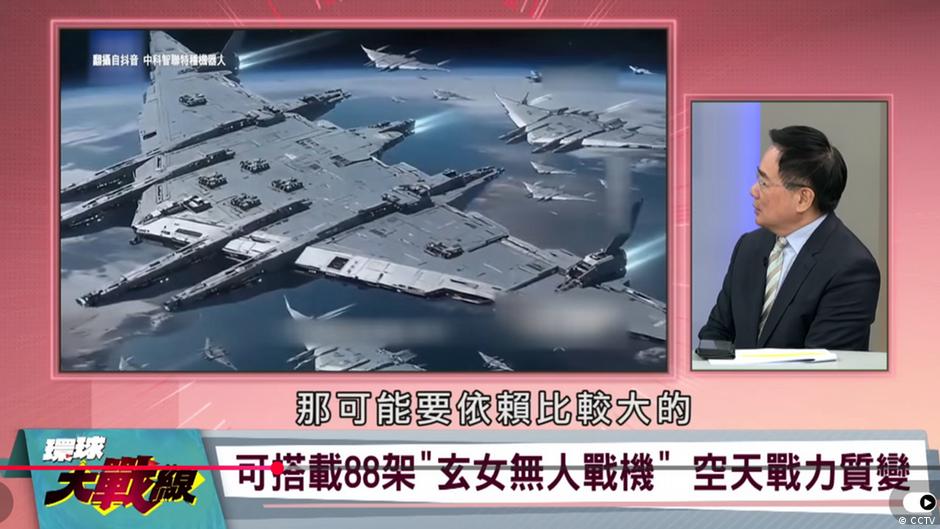
China is set to develop a combined air and space defense system referred to asNantianmen(“Heavenly Gate”). The main feature is the airborne carrier Luanniao, which is 242 meters (794 feet) long, has a wingspan of 684 meters, and is said to weigh up to 120,000 tons at takeoff — a massive structure. From its deck, unmanned space fighters, known as Xuannu,are set to deploy hypersonic missiles and attack objectives within the atmosphere and in space.
“China has consistently ranked second in space exploration — following the United States, yet significantly ahead of Europe,” stated space security expert Juliana Süß from the German Institute for International and Security Affairs (SWP) in an interview with .
She stated that Beijing has allocated “massive amounts of funding,” emphasizing that space serves a significant status function for the leadership and is “crucial for military capabilities.”
The proposed space carrier, based on weight, would exceed the heaviest existing aircraft carriers by approximately 20%. Although it would be shorter in length, its wingspan would be considerably wider than that of a typical naval aircraft carrier. The largest aircraft carrier currently in operation, the USS Gerald R. Ford, has a length of about 337 meters and a width of 78 meters, with a total weight of around 100,000 tons including fuel, personnel, and equipment.
A short report on China’s military program “Lijian” broadcasted by the state-run television network CCTV shows the announced aircraft carrier as a highly realistic 3D model floating above the Earth, emitting space jets and using weapons in outer space. Clips from the program are being shared online, including a video on YouTube (with the option to turn on English subtitles).
Skeptics question the feasibility of the massive space vessel
From a technical perspective, the plan exceeds what modern rockets are capable of launching into orbit. Even if assembling modules in space were theoretically feasible, numerous challenges still exist. These include power generation, thrust, temperature control, shielding against space debris—and most importantly, the enormous expense. A 120,000-ton carrier in space would be entirely beyond the practical carrying capacity of existing launch systems likeSpaceX’s Starship.
A German diplomat and space expert named Heinrich Kreft stated that, looking back from today’s viewpoint, the project is “entirely unrealistic” — however, he still considers it as part of a broader long-term path.
“Numerous concepts that were once considered science fiction are now reality,” Kreft stated.
This signifies China entering a competition driven by individuals such as Elon Musk or Jeff Bezos, who have ambitious plans for lunar and Martian settlement.
A powerful weapon designed to convey a strategic message
Studies from the United States tend to view Luanniao more as a strategic message rather than a detailed construction plan.The National Interestran an article with the title: “Beijing Wants You to Think It’s Developing Flying Aircraft Carriers”
The vision, as noted by author Brandon J. Weichert, is part of a “broader propaganda effort” aimed at unsettling the West and consuming time and resources.
For space analyst Kreft, the statement mirrors a strategically inserted message within the power struggles involving the United States — set against the background of the Taiwan dispute.
“From my perspective, this seems like China has released something into the world with Taiwan clearly in focus, aiming to make a statement,” he said.
He highlights a set of impressive Chinese “superweapon” declarations — including an alleged ultimate submarine-detection device and space-based technologies — that Western specialists often label as “unrealistic,” yet are regarded as components of a strategy meant to establish a deterrent.
China’s subsequent move in the space competition against the United States
A SWP expert named Süß situates the project within a security policy framework. She perceives these efforts “more from a deterrence perspective” — the goal, she explains, is “to show strength and display power in various areas.”
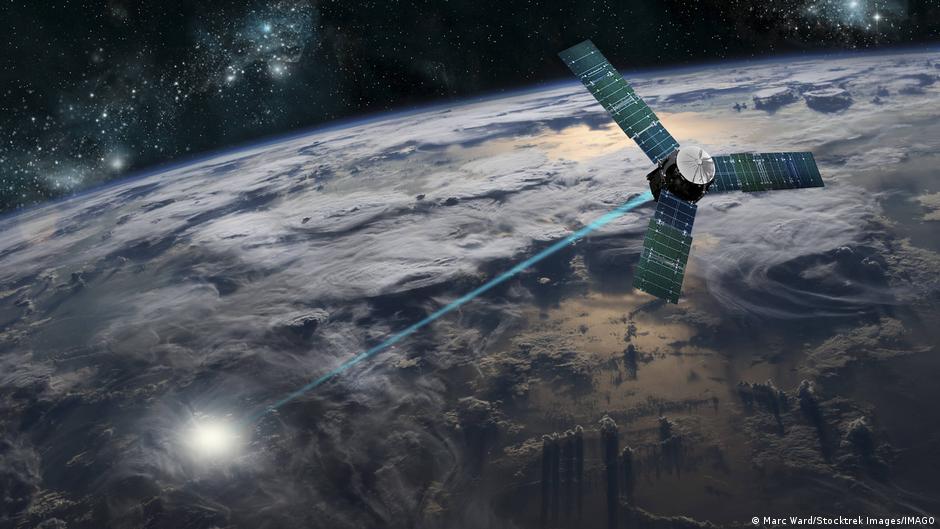
At the same time, she views the announcement as China’s response to US space-based missile defense initiatives. The“Golden Dome”suggested by Trump aims to safeguard the United States from various airborne dangers via a complex system of land- and sea-based interception missiles, radar technologies, and potentially space-based interceptors — a venture that is seen as highly technically challenging and strategically complicated.
According to Süß, the most important factor for effective deterrence is credibility.
How feasible this large and ambitious project, the space carrier, truly is remains a separate issue.
It is exactly within this ambiguous area that Luanniao seeks to act — a significant danger that holds political value even before any physical components are put together.
Kreft labels the initiative as “nonsense, psychological manipulation,” while simultaneously cautioning against being misled by it.
He states that China is engaged in “all possible future projects and weapon systems,” such as in the area of lasers, where Beijing “seems to be more advanced than others.”
This piece was first released in German.
Author: Alexander Freund






Leave a Reply