
Eight companies out of ten that have implemented artificial intelligence (AI) services are utilizing three or more distinct AI models, as per a survey. The findings indicate that the enterprise AI market has evolved into an oligopoly controlled by a small number of firms rather than being led by one dominant player.
On the 1st (local time), the U.S. venture capital company Anderson Horowitz (a16z) conducted its “3rd Annual Chief Information Officer (CIO) Survey” by interviewing 100 C-level and vice president-level executives from Fortune 2,000 companies. The findings revealed that 81% of organizations were utilizing three or more AI model series at the same time.
This was seen as companies trying to reduce their reliance on particular AI firms or solutions. Businesses often utilized various models for different functions. OpenAI was commonly applied for chatbots, knowledge management, and client service, whereas Anthropic was typically used for programming and data analysis. This indicates a pattern of “specialization,” where each AI model is given tasks it excels at.
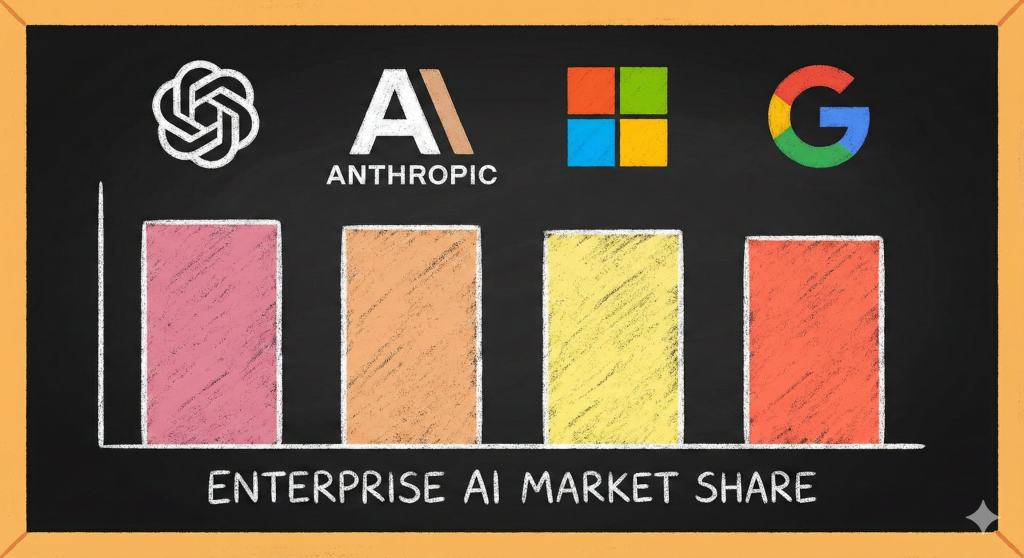
Consequently, a16z concluded that the enterprise AI market has evolved into an oligopoly instead of a “winner-takes-all” scenario. Specifically, 78% of the surveyed companies were implementing OpenAI in their operations, while 44% were utilizing Anthropic. When adding the companies that were testing Anthropic (19%), the overall figure amounted to 63%. Anthropic’s market share increased by 25 percentage points since last May, indicating the most significant growth. Although the usage of Google Gemini also rose, it performed poorly in the coding field.
Microsoft showcased significant control within the enterprise application market. MS’s 365 Copilot and GitHub Copilot were at the top in both enterprise chatbots and enterprise coding. 65% of businesses stated they “tend to stick with current providers when feasible,” highlighting a situation of vendor dependency. Fears that Microsoft, previously the leading force in software, would become less competitive as AI develops, have not come true.
Corporate spending on AI has been rising. As per the survey, the average investment in generative AI by companies increased from 4.5 million dollars over two years to 7 million dollars, and is expected to hit around 11.6 million dollars (a 65% rise) this year.
However, the real return on investment (ROI) that companies experience has not lived up to expectations. a16z mentioned, “Companies are still in the process of learning how to properly incorporate AI into their daily operations.” A representative from a startup based in San Francisco noted, “Companies often rush to adopt AI tools out of fear of being left behind, which leads to poor productivity.”






Leave a Reply