

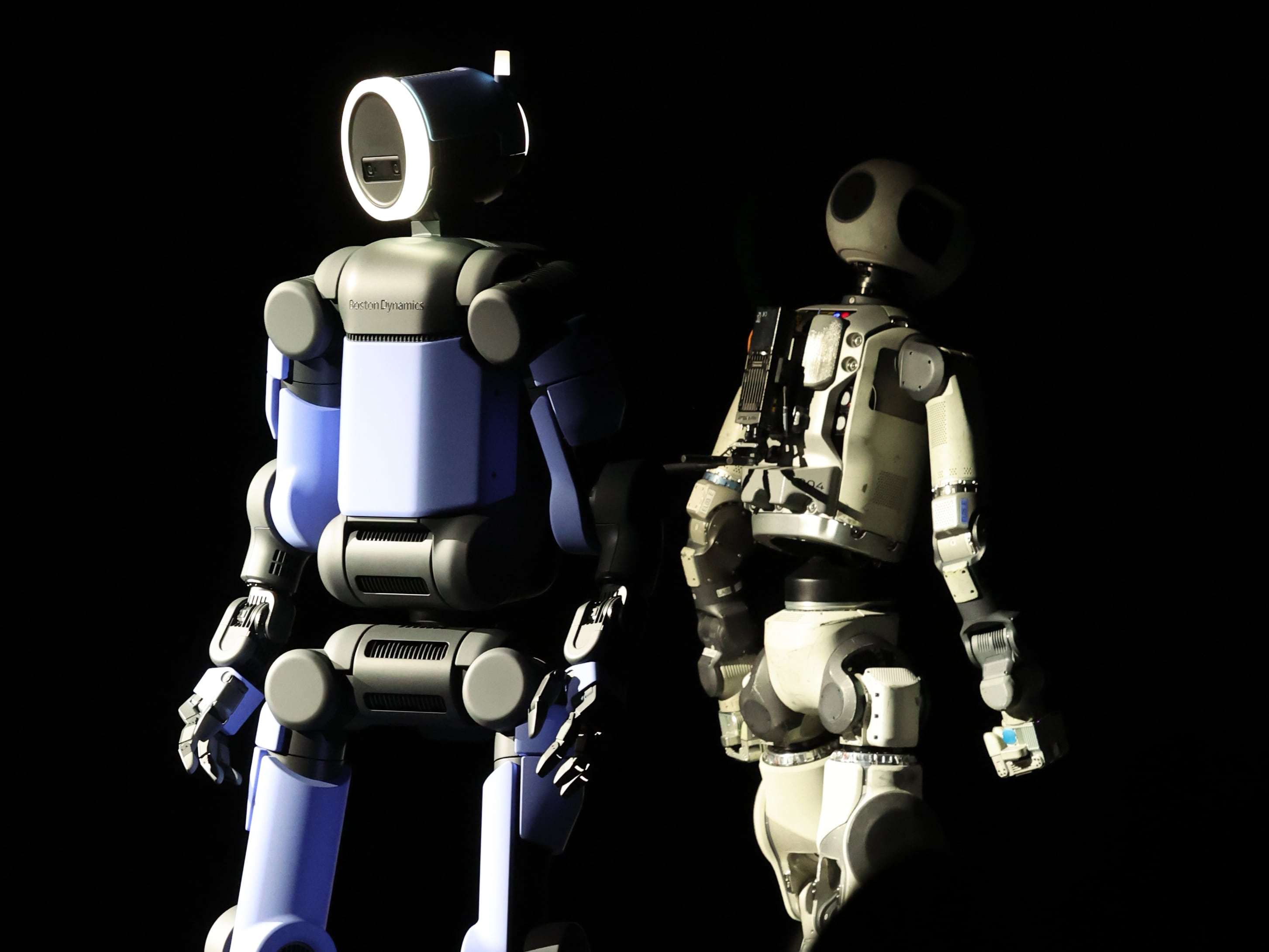
In Greek mythology, Atlas is a god who silently bears the immense sky on his two shoulders. The name “Atlas,” assigned to the humanoid robot introduced by Hyundai Motor Group at CES 2026 in Las Vegas last month, symbolizes the company’s determination to support future industries and human life.
However, Hyundai’s Atlas now faces the challenge of “labor-management conflict.” When Hyundai revealed plans to introduce Atlas beginning in 2028 at its U.S. electric vehicle facility, the union raised concerns, asserting, “No robot can be implemented without a labor-management agreement.” This is due to worries that jobs might be replaced by automation. The worldwide trend of increasing robot usage in manufacturing facilities is clear. National and societal measures are required to manage shifts in the job market caused by automation. Nevertheless, no company can overlook the tough reality that innovation is crucial for staying competitive in the global market.
Concerning the Hyundai union’s resistance to the use of robots, President Lee Jae Myung stated, “One cannot escape the tides of history,” and added, “If this is the future, we need to get ready and adjust ahead of time.” This is a reasonable perspective. Some were surprised that a president who is usually supportive of workers would criticize the union. The Korean Confederation of Trade Unions expressed disappointment, saying, “We are disappointed that President Lee favors the management’s viewpoint.” The problem is the inconsistency between his statements and the government’s real policy direction. Labor policies currently concentrate more on limiting corporate activities rather than promoting reforms within the labor sector.
The Hyundai union’s statement, “If you want to see the end of labor-management relations, we will show it to you,” goes beyond being just a warning. The yellow envelope bill (Trade Union and Labor Relations Adjustment Act, Articles 2 and 3 Amendment), which is scheduled to come into effect in March, defines “business decisions that affect working conditions” as issues for labor disputes. The Hyundai union claims that even if robot implementation focuses on overseas facilities, it may still have an impact on domestic employment. If a company’s strategic choices to adapt to the fast-changing global business landscape are considered “affecting working conditions,” they could be subject to disputes. Even if a company’s performance improves, the union might legally strike if it perceives the results as unfavorable. While U.S. Tesla and Chinese firms expand the role of robots in their factories, Korean companies face the risk of falling behind globally due to the challenges posed by the yellow envelope bill. Former People Power Party Representative Yoon Hee-sook criticized this on Facebook, stating, “Issuing a permit for robot-destroying actions like the yellow envelope bill while preparing for a robotized future is a grotesque contradiction,” and added, “Without follow-up actions such as abolishing the yellow envelope bill, President Lee’s ‘if this is the future’ comment is just empty rhetoric with no real meaning.”
For President Lee’s statements to the Hyundai union to hold real significance, tangible solutions must be implemented. It is contradictory to promote readiness for the future while moving backward on institutional environments that should foster innovation. While compelling companies to confront strikes over strategic decisions crucial to their survival, the government enhances legal advantages for unions to resist change and maintain entrenched interests. Now, more meaningful and forward-looking labor reform initiatives need to be addressed within a wider context. It is critical to objectively evaluate the effect of new technologies on jobs and establish a refined social consensus model to avoid unnecessary conflicts. Merely speaking about innovation is hypocrisy—it only obstructs progress.






Leave a Reply