
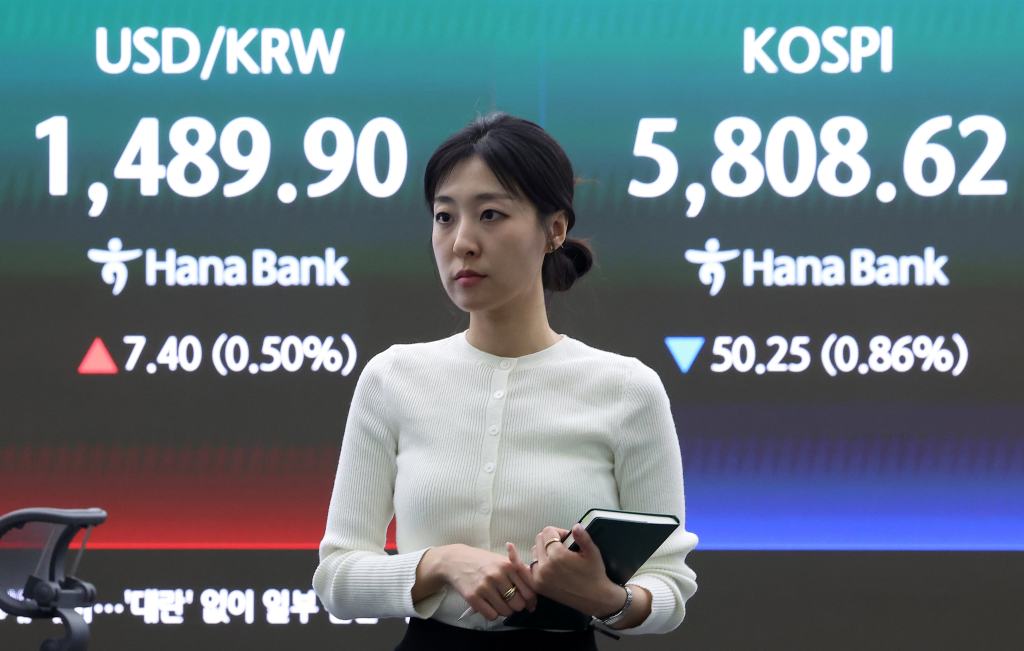
Amid a major drop in both domestic and global stock markets last month caused by the conflict between the U.S., Israel, and Iran, individuals in their 20s were discovered to have managed the decline most effectively. In contrast, those aged 70 and older experienced the greatest losses. Previously, older investors had outperformed younger ones by maintaining high-quality domestic stocks, but the war changed this pattern. Moreover, female investors, who traded less often during the conflict (-8.61%), performed better than male investors (-9.02%). The conflict therefore led to significant changes in investment returns based on age and gender.
◇Divergent Approaches During Crises… Younger Investors Protected Their Losses by Selling High-Risk Stocks
Based on data collected by Mirae Asset Securities regarding returns, turnover rates, and top net-buy/sell stocks for different age groups over the last month, the average loss among all investors was -8.81%. However, individuals in their 20s experienced a loss of -6.24%, which was the lowest among all age groups. Investors in their 30s (-6.38%) and 40s (-8.96%) also performed better than the average. On the other hand, those aged 70 and above faced the biggest drop at -10.43%. Just two months earlier, in January and February, the 70+ group had achieved the highest returns of 13.22% and 9.46%, respectively, significantly outperforming those in their 20s (9.1%, 3.77%) and 30s (6.73%, 3.76%). The situation changed completely in the bear market.
This shift in returns across generations is linked to variations in investment strategies during the crisis. Although all age groups hurried to purchase domestic blue-chip stocks such as Samsung Electronics, SK Hynix, and Hyundai Motor following the market decline, their approaches to selling differed. Investors over 60 years old had U.S. AI and major technology companies like NVIDIA (-1.57%), Alphabet (-7.89%), and Palantir Tech (6.56%) on their net-sell lists. Experts believe that fear-driven selling or early profit-taking on previously strong international stocks, due to geopolitical concerns, caused this trend.

Investors in their 20s and 30s, on the other hand, concentrated on selling off significantly declined thematic stocks such as Rainbow Robotics (-39.72%), Fadu (-22.40%), and Bloom Energy (-12.90%). By focusing on disposing of volatile assets while keeping long-term growth-focused U.S. major tech stocks, younger investors successfully reduced their losses.
◇Regular Trading Increases Losses During Downturns… Women’s Caution Proved Beneficial
Within the same age group, the rate of trades (turnover rate) affected returns. The average turnover rate last month was 45.62%, which is higher than January (43%) and February (35%). Investors were more active in trading during the war.
Male turnover rate (50.71%) was higher than female’s (34.89%) by 15 percentage points. However, women achieved better returns (-8.61%) compared to men (-9.02%). This indicates that women, who avoided impulsive trading, managed their assets more efficiently than men, who tried to recoup losses through constant trading.

Notably, women in their 20s, who experienced the least decline (-6.04%) among all groups, had a turnover rate of only 28.82%. On the other hand, men in their 30s, who had the highest turnover rate at 70.58%, performed worse with a -6.66% return. This is different from the upward trend seen in January, when active trading helped both men (10.43%) and women (10.04%). A representative from Mirae Asset Securities said, “During a steep decline, panic selling or speculative short-term trading often increases losses. These figures show how patience and a cautious approach can help safeguard investments during times of extreme uncertainty.”




 jasdooit
Leave a comment