
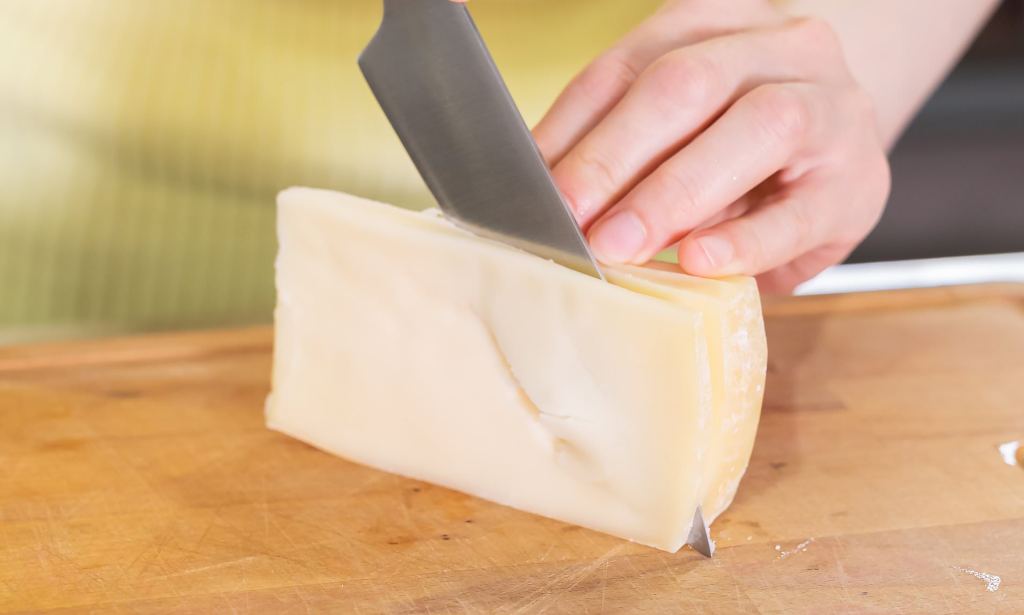
Cheese that is suspected to be linked to an E. coli outbreak this year has tested positive for the bacteria.
Last month, the FDA and CDClaunched an investigation into Raw Farm, LLC to determine if there is a connection to a multi-state E. coli outbreak associated with its raw dairy products.
The items were associated with nine cases of illness and three hospitalizations, including a patient who experienced a severe kidney issue.
Raw Farm rejected the agencies’ assertions that its products were responsible for the infections and stated that samples it tested showed no presence of the bacteria.
This week, the CDC and FDA discovered that a sample of cheddar cheese from Raw Farm was positive for E. coli O157:H7.
However, the E. coli strain differs from that found in the ill individuals during this outbreak. Rather, it is connected to the strain affecting patients in a distinct outbreak in 2025, which has since concluded.
Furthermore, the agencies stated that the cheese which tested positive this year was not released for distribution.
Currently, the CDC and FDA are looking into whether individuals affected by the 2025 outbreak had eaten any Raw Farm products.
The E.coli O157:H7 strain was associated with a significant outbreakMcDonald’s recallin 2024, which was associated with onions used in Quarter Pounders.
In total, the burgers were associated with 104 cases of illness, 34 hospital admissions, and one fatality.
The Food and Drug Administration and the Centers for Disease Control first sounded the warning about the Raw Farm-related outbreak on March 15, 2026.
The original statement cautioned that two individuals had been hospitalized and five others became ill following consumption of Raw Farm products.
Health authorities recommended a product recall, but Raw Farm rejected the appeal, stating in a statement that it “100 percent disagreed” that its items were responsible for the outbreak.
On March 26, health authorities reported two more cases of illness and one new hospitalization linked to the outbreak, and once more urged a product recall.
However, Raw Farm rejected their request once more and stated in a statement that all tests conducted on its products were negative for E. coli.
It’s possible for all the tests to come back negative while the product still led to an outbreak if health authorities overlooked testing the contaminated batch.
Out of seven patients interviewed by health authorities, five mentioned they had eaten Raw Farm cheddar cheese and two indicated they had drunk raw milk.
On April 2, almost three weeks following the original request, Raw Farm eventually decided to recall its cheddar cheeses associated with the outbreak.
In a statement, it mentioned that it is recalling the products ‘under protest’ and ‘disputed’ the connection between its products and the outbreak.
It stated that ‘no harmful organisms’ were detected in its products as of that date.
Currently, in the most recent update, health authorities reported that among 19 cheese samples examined, one showed a positive result for E. coli.
Since the strain is associated with earlier illnesses connected to raw milk, they are now examining additional items from Raw Farm for possible contamination.
Individuals affected during this outbreak are located in three states: California, Texas, and Florida.
One person has developed hemolytic uremic syndrome, a severe kidney disorder that may lead to long-term issues, while more than half are below the age of five.
The unprocessed cheeses were available at Sprouts, H-E-B, and various other supermarkets.
Raw Farm has currently withdrawn its block and shredded cheddar cheeses from the market.
These are: Raw FarmLightly Salted Cheddar Block, available in 8oz, 16oz, or 80oz sizes, along with its Lightly Salted Cheddar Shred in 8oz, its Bag of Original Cheddar Shred in 80oz, and its Jalapeno Cheddar Block offered in 8oz or 16oz.
The dairy products are labeled with expiration dates as late as the end of September this year.
The FDA has released their lot and serial numbers on itswebsite.
The items were produced with raw milk, which refers to milk that hasn’t undergone pasteurization, a method introduced in the 1900s that involves heating milk to 161F (71.5C) for a short period to eliminate potential bacteria.
The CDC cautions that consuming products made from raw milk can increase the likelihood of consumers coming into contact with harmful bacteria such as E. coli, listeria, and salmonella.
Young children, individuals aged 65 and above, expectant mothers, and people with compromised immune systems are especially vulnerable to harmful microorganisms.
Individuals are being urged not to eat the cheeses and to dispose of them right away or take them back to retailers for a complete refund.
In a prior update, individuals who had recently consumed the cheeses were advised to watch for symptoms such as a fever of 102F (39C), diarrhea lasting more than three days, and vomiting.
Consumers were also advised to discard the affected cheeses and to clean any surfaces they have touched by using hot soapy water or a dishwasher.
No fatalities have been confirmed, yet authorities are encouraging anyone who thinks they became ill from the cheese to come forward.



 jasdooit
Leave a comment