
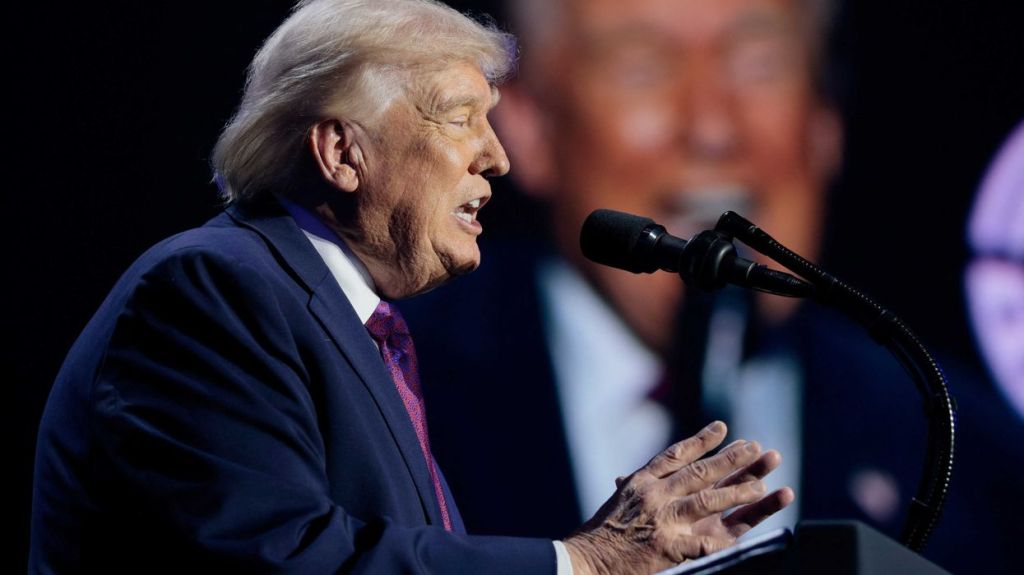
The blending of President Donald Trump with Jesus Christ aligns with mental conditions characterized by grandiose delusions — so why do we keep treating this as typical?
In a recent piece published in the New Statesman,journalist Lee Siegelclaimed this stems from the acceptance of mental health issues, following the closure of institutions for individuals who were seen as having “lifestyle challenges,” leading to widespread homelessness and aggression.
“This resulted in figures such as Rudy Giuliani, and to a lesser degree, Michael Bloomberg, and established law and order as a key and enduring element of the political right,” Siegel wrote, followed by recounting the stories of three men from Ypsilanti, Michigan, who were confined in 1964 because each believed they were literally Jesus Christ (and rejected the divinity of the others).
The three Christs of Ypsilanti—Clyde Benson, Joseph Cassel, and Leon Gabor—were real patients who were harmed by their mental illnesses,” Siegel explained. “One endured severe personal tragedies, another had an emotionally and physically abusive father, and the third had a mother who was herself psychotic.” In contrast, “Trump’s psychological wounds align with the popular modern understanding of trauma: the daily setbacks and defeats that push certain narcissistic personalities into defensive, unapologetic, vindictive idealized selves, immune to hardship and failure.
Certainly, former Yale University psychiatristDr. Bandy X. Leeinformed a Salon journalist just before the 2020 presidential election that Trump would not recognize the outcome due to his narcissistic nature.
Just as someone once accepted praise instead of love, they might now accept fear when praise is no longer possible,” Dr. Lee said to Salon. “Rage attacks are frequent, as individuals with deep needs often struggle to meet expectations—and eventually, everyone ends up in this situation. However, when there’s a total loss, like losing an election, it can lead to a wave of destruction and a reign of terror as revenge against a nation that has let them down.
She stated, “It is much simpler for a person with pathological narcissism to think about destroying themselves and the world, particularly its ‘laughing eyes,’ rather than step back into being a ‘failure’ and a ‘fool’—which, for someone with this disorder, would seem like a form of psychological death.”
In a comparable manner, Siegel contended that “Trump’s position in America is equally ridiculous. It is almost humorous. He behaves like a deity who only needs to raise his finger to turn his desires into reality. However, the nature of gods—particularly harsh, envious ones—is that they express exactly what they mean and carry out precisely what they say. For Trump to rule America with the complete authority he imagines, he would have to take over all media outlets, label large groups of people as deviants, socially isolate and disempower those who disagree, imprison, torture, and kill individuals. For him to achieve success in Iran, he would need to bomb the country from the sky and rebuild society from scratch, much like MacArthur did in Japan at the conclusion of World War II.”
While some view Trump’s analogy of himself to Jesus from a psychological perspective, others approach it throughturning to theology. Conservative writer Rod Dreher stated that Trump is “exuding the spirit of Antichrist,” while Calvin University professor Kristin Kobes Du Mez noted that Trump’s use of the image “led to significant division among his religious supporters.”
Related Articles:
・A religious scholar presents a surprising idea about why Trump could be the Antichrist
・Trump is not the ‘sacrificial lamb’ he believes himself to be, according to a columnist.
・A neuroscience expert discusses why the perception of Trump as the savior is widespread and perilous



 jasdooit
Leave a comment