

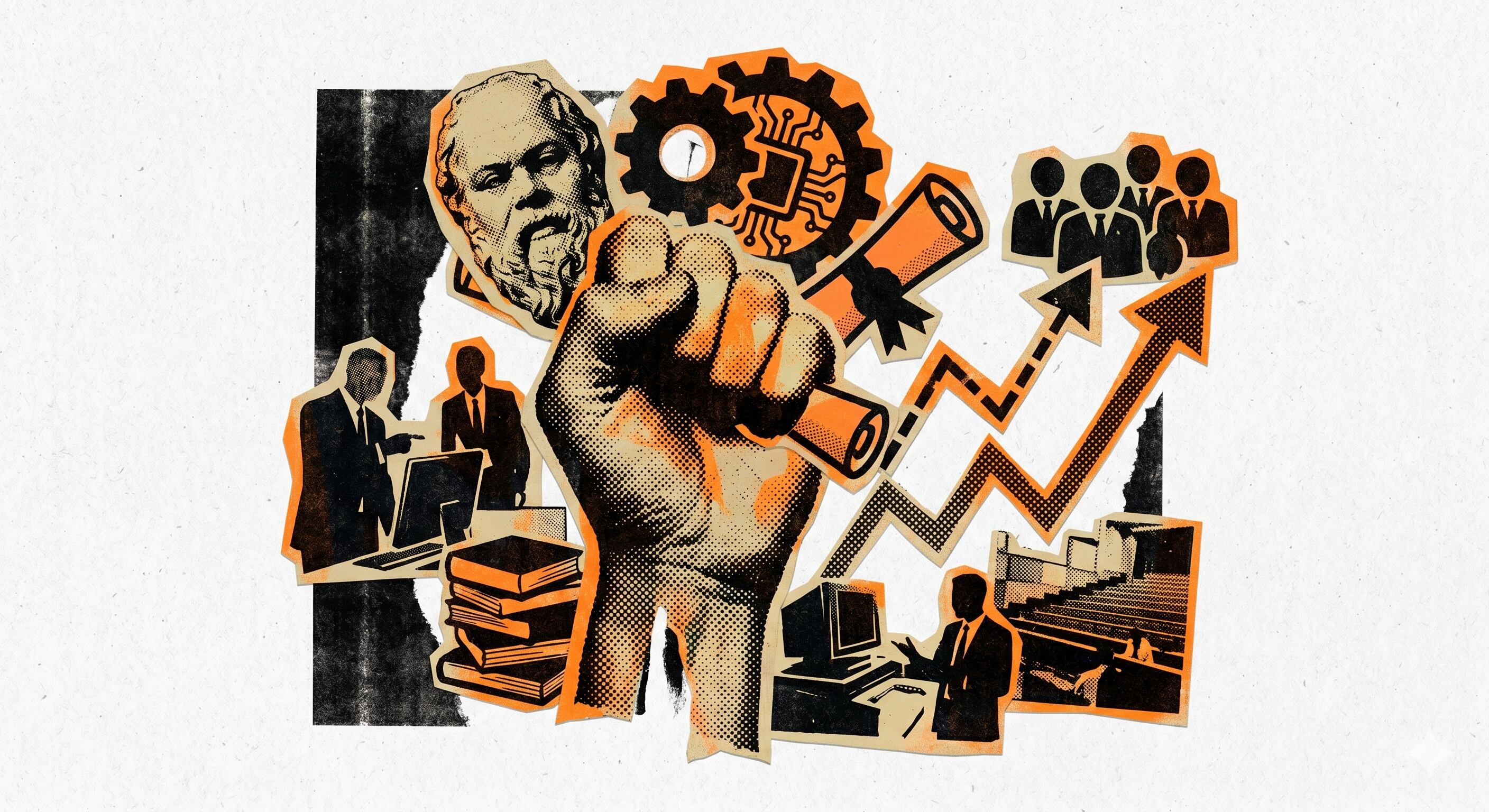
There are whispers that philosophy is becoming more prominent in the era of artificial intelligence (AI). These rumors stem from the activities of major technology companies. Amanda Askell, a 37-year-old philosopher, created the ethical standards for the large language model “Claude” during her time at Anthropic. The fact that Alex Karp, founder of Palantir, obtained a Ph.D. in philosophy from Goethe University in Germany is also frequently mentioned. To add to this, Google DeepMind recently hired Henry Shevlin, a Cambridge University professor, in the role of “philosopher.”
Some reports suggest that this trend is affecting university admissions within the country. The ratio of applicants to spots in philosophy departments has increased. For example, Seoul National University’s philosophy department experienced a rise in its early admission competition rate, from 9.92 to 1 in the 2020 academic year to 15.56 to 1 in recent times. At Kyungpook National University, the philosophy department had the highest competition rate among all disciplines during regular admissions. Gwangju Institute of Science and Technology (GIST), which primarily focuses on science and technology, surprisingly hired two philosophers with Harvard education as professors.
The world is constantly evolving. In the early 2010s, when this reporter was a college student, philosophy was regarded as the most distant discipline from science and technology. Students from other fields often expressed shock at classes labeled “Stone Age” without even using PowerPoint slides. The idea of “using my major to find a job” was considered a paradox. How do those who once studied philosophy perceive the “reemergence of philosophy in the AI era”? Responses were gathered from juniors, seniors, and alumni working in areas unrelated to philosophy.
“Please, let me go first. I’ll develop any logic you require.” (Opportunist)
“Still as determined as before, I’ll debate with AI as well.” (Debater)
“The ‘Chinese room’ thought experiment proposed by Searle, which was covered in my philosophy of mind course, appears to have come to life in the age of artificial intelligence.” (Scholar)
These were the more favorable responses. The majority of reactions were negative. Philosophy departments are populated by skeptics who regularly embrace doubt. How could their nature, once etched onto department jackets with Descartes’ foundational statement “Cogito, ergo sum” (I think, therefore I am), have shifted?
“AI? That’s all it is about law school.” (Skeptic 1)
“Did similar news stories appear a decade ago? Philosophy is a narrow path where you are compensated for thinking.” (Skeptic 2)
“It’s unpleasant how they quickly develop technology and then, once it gets out of hand, ‘invite’ philosophers. I feel uneasy about how they greatly exaggerate the significance of the humanities in the age of AI. It only plays a role in a small section of massive corporations. Do discussions on the humanities really take place in the offices of most humanities graduates? Definitely not.” (Skeptic 3)
As critics point out, tech companies “hiring” philosophers is a rare occurrence. Furthermore, the philosophers these companies are interested in—those focusing on AI consciousness and ethics—are specialized areas that cannot be accessed at the undergraduate level. Therefore, majoring in philosophy solely for a tech career would be a premature choice. However, if the aim is to develop “the ability to think critically,” the situation changes. The skeptics’ responses showed their determination not to be influenced by trends. They did not succumb to the reporter’s suggestive questions that aimed to idealize their majors. Instead, they remained skeptical, asked questions, and challenged assumptions. Even years after graduating, they continue to refuse to stop thinking and insist on maintaining their humanity.




 jasdooit
Leave a comment