
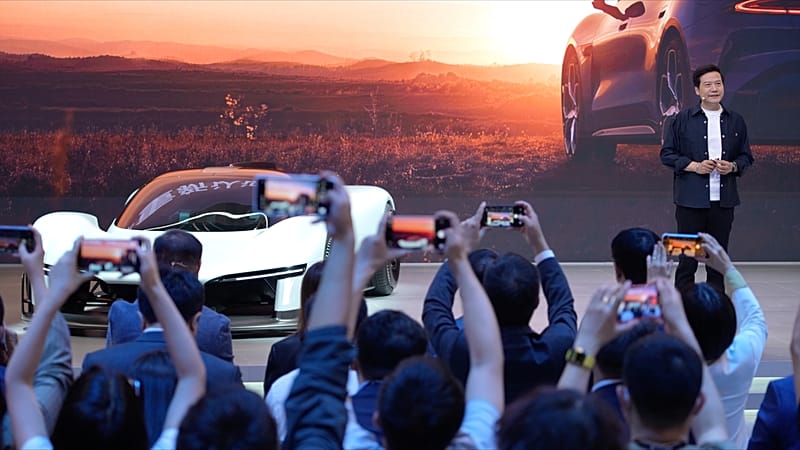
At the Auto China 2026 automotive exhibition in Beijing, Xiaomi’s display area was one of the most packed, as attendees filled the space to see the company’s founder and CEO, Lei Jun, a person whose prominence in China is similar to that of a celebrity.
In early April, Xiaomi captured significant attention through a notable endurance test conducted by Lei Jun, who personally drove a Xiaomi SU7 Pro from Beijing to Shanghai – a distance of approximately 1,300 kilometers – with only one charging stop along the way.
The journey was broadcast live on social platforms, drawing a significant virtual viewership and transforming the drive into a public showcase of the car’s actual range and capabilities.
At Auto China, Lei Jun introduced the Vision Gran Turismo concept for the first time within the country, after it was revealed globally at the Mobile World Congress 2026. He also provided details on the performance of the next-generation SU7 and discussed plans for the upcoming YU7 GT.
From production to ecosystem
Xiaomi’s growth in the electric vehicle industry has been swift. The company made its entry into the market in 2024 with the introduction of the SU7. From there, it has broadened its range, featuring the YU7, which achieved 200,000 pre-orders in just minutes after its launch.
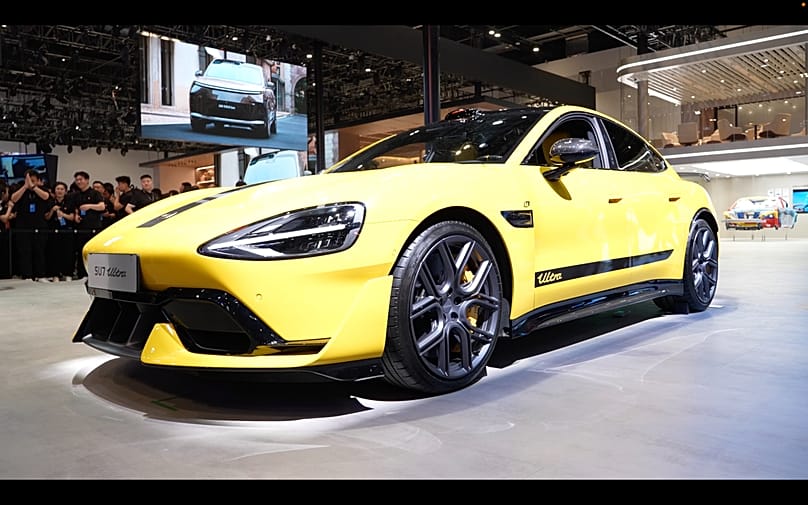
The company is currently getting ready to introduce the YU7 GT, its initial model created in partnership with European engineers. The car is set to make its appearance in China by the end of May, offering a blend of performance, comfort, and driving experience.
Performance has now become a central element of Xiaomi’s brand identity. The SU7 Ultra, for instance, can go from 0 to 100 km/h in less than two seconds and achieves a maximum speed of 350 km/h, firmly establishing it within the high-performance electric vehicle segment.
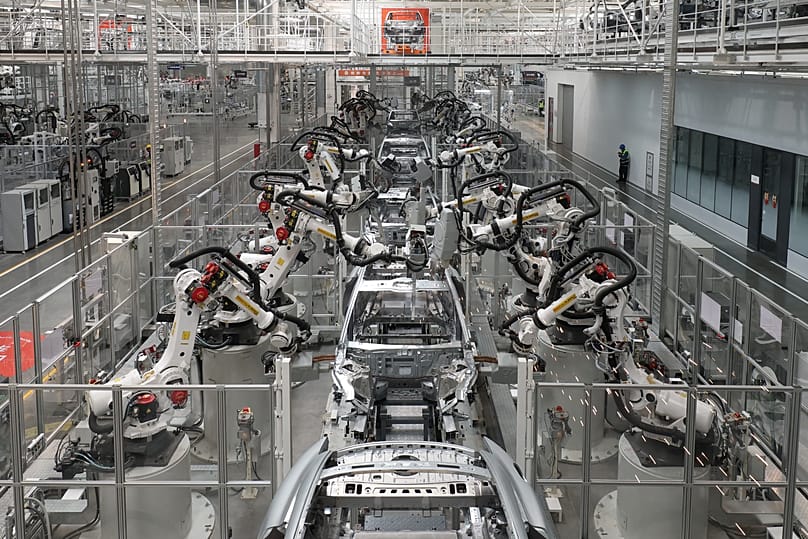
Within Xiaomi’s electric vehicle factory in Beijing, production operates at a speed that reflects these aspirations: a new car is completed on the assembly line approximately every 76 seconds.
The platform combines production, research, testing, and customer interaction in a single location, showcasing Xiaomi’s strategy towards vertical integration.
Over 700 robots are engaged in critical operations, with automation levels surpassing 90% in certain production areas, making the factory significantly dependent on AI-powered quality control systems that identify flaws with exceptional precision. An in-house testing facility allows each vehicle to be assessed under actual driving scenarios prior to being handed over.
In addition to performance, Xiaomi is also focusing on integration. Its overall “Human x Car x Home” approach seeks to link vehicles with personal devices and smart home systems via its HyperOS operating system. In practice, this enables drivers to handle daily tasks — such as booking appointments or managing home settings — while the system learns from user behavior, modifying lighting or music according to stress levels or tastes.
This method of ecosystem development highlights a broader pattern within Chinese car manufacturers, who are progressively integrating hardware with software and AI-powered capabilities.
Xiaomi is a prime example of where the product will head next. Smart home and smart devices play a significant role in our daily lives.
The vehicle becomes an additional item in our domestic life, professional life, and recreational life. That’s the model that will evolve, and I believe everyone should adhere to,” stated James Pearson, founder and CEO of Lionheart, an automotive branding and advertising firm.
Expansion into global markets
As its local team grows quickly, Xiaomi is now focusing on global markets.
The corporation has revealed intentions to launch its worldwide growth initiative in 2027, with Germany set to be its initial international market. To get ready, Xiaomi established an Electric Vehicle Research and Design Center in Munich in 2025, a prominent center for automotive engineering in Europe.
Headed by former BMW executive Rudolf Dittrich, the center is dedicated to aligning Xiaomi’s vehicles with European requirements — including rules, infrastructure, and consumer tastes.
“Xiaomi is adopting this approach in a methodical way, analyzing data. We are striving to gather as many customer insights as possible,” Dittrich stated at Auto China 2026.
Initial signs indicate increasing enthusiasm. During trial runs held last year, the cars drew interest even at charging points, with people walking by stopping to examine them more closely.
Xiaomi’s expansion into Europe occurs as the growth in the electric vehicle sector starts to slow down. According to figures from the European Automobile Manufacturers’ Association (ACEA), battery-electric vehicles made up 17.4% of new car registrations in 2025, an increase from 13.6% the previous year, while hybrid vehicles — at 34.5% — continue to be the favored option among European buyers.
At the same time, rivalry is becoming more fierce, as traditional companies such as Volkswagen and Tesla encounter growing challenges from Chinese firms like BYD and XPeng.
The European Union has also taken steps to apply further tariffs on electric vehicles manufactured in China following an investigation into unfair subsidies, introducing another obstacle for new market participants.
In 2025, the Xiaomi SU7 Series topped the sales charts for sedans within its price range. The standard model starts at roughly €27,000, while the SU7 Max is available for about €38,000.
The outcome highlights the company’s increasing momentum as it aims for total EV deliveries of 550,000 vehicles throughout its range this year, an increase from over 400,000 previously.
In the future, Xiaomi has indicated intentions to expand its car range even more, although specific information remains unconfirmed.
Our strategic objective is to emerge as one of the leading five automobile manufacturers worldwide,” Dittrich stated. “And I believe it is evident that with the present range of products, this is not achievable.






Leave a Reply