
Starting as a school designed to prepare students for studying abroad, Tsinghua University in Beijing has become a leading force in global academic fields such as artificial intelligence and engineering, representing a hallmark of achievement in China.
As per the 2026 rankings from Times Higher Education and QS World University Rankings, Tsinghua is positioned 12th and 17th globally, respectively.
In the Asia University Rankings 2026 published last month, it maintained the top position, with Chinese institutions leading the regional list. QS placed it ninth in the region.
Tsinghua is the sole Asian university to be listed in the top 10 for Physical Sciences, typically grouped within Natural Sciences, in the 2026 THE subject rankings, matching the standing of top U.S. institutions.
The university’s power is clearly shown through its research achievements. In 2025, it maintained the number one position in CSRankings, a ranking system that evaluates computer science institutions based on faculty publications at prestigious conferences. It outperformed well-known U.S. universities like Carnegie Mellon University and Stanford University in high-level output within artificial intelligence and computer systems.
Tsinghua is at the top of U.S. News & World Report rankings in important fields such as Engineering, Materials Science, and Chemistry.
 |
|
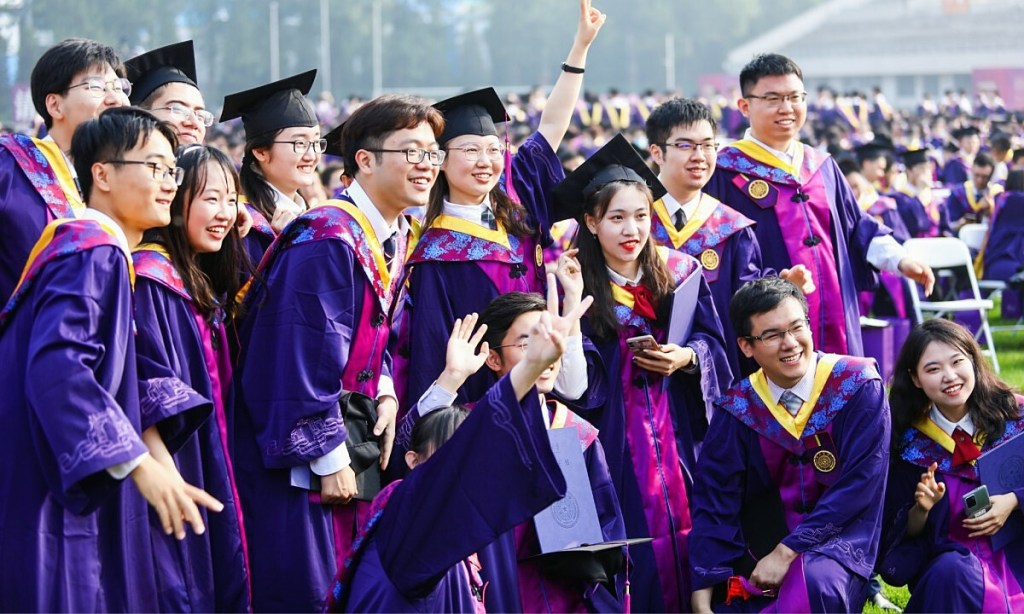
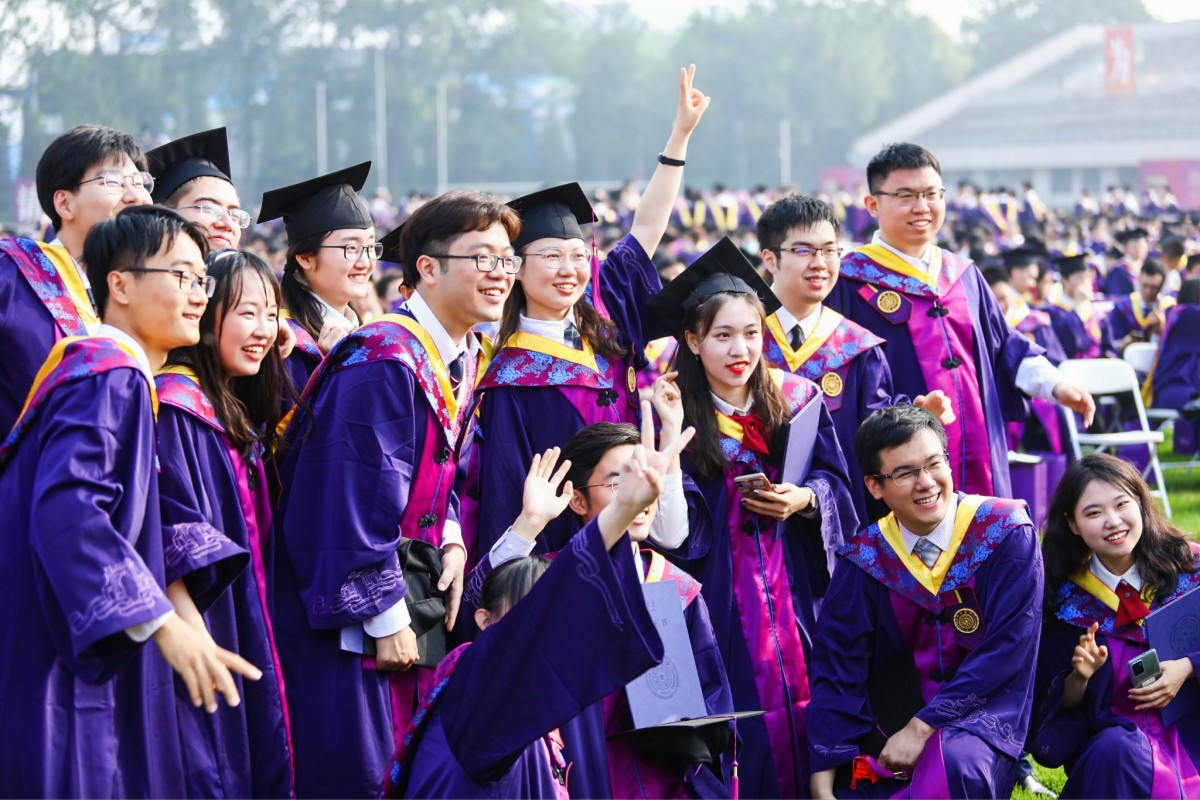
Students who have completed their studies at Tsinghua University during a graduation ceremony. Image taken from the university’s official website. |
Established in 1911, Tsinghua began as a training institution for Chinese students who intended to study in the United States, and introduced a four-year undergraduate curriculum in 1925.
After the establishment of the People’s Republic of China in 1949, a countrywide reorganization of higher education started. By 1952, Tsinghua had transformed into a multi-disciplinary polytechnic university specializing in engineering education, as stated on its website.
During the higher education reforms in China during the 1980s, Tsinghua strengthened its status as one of the nation’s top universities. It is part of the prestigious C9 League, frequently referred to as China’s “Ivy League,” along with Peking University.
Both organizations benefited significantly from government support via national programs like Project 211, Project 985, and the Double First Class initiative, which provided financial resources and policy assistance to enhance educational standards, draw in international talent, and boost global partnerships.
Getting into Tsinghua University is highly competitive. The acceptance rate is approximately 0.1%, and candidates usually need to achieve scores ranging from 680 to more than 710 out of 750 on the national college entrance exam, known as the Gaokao.
A fundamental aspect of Tsinghua’s power is its emphasis on graduate studies. Out of approximately 63,000 students, around 16,500 are undergraduate students, with the majority being master’s and doctoral students, numbering over 21,700 and 24,800 respectively, plus more than 3,400 postdoctoral researchers, according to official figures from last December.
The university has also trained numerous top leaders in China, such as President Xi Jinping, who graduated in chemical engineering.
It has over 17,000 academic staff, comprising 56 members of the Chinese Academy of Sciences and 36 from the Chinese Academy of Engineering.
The main source of funding for Tsinghua University comes from national science and technology initiatives and specific financial programs. In 2024, the institution obtained over 2 billion yuan (US$290 million) in research grants. It is part of a small number of Chinese universities that have annual budgets surpassing US$5 billion when considering purchasing power parity, as noted in a 2019 report from the Center for Security and Emerging Technology.
In 2025, Tsinghua University released over 3,000 papers in top-tier journals, placing it seventh worldwide, as reported by the Nature Index.
In the QS rankings, Tsinghua achieves nearly flawless scores (over 99/100) in academic reputation, research citations, and employer perception.
The university has formed collaborations with over 290 institutions in 50 countries, solidifying its position as an international center for knowledge that connects China with top academic leaders worldwide.
In addition to its academic excellence, Tsinghua is recognized for its large 483-hectare campus located in Beijing. Constructed on the site of former imperial gardens from the Qing Dynasty, it combines traditional Chinese architectural elements with contemporary Western-style buildings. Artificial lakes filled with lotus plants are found next to advanced laboratories, forming a setting that is both peaceful and academically demanding.
In 2010, Forbes recognized it as one of the most picturesque university campuses globally.
International undergraduate students usually pay approximately 30,000 yuan annually in tuition, while medical courses can reach as high as 70,000 yuan.

 jasdooit
Leave a comment