
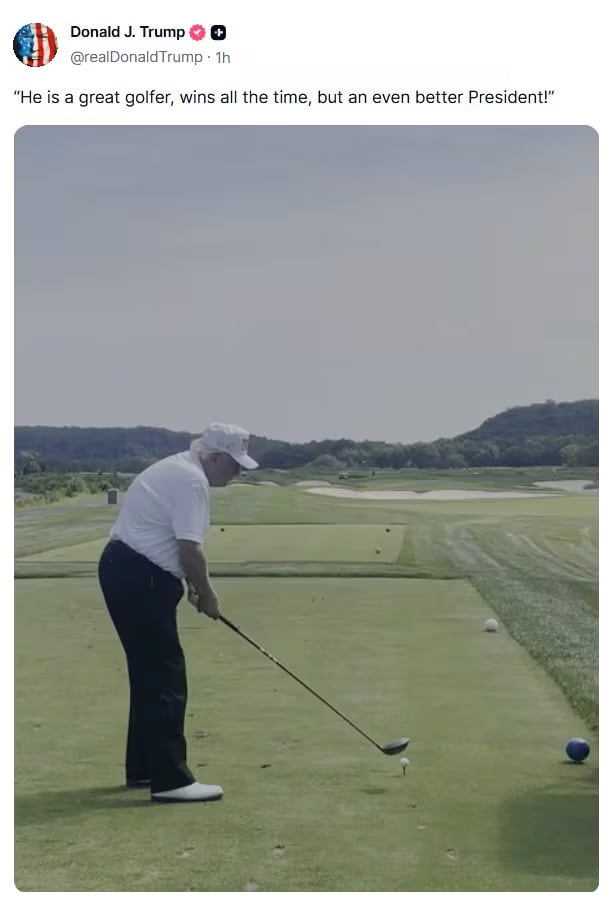
With two months left until the November midterm elections, a survey revealed that U.S. President Donald Trump’s approval rating for his job performance has fallen to 33%. Analysis suggests that dissatisfaction over high inflation and living costs is not only affecting Trump’s personal approval rating but also acting as a negative factor for Republican candidates in the elections.
According to a survey commissioned by the Financial Times (FT) from polling firm Focaldata on September 6, only 33% of registered U.S. voters expressed support for Trump’s job performance. This marks a 3 percentage points decline from a month ago and the lowest level since FT began tracking the data in May. Even within the Republican base, approval of Trump’s job performance dropped to 72%, down over 2 percentage points and the lowest recorded during the survey period.
Economic concerns were at the heart of the worsening public sentiment. Approximately two-thirds of respondents assessed that the U.S. economy is heading in the wrong direction. The proportion of respondents who said their personal economic situation had worsened since Trump took office rose to 57%, an increase of 4 percentage points over the past month.
Cracks are also emerging within Trump’s core Republican support base. Only 53% of Republican voters supported Trump’s job and economic policies, a decline of approximately 8 percentage points from a month ago. FT analyzed, “The prolonged Iran war, leading to rising fuel and consumer prices, has also contributed to the deterioration of economic sentiment.”
Regarding Trump’s recent decision to impose a 50% tariff on certain Canadian goods, 56% of registered voters opposed the measure. Opposition exceeded 60% among independent voters, while nearly one-third of Republican supporters also viewed it negatively. This reflects concerns that the tariff policy could further drive up domestic prices.
A significant number of respondents also indicated that Trump’s active intervention in the elections would not benefit Republican candidates. Forty-six percent of all respondents answered, “President Trump is making it harder for the Republican Party to win the midterm elections.” Among independent voters, 47% said, “I am less likely to vote for candidates publicly endorsed by President Trump.”
In party-specific midterm election approval ratings, the Democratic Party led the Republican Party by 7.5 percentage points. This gap widened from the 5 percentage points lead the Democrats held a month ago. For the Republican Party, which must defend its narrow majority in both the Senate and House of Representatives, failure to address concerns over living costs could compound the burden of Trump’s low approval rating.
The survey was conducted online from August 28 to September 1 among 1,914 registered voters across the United States. The margin of error is ±2.6 percentage points.



Leave a Reply