
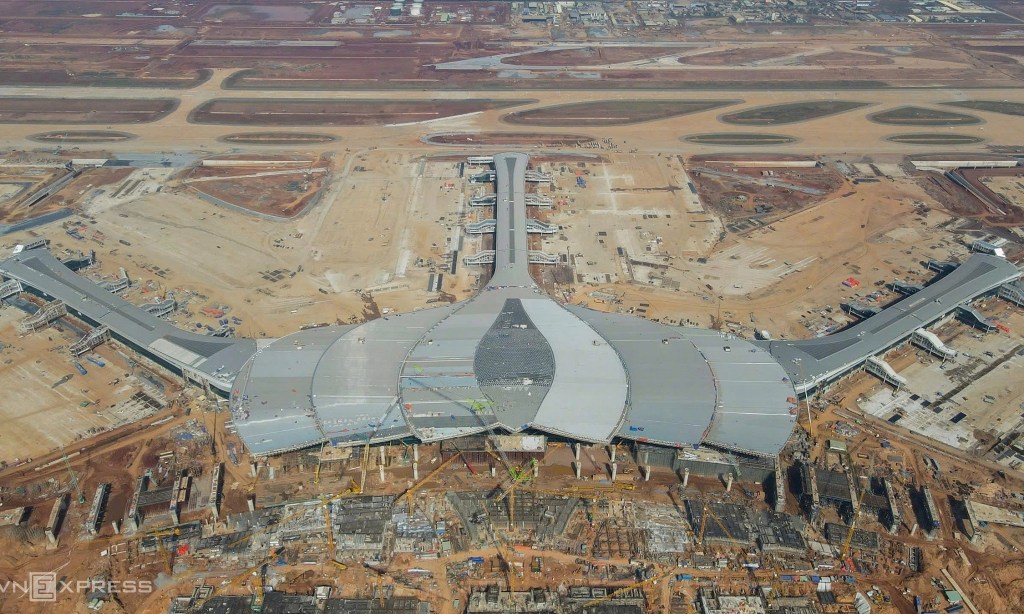
Vietnam’s new Long Thanh International Airport, set to open near Ho Chi Minh City later this year, will position its three train stations in front of the main terminal to accommodate a limited space, increasing the distance passengers need to walk by approximately 400 meters.
Dong Nai City, home to the airport, outlined the plan in a document directed to the Ministry of Construction, the Ho Chi Minh City authorities, the Thang Long Project Management Board, and the airport’s investor, Airports Corporation of Vietnam.
The strategy outlines how the North-South high-speed rail line and two metro systems would be integrated within the corridor connecting to Terminal 1.
The high-speed rail route would be positioned in the middle of the railway corridor. The expansion of the Ben Thanh-Suoi Tien metro, which extends from Ho Chi Minh City to Dong Nai City’s administrative hub and the airport, would be located on its left side, whereas the Thu Thiem-Long Thanh metro would operate on the right.
 |
|
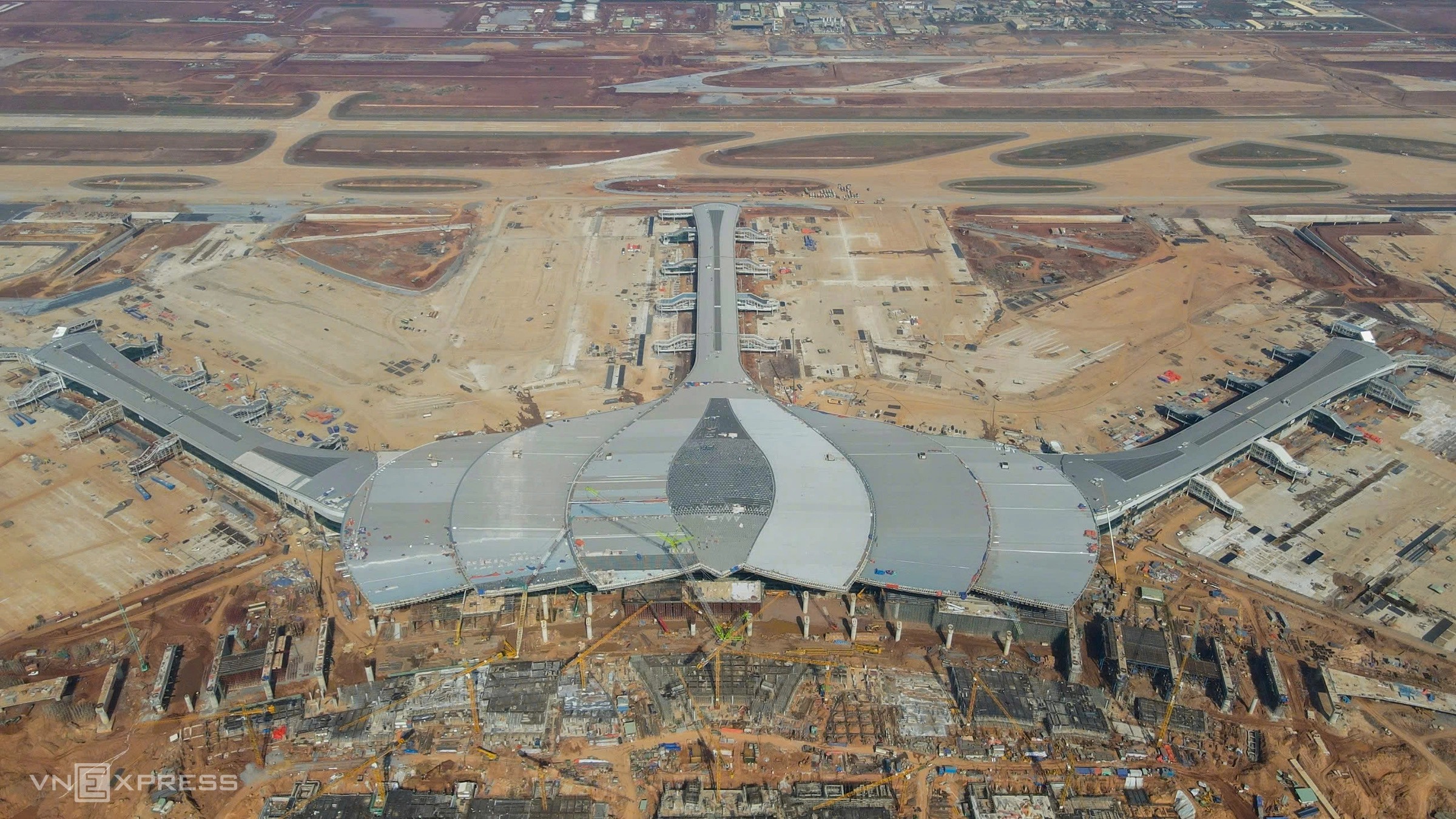
The construction area of Long Thanh airport in Dong Nai City in December 2025. Photo courtesy of VnExpress/Quynh Tran |
Due to the existing congestion in front of Terminal 1 caused by roads, bridges, parking areas, and other structures, the city decided to position the stations differently instead of aligning them along a single line.
The high-speed station would move toward the northeast, serving as the central feature of the cluster. The two metro stations would relocate to the southwest, positioned parallel to and reflected across the high-speed line.
The drawback, according to the city’s own calculation, is that passengers would need to walk approximately 400 meters further between the train platforms and the terminal compared to a direct, single-line layout.
Every line would maintain its own structure, technology, signaling, and operations, according to the city, which would reduce the chance of systems conflicting and allow the projects to be developed on distinct schedules.
Travelers would move between the terminal and the three stations via pedestrian bridges, underground passages, or a combination of both, with specific station locations and depths to be determined in the upcoming design phase.
The risks are significant. Long Thanh is among the largest airport developments in Southeast Asia, completing its initial phase and expected to start functioning by the end of 2026, capable of handling approximately 25 million travelers annually.
It is designed to become a regional center that eases the crowded Tan Son Nhat airport in Ho Chi Minh City. Transporting passengers to and from the location, approximately 40 km from the city center, has sparked a competition to develop railway infrastructure.
The Thu Thiem-Long Thanh route, the primary connection from Ho Chi Minh City to the airport, is set to start construction in early July.
The government has also given general approval to extend the Ben Thanh-Suoi Tien metro line to the airport, a link that Dong Nai claims could reduce the travel time between the airport and central Ho Chi Minh City to approximately 30 minutes.
And Long Thanh is planned to be a station on the North-South high-speed rail, a 1,541-km route with a speed of 350 km/h, which is scheduled to begin construction later this year and will span the entire country by approximately 2035.





Leave a Reply