
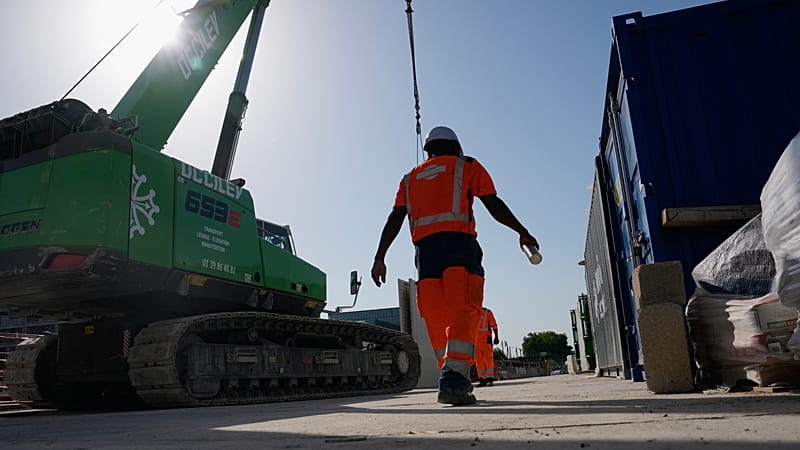
“Rest periods” for every employee? A European trade union group urges the European Commission to implement rest breaks for workers during an unprecedented heatwave.
“The cooling breaks implemented during the World Cup have drawn attention to the risks faced by workers due to extreme heat and the effective steps that can be taken to ensure safety,” said Esther Lynch, General Secretary of the European Trade Union Confederation (ETUC).
She mentioned that although employees would require more than three minutes to recover from heat exposure, this approach serves as a positive example of how work can be adjusted to suit the evolving climate.
“We require a maximum working temperature regulation that ensures every employee has the right to scheduled breaks, access to water, and restroom facilities,” Lynch stated to Health.
Prolonged exposure to high temperatures in the workplace can create physical stress on the body, potentially resulting in fatigue, serious health issues, and even fatalities.
Work-related fatalities caused by extreme heat have risen throughout Europe in recent years.
The most recent information from the World Health Organization indicates that over 2.4 billion employees are subjected to high temperatures worldwide, leading to more than 22.85 million work-related injuries annually.
As per the WHO, to maintain an eight-hour work shift, the central body temperature must not go beyond 38°C.
Prolonged contact with elevated temperatures poses considerable health dangers, increasing the likelihood of heart-related issues, aggravating lung diseases, and playing a role in other ailments like persistent kidney problems or reduced fertility.
Who stands the highest risk?
Although heat impacts every worker, certain occupations and health issues increase the likelihood of risk.
Individuals who are older, have long-term health issues, are pregnant, or engage in highly demanding physical work are more susceptible to extreme heat.
“Individuals employed in outdoor sectors such as construction or farming are clearly vulnerable to heat exposure, yet nearly half of all employees encounter heat in their workplace,” Lynch stated.
What actions can be taken to support employees?
Extreme heat events are predicted to occur more frequently, and offices are taking steps to adjust to this changing situation.
Measures like flexible work schedules, frequent rest periods, and rotating job duties are the most widely used strategies to avoid heat stress and climate change-related hazards in the workplace, as stated by the European Agency for Safety and Health at Work.
“Employers should acknowledge that heat is now a foreseeable work-related hazard and must be mitigated by implementing preventive strategies that are addressed beforehand,” stated Lynch.
She observed that the present issue throughout Europe is a “collection of insufficient and obsolete national laws along with voluntary recommendations from the European Commission.”
“Climate change is not an issue that respects national boundaries, so we require enforceable European laws and funding for labor inspection agencies to make sure it is adhered to,” Lynch said.




 jasdooit
Leave a comment