
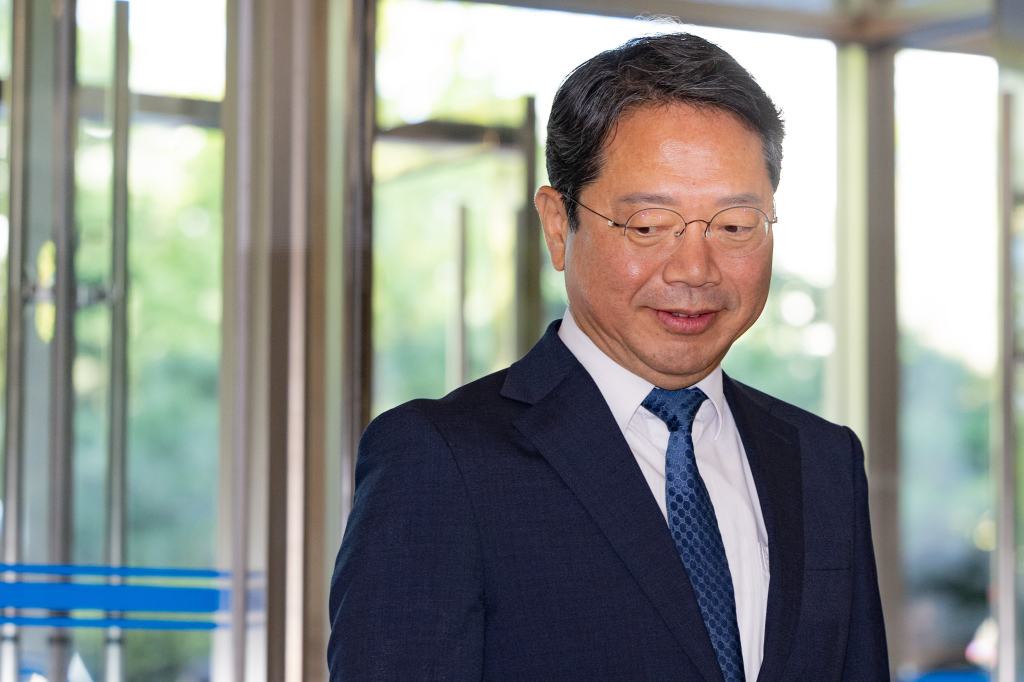
The clinical trial approval speed for Genencell, a pharmaceutical company linked to Justice Minister nominee Kim Seung-won and involved in a ‘lobbying allegation,’ was found to be more than twice as fast as other novel coronavirus treatments on September 5. Opposition parties criticized, “From the perspective of nominee Kim, who directly requested the Ministry of Food and Drug Safety (MFDS) commissioner for ‘fast approval,’ this was a successful lobbying effort.”
◇Average 71 days for ‘novel substance’ trials, Genencell took 33 days
According to the ‘COVID-19 treatment clinical trial approval status’ submitted to Han Ji-a, a lawmaker from the People Power Party, by the MFDS, 21 cases of novel substance-based COVID-19 treatments took an average of 71 days to receive approval between 2020 and 2022. In contrast, Genencell, under the same novel substance conditions, took only 33 days—over twice as fast.
During the same period, the MFDS approved 45 clinical trials for COVID-19 treatments. Of these, 24 cases involved drug repositioning (adding efficacy to existing approved drugs), while 21 cases, including Genencell, involved novel substances. Typically, drug repositioning requires shorter approval periods than novel substances, as existing safety data is available. Indeed, the average approval period for drug repositioning during 2020–2022 was 38.7 days, compared to 71.6 days for novel substances. However, Genencell, which submitted a novel substance (‘Damulsuk extract’), achieved approval in 33 days—faster than even the average for drug repositioning.
In response, Kim’s camp argued, “Genencell’s review period was 11 days, longer than the average for novel substances. Genencell was processed under the official fast-track system.” They added, “The MFDS only counts the ‘review period’ as the time spent on document evaluation.” They claimed the 20-day period from September 30 to October 18, 2021—when Genencell prepared supplementary materials after MFDS requests—should not be included, as the review period should reflect only the MFDS’s actual evaluation time.
◇Genencell received 14 supplementary requests from MFDS
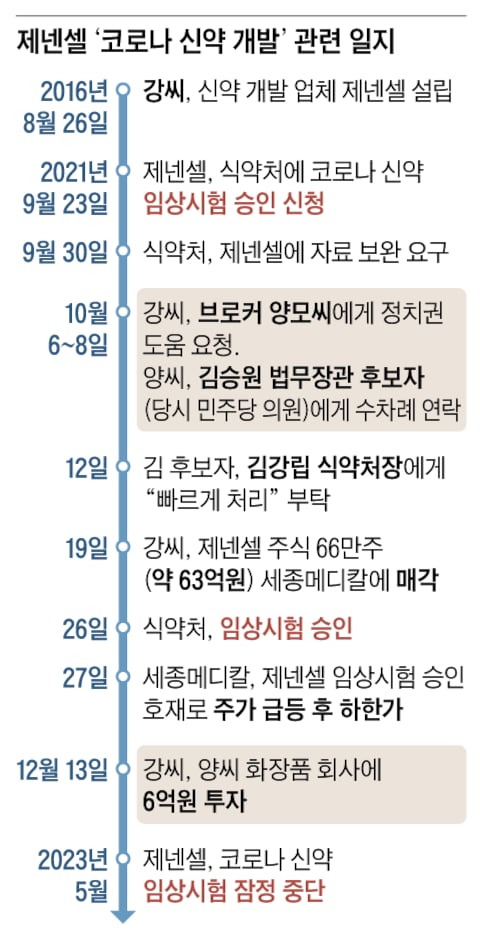
Opposition parties raised suspicions, stating, “This approval speed is abnormal.” They highlighted that Genencell, a small pharmaceutical company, achieved unusually fast approval for a novel substance. Moreover, Genencell had received 14 supplementary requests from the MFDS on September 30, 2021. Despite this, Genencell secured approval within a month.
Prosecutors determined that Kim’s intervention influenced the process. According to the indictment, after the MFDS’s 14 supplementary requests, Genencell founder Kang requested broker Yang to “expedite approval through political connections.” Yang, close to Kim, asked him to “help speed up the MFDS’s delayed approval for Genencell.” Kim then contacted MFDS Commissioner Kim Gang-lip on October 12, saying, “Please ask the responsible officials to process it quickly.” Kim Gang-lip replied, “Commissioner, I will ensure the Genencell case is handled promptly.” Two weeks later, Genencell received MFDS approval.
Kim’s camp cited other pharmaceutical cases, stating, “Short review periods alone do not prove lobbying or favoritism. There is no evidence that Kim’s call altered review order, standards, or omitted procedures.” The People Power Party countered, “Since Kim requested the MFDS commissioner to expedite a specific company’s process during a critical review phase, it cannot be ruled out that this influenced the supplementary review and evaluation.”

◇Submission of falsified data omitting ‘hamster deaths’
During the trial, Genencell was found to have submitted falsified data to the MFDS, omitting suspected side effects such as hamster deaths in animal testing. Kang, indicted for breach of trust, was sentenced to three years in prison with a five-year suspended sentence in December 2024. Kim, investigated for promised bribery, received a suspended indictment—a disposition where charges are acknowledged but prosecution is delayed.
Kim stated regarding the COVID-19 drug lobbying allegations, “I called the MFDS commissioner to relay a public interest complaint about undue delays in treatment trials. I filed a constitutional appeal against the unjust suspended indictment with the Constitutional Court.”
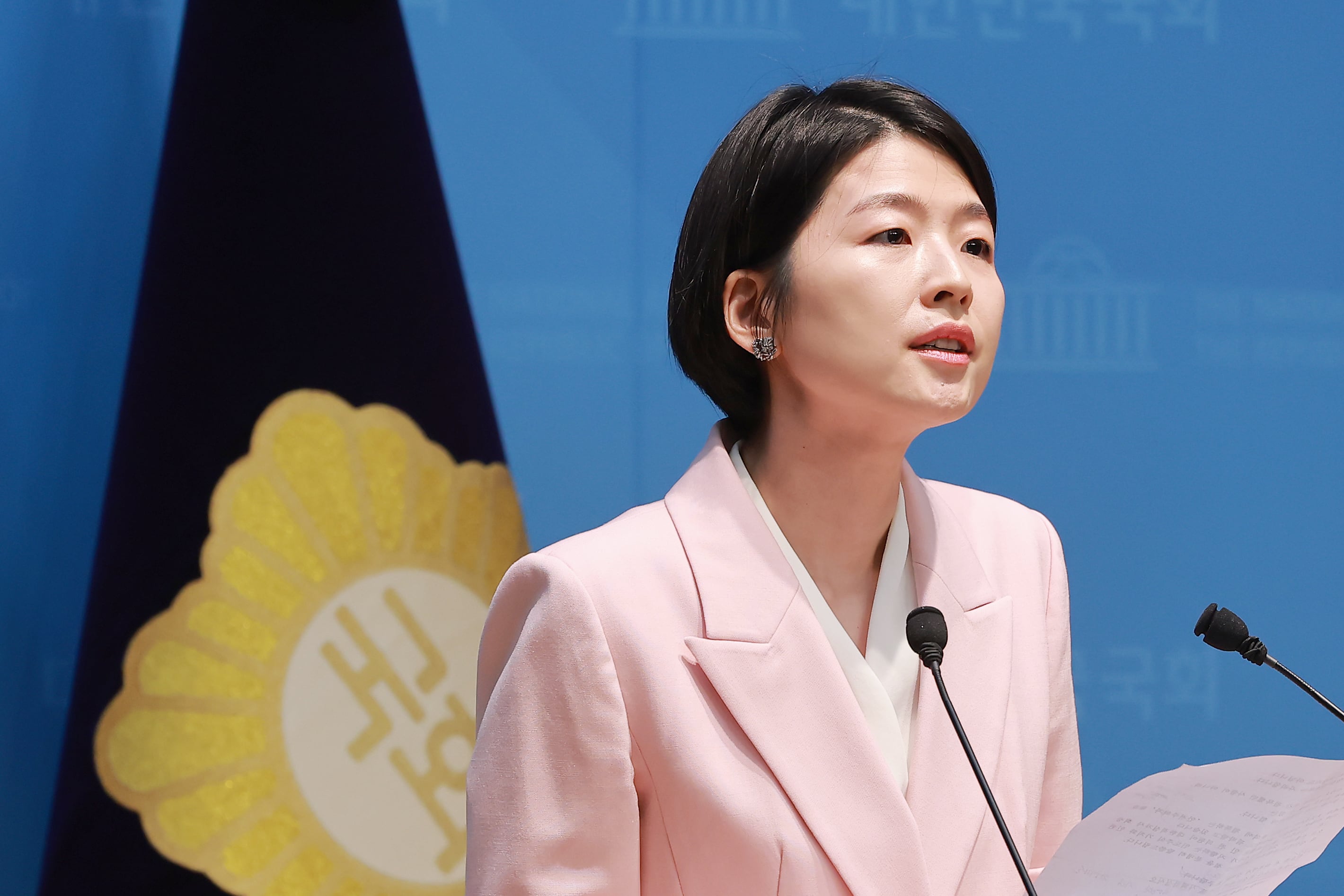
Han Ji-a commented, “The MFDS must clarify the unusually fast approval process and review grounds for Genencell in relation to Kim’s COVID-19 drug lobbying allegations. As this concerns public safety, we will thoroughly verify it during the national audit.”



Leave a Reply