
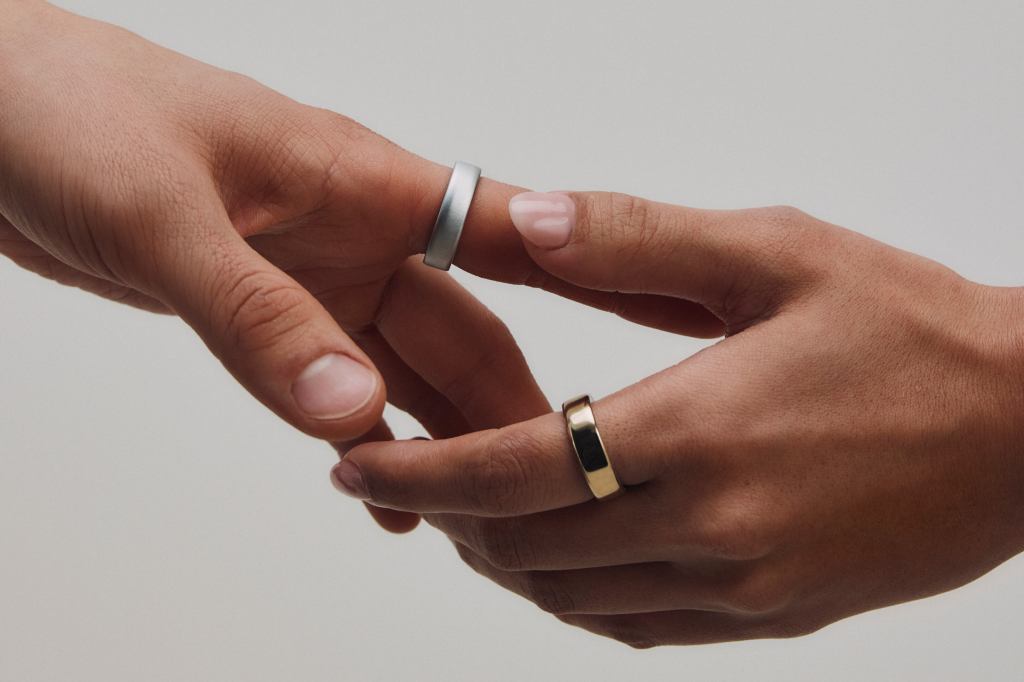
Prince Harry, actor Jennifer Aniston, influencer Kim Kardashian, and Spider-Man star Tom Holland—among others who popularized the “smart ring” by wearing it—have propelled Oura, the company behind the device, toward a U.S. stock market listing. Starting as a small ring that measures heart rate, body temperature, and sleep quality, the company has grown into a healthcare platform with 5 million paid members, drawing significant Wall Street interest in its initial public offering (IPO).
According to the Wall Street Journal (WSJ) and The Guardian, Oura publicly filed for an IPO with U.S. securities authorities on September 3 and is aiming for a Nasdaq listing as early as this month. The ticker symbol will be “OURA.” Specifics about the offering size and target price range remain undisclosed.
The market anticipates Oura’s valuation to far exceed the $11 billion (approximately 15 trillion Korean won) recognized during its last funding round. The company raised $900 million from investors last year.

◇$349 Ring Drives 74% Sales Surge
Founded in Finland in 2013 and now headquartered in San Francisco, Oura’s smart ring continuously tracks heart rate, body temperature, blood oxygen saturation, movement, and sleep quality, displaying data via a smartphone app. Prices range from $349 to $499. The latest model, the “Oura Ring 5,” launched in May for $399. It is 40% smaller than previous versions and monitors over 50 metrics, including sleep, activity, stress, recovery, heart health, and women’s health.
The product gained traction among health- and longevity-conscious consumers. Notable users include Aniston, Prince Harry, Kardashian, and Holland. Aniston once publicly stated she was “addicted” to checking her Oura health metrics. Prince Harry’s 2018 beach stroll in Australia while wearing the ring also sparked attention.
◇Subscription Model Boasts 89% Gross Profit Margin
Oura’s growth trajectory, revealed in its IPO filing, is steep. From the start of the fiscal year to June 30, revenue reached $1.21 billion, a 74% year-on-year increase. Net profit hit $60.8 million, a significant improvement from $1.6 million in the same period the previous year. After turning its first annual profit last year, Oura has expanded its profit margins further in 2026.
Wall Street is particularly focused on Oura’s subscription business, which generates recurring revenue post-sale. To fully utilize health data collected by the ring, users must pay a monthly fee of $5.99 or an annual fee of $69.99. Paid memberships have doubled to 5 million in a year. Subscription revenue for the nine months ending in June surged 121% to $240.5 million, with a gross profit margin of 89%. Unlike hardware, which incurs manufacturing and logistics costs, the software-driven subscription model leverages existing data for recurring revenue.
While hardware still accounts for roughly 80% of total sales, subscriptions—growing far faster—are becoming a key value driver. Customer loyalty is also high: users opened the app an average of 3.5 times daily during the first three quarters of the fiscal year. The WSJ noted the filing highlighted “high margins and a loyal user base.”
◇72% Female Users… 42 Billion Hours of Biometric Data
Demographics show 72% of paid members are women, with 42% aged 30–45 and 31% under 29. Oura emphasizes it is not just a hardware manufacturer but a “health intelligence platform.”
The company has accumulated approximately 42 billion hours of biometric and physiological data across 50 metrics. This data refines personalized health analytics and fuels new services. Beyond consumers, Oura has secured institutional clients, including the U.S. Department of Defense, and recently partnered with sports leagues.
Oura’s IPO involves 18 underwriters, including Goldman Sachs, Morgan Stanley, JPMorgan, Allen & Company, and Jefferies as joint lead managers. Robinhood, a retail brokerage, is also part of the syndicate.






Leave a Reply