
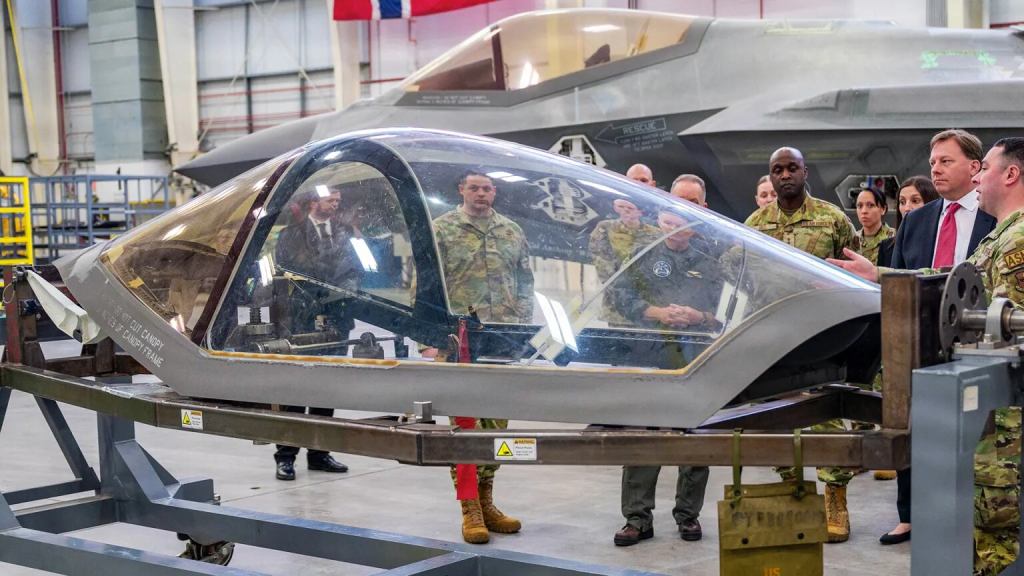
Bloomberg News reported on the 24th that the cockpit canopy (canopy) and armament bay door of an F-35 fighter jet traveling from Australia to the U.S. in late May had fallen into the hands of the Chinese government.
Prior to this, the U.S. political media outlet Politico first reported on the 19th, one week earlier, that “two critical components related to the low-observability stealth capabilities of the F-35 operated by the Royal Australian Air Force, which were sent to the manufacturer Lockheed Martin in the U.S. for repairs last summer, were instead shipped to Hong Kong during transportation.” The radar-absorbent material of the F-35 canopy degrades in performance over time, necessitating repair or replacement.
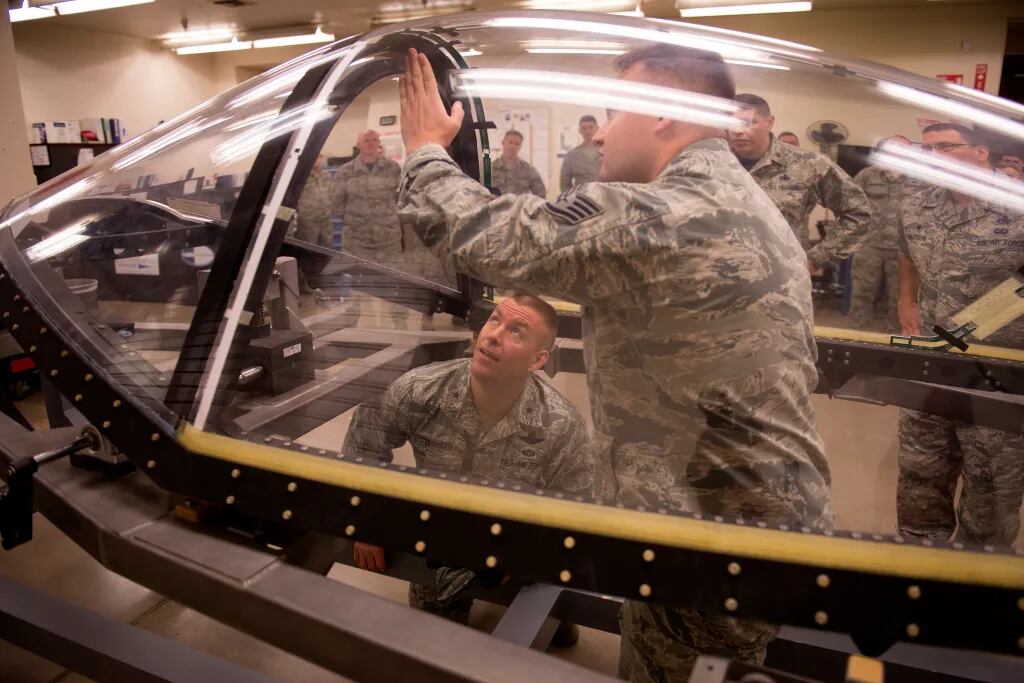
The F-35 program has long been a primary target of Chinese intelligence agencies. If China secures the F-35 canopy, it could mimic radar-resistant designs for its own advanced fighter jet capabilities.
The F-35 is operated by 19 U.S. allied and partner nations, including Australia and South Korea. Australia operates 72 units and shares spare parts for the F-35 with seven other countries.
Regarding this, Australian Defense Minister Richard Marles stated on the 22nd that “the missing components are not sensitive,” but even the gold film used to reduce radar reflection signals in older F-35 canopy models is classified.
At the time of Politico’s initial report, the U.S. Department of Defense only stated, “We are aware of the transportation issue involving unserviceable F-35 Lightning II components and are working to establish safeguards for recovery and prevention of recurrence.”
According to Bloomberg’s report, the problematic components were separated from the Royal Australian Air Force’s F-35A and were being transported from Australia to the U.S. via the American logistics company UPS in late May. They were scheduled to undergo inspection to determine whether to repair or dispose of them.
However, unusually, the F-35 components moving through the international logistics network passed through South Korea and were then directed to Hong Kong. Afterward, Chinese authorities secured the components and have not returned them, according to Bloomberg’s sources.
While Australian Defense Minister Marles downplayed the “security risk,” U.S. military experts stated they could not determine what information China might glean from the acquired F-35 canopy and armament bay door.
Not all F-35 components are top-secret or reveal critical information about the airframe design. However, the canopy and armament bay door are sensitive parts where structure, materials, joints, tolerances between design and actual manufacturing, and surface treatments all work together within the stealth design.
If radar-absorbent materials or other special surface treatments remain intact, the technical analysis value would inevitably increase.
The current status of these two components is unknown. Therefore, with no information on how much coating or special treatment remains or whether China has already analyzed them, no conclusions can be drawn at this time.
Even setting aside these uncertainties, the mere fact that China has acquired the actual F-35 canopy and armament bay door is a significant incident of losing control over sensitive physical hardware.
The canopy is one of the most challenging components in a stealth fighter jet. This is because the aircraft must secure visibility while minimizing radar reflection. Both the cockpit and the pilot’s helmet are major sources of radar reflection. Therefore, the canopy’s materials, structure, joints, and special treatment methods are particularly crucial for frontal stealth performance.
In fact, the F-35 canopy has undergone repeated paint peeling, and only recently, after two decades of improvements, has its transparency, stealth performance, and durability significantly improved. Military experts therefore say that if the canopy secured by China is a new model, it could provide substantial assistance to China’s stealth canopy development.
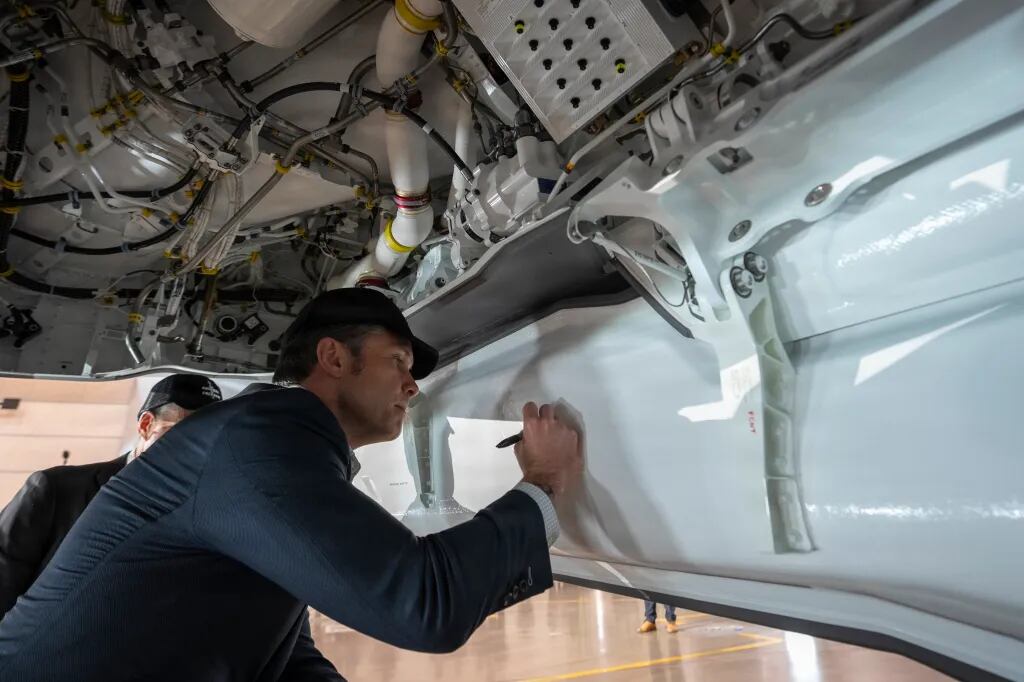
The armament bay door, which constitutes a large portion of the airframe’s exterior, is also critically important as it must not increase radar signals. If radar-absorbent material (RAM) coating remains, it could be a significant loss. RAM technology is a materials engineering technology that the U.S. has kept under extreme security.
China has long attempted various methods to obtain F-35-related information, including cyberattacks, supply chain access, acquisition of technical information, and utilization of U.S. technical personnel.
Due to these concerns about China, the U.S. deliberates carefully when selecting countries to which it sells the F-35.
Representative cases are the United Arab Emirates (UAE) and Saudi Arabia. The first Trump administration approved the sale of 50 units to the UAE in 2020, but the Biden administration raised concerns that the UAE’s strengthened cooperation with Chinese telecommunications company Huawei could allow Chinese communication infrastructure and Chinese military and intelligence agencies to access the aircraft and infrastructure. The Biden administration effectively withdrew, and the UAE also abandoned the plan.
The second Trump administration’s Department of Defense provisionally approved the sale of 48 F-35A units to Saudi Arabia on the 17th, but this also requires congressional review. U.S. intelligence agencies have already warned that the military and technological relationship between China and Saudi Arabia increases the risk of F-35 information leaks.
At this point, it cannot be determined whether the detour through South Korea to Hong Kong was a planned operation by Chinese intelligence agencies or a simple transportation error. However, what is clear is that Chinese authorities have not returned the F-35 components.






Leave a comment