
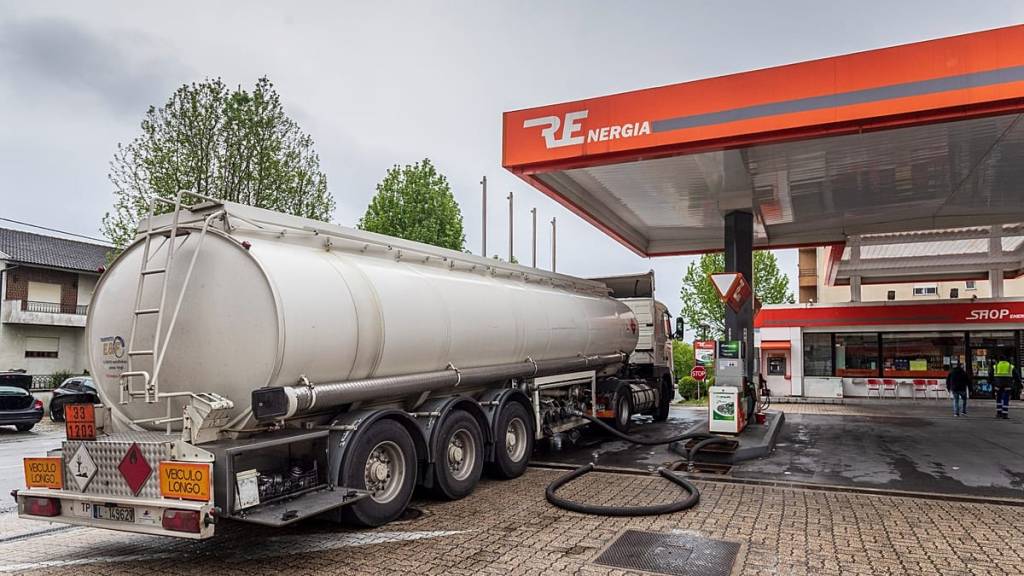
“Any sector that includes road fuels in the [value] chain will face additional costs because prices have been trending upwards in recent months,” warned Nuno Figueiredo, spokesperson for DECO PROteste, the Portuguese consumer-rights organisation, at a time when retail prices for these energy products in Portugal are several dozen cents higher than on the day the Iran war began.
Despite the slight relief in fuel prices recorded on Monday, monitoring by the Directorate-General for Energy and Geology (DGEG) shows that on 28 February, when the conflict broke out, the average price of standard diesel and standard 95 octane petrol in mainland Portugal stood at €1.596 and €1.681 per litre respectively.
Almost seven months later, on 27 September, the prices had already risen to €2.219 and €2.113 per litre, in that order. An increase of 62 and 43 cents per litre in each case.
This reality is unfolding against a backdrop of severe disruption on oil markets caused by the conflict being fought by the US and Israel against Iran, which has led to significant damage to energy infrastructure and refineries across the Middle East.
It is also being fuelled by restrictions on shipping in the Strait of Hormuz, through which around 20% of global oil consumption passed before the war.
Drawing on data from Statistics Portugal (INE) on inflation, the DECO PROteste spokesperson notes that in August the rate accelerated to 3.3%, a rise “almost entirely” explained “by the increase in the price of diesel”, according to the institute.
Overall, in the same month, prices for energy products were up 12.2% compared with a year earlier. In this context, Nuno Figueiredo argues that it is possible “to state with confidence that the impact [of high fuel prices] will be felt across almost the whole economy”.
Yet, at a time when “almost all of us depend directly or indirectly on fuels”, some sectors are feeling the consequences of these increases “more immediately”, Figueiredo stressed to Euronews.
In this article, we explain which activities are most exposed to the impact of the high prices being charged at service stations in recent weeks.
From fisheries to agriculture and beyond
Among the sectors where the effects are likely to be most visible in the coming period, fisheries stand out. This is because “the cost of each trip out to sea, with fuel more expensive”, will be higher from the outset, meaning it “will be passed on more quickly to the price of the final product”, the consumer-rights spokesperson tells Euronews.
The same is expected to happen in agriculture. “Costs build up throughout the whole growing period and then, later on, as a result, they are also reflected in consumers’ wallets.”
In both cases, “the consumer suffers indirectly from the consequences of fuel prices”. Even “indirectly”, because of “all the logistics involved” in getting products to customers. “All types of transport associated with industry” and with the movement of goods will, therefore, “also face higher costs”, Figueiredo points out.
“So, inevitably, it will be the consumer, as the last link in the chain, who ends up spending more money to buy what they used to buy more cheaply”, the DECO PROteste representative concludes.
Indeed, speaking to “Dinheiro Vivo”, the National Association of Public Road Hauliers of Goods (ANTRAM) and the Farmers’ Confederation of Portugal (CAP) warned that the rise in fuel prices would ultimately be paid by consumers.
And in an interview given at the start of September to Antena 1 radio, when fuel prices had already passed €2 per litre, the director-general of APED – the Portuguese Association of Distribution Companies, Gonçalo Lobo Xavier, also warned that this would “be reflected in the final price of goods” on supermarket shelves.
The effect, however, would not necessarily be immediate or fully passed on, APED insisted, saying that retailers have absorbed part of the rise through “margin reductions” in profits.
The recent impact on the food basket
Despite this backdrop, Figueiredo adds that the basket of 63 essential food items monitored by the consumer-rights organisation registered, in the week between 16 and 23 September, a price drop of €1.86 compared with the previous seven days.
A “contradiction”, in Figueiredo’s words, because it “ran counter to the upward trend in fuel prices” seen over “three or four consecutive weeks” in the run-up to that analysis.
So how can these figures be explained? “Some products became cheaper and did not have a direct link, or we did not identify a direct link, to fuel prices, otherwise they too would have increased.” The country is therefore experiencing a situation in which it is not possible “even to make a forecast” about “what will happen tomorrow”, the DECO PROteste spokesperson notes.
Faced with this scenario, Figueiredo urges consumers to “go back to what people used to do and do a big monthly shop”, choosing to go to the supermarket “in the weeks when there is a downward trend” in basket prices. The aim is to avoid “weekly fluctuations” that may be damaging for household budgets.
“The best advice is to try to take advantage of periods when prices have fallen, in the case of food in particular, and try to buy a larger quantity of what is needed”, the representative says.
Transport? “Electric vehicles will feel it less”
As with freight, the rises in diesel and petrol prices are also likely to be felt in passenger transport. This is particularly true for services that rely “exclusively” on this type of fuel, Figueiredo tells Euronews.
He also points out that “electric vehicles will feel it less”, even though “electricity is not, strictly speaking, at the best prices either”.
Speaking to Jornal de Negócios, Sónia Ferreira, president of the National Association of Passenger Transport (ANTROP), said on 22 September that higher fuel prices could mean an additional cost of an estimated €35 million for the passenger transport sector in Portugal.
Price rises are also being felt in other sectors
Representatives of other industries have likewise been warning about the consequences that these fuel price increases may have for businesses. One example is the Association of Civil Construction and Public Works Industries (AICCOPN) which, according to the “Jornal Económico”, stressed that this trend is particularly damaging for construction, as it is a sector inseparable from the use of heavy machinery and road transport of materials.
Earthmoving contractors in particular took to the streets last week, staging a go-slow protest to draw the government’s attention to the difficulties they are facing.
The organisers pointed out that fuel accounts for almost 70% of the final price charged to clients and that, according to SIC Notícias, the government led by Luís Montenegro has agreed to extend to this sector the support of 10 cents per litre already in place for professional and agricultural diesel.
Meanwhile, AIMMAP – the Association of Metallurgical, Metalworking and Related Industries of Portugal, through its executive vice-president Rafael Campos Pereira, highlighted the cost of road transport as one of its main concerns, reporting that companies operating in the sector are cutting margins in order to remain competitive “in the markets”, ECO – Economia Online reports.
Speaking to RTP, the medicines distribution sector has even admitted it may limit daily deliveries, stopping them at weekends, and estimates that the higher operating costs stemming from price rises could leave it facing losses of up to €4 million this year.
This text was translated with the help of artificial intelligence. Report a problem : [feedback-articles-en@euronews.com].




Leave a comment