
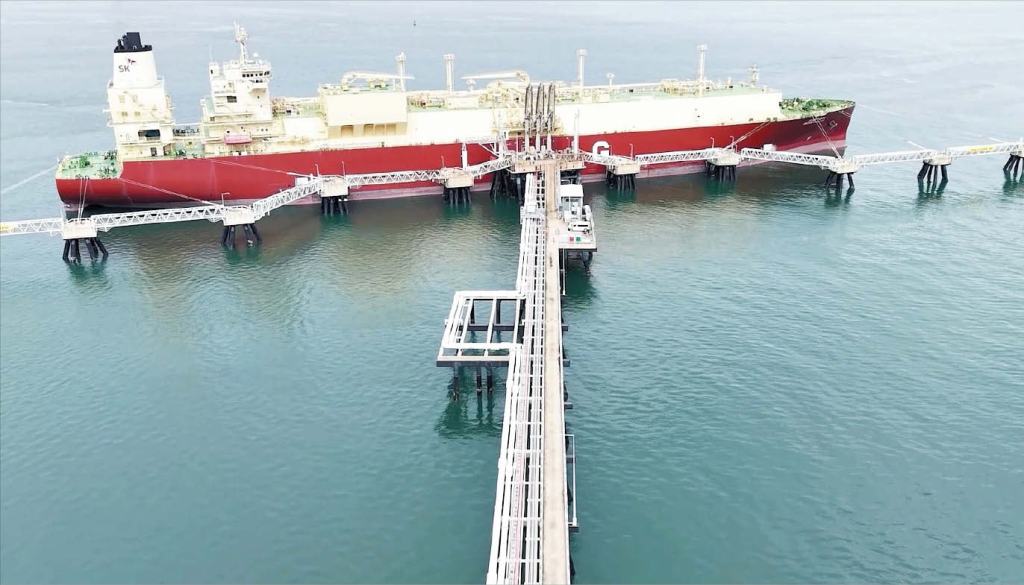
On the morning of September 30, in Darwin, the capital of Australia’s Northern Territory (NT). After driving south from the city center for about 40 minutes, a massive LNG plant appeared along the coast. Spanning 700,000 square meters—a size equivalent to about 100 soccer fields—this is the Darwin LNG Terminal of the Barossa Gas Field project, where SK Innovation E&S has invested alongside local companies like Santos for 14 years. Natural gas extracted from the Barossa Gas Field, located approximately 300 kilometers northwest, travels through pipelines ranging from 66 to 86 centimeters in diameter and stretching a total of 385 kilometers to this terminal. The gas is then liquefied here and shipped to South Korea via LNG carriers. The journey takes just 10–12 days—a transportation efficiency nearly twice as fast as the 18–25 days required from the Middle East or the 22–28 days from the U.S.
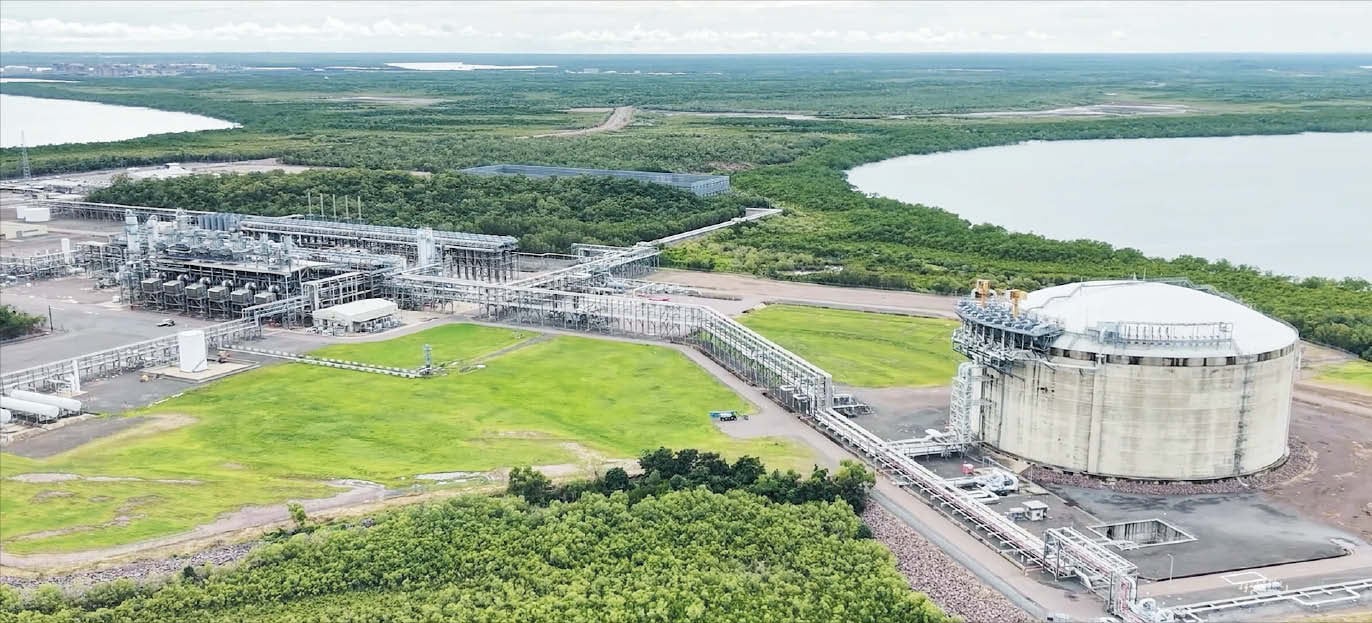
SK, which covered 1.6 billion dollars of the project’s total 4.3 billion dollars in development costs, secured a 20-year supply of up to 1.3 million tons of LNG annually. Imports to South Korea began in February of this year. This volume represents approximately 3% of the country’s total LNG imports and is sufficient to generate power for 3 million households for a year. The project’s importance has grown significantly amid the Russia-Ukraine war and this year’s Middle East conflict. It ensures stable LNG supply without the risks associated with routes like the Hormuz Strait, which is prone to frequent disputes. This is why SK persisted with the project for over a decade.
◇Discovering an Underground Gas Field as Large as Seoul
The project began in 2012 when SK acquired a 37.5% stake in the Barossa Gas Field, then in its early exploration phase, for 310 million dollars. At the time, South Korea was emphasizing stable energy security following a major blackout in 2011. SK urgently needed a reliable LNG supply source for its domestic power plants and city gas operations.
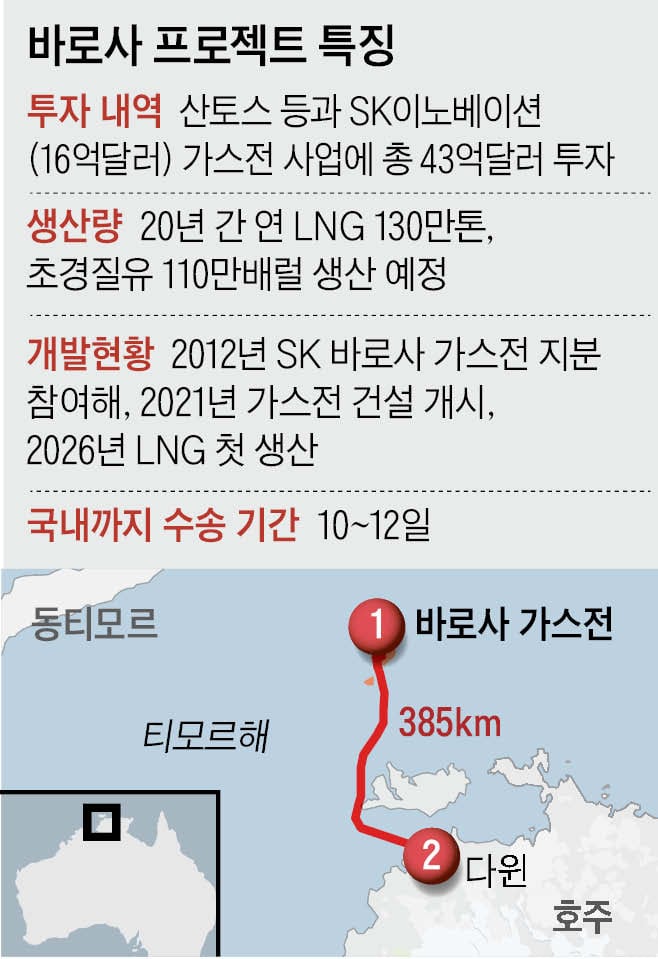
Initial expectations were modest, but evaluations from 2014 to 2017 revealed recoverable reserves far exceeding initial estimates. The current proven reserves amount to 3.4 trillion cubic feet—enough to produce 3.5 million tons of gas annually for about 20 years. Kim Hyun-jun, a technical committee member at SK Innovation E&S’s LNG Business Division, explained, “The underground structure containing the gas is as large as Seoul itself. We increased investments as the reserves doubled compared to initial estimates, enhancing economic viability.”
However, challenges persisted. The COVID-19 pandemic from 2020 to 2022 caused severe delays in procuring materials for the gas field and terminal construction. Legal disputes with local Indigenous communities over cultural heritage damage also halted work for over a year.
◇Reducing Spot Market Reliance for Stability
SK Innovation E&S views the Barossa project’s success in lowering dependence on the spot market as a key achievement. Before Barossa’s operation, SK sourced over half of its annual 6 million tons of LNG from uncertain spot markets. Price volatility during crises like the Middle East conflict and fierce competition for inventory made stability difficult. With Barossa, this reliance has dropped to around 30%, easing pressure.
Kang Ryun-kwon, head of SK Innovation E&S’s Business Planning Division, stated, “The Barossa project has equipped us with end-to-end experience from gas development to power generation, creating the capacity to pursue new ventures.”





Leave a comment