
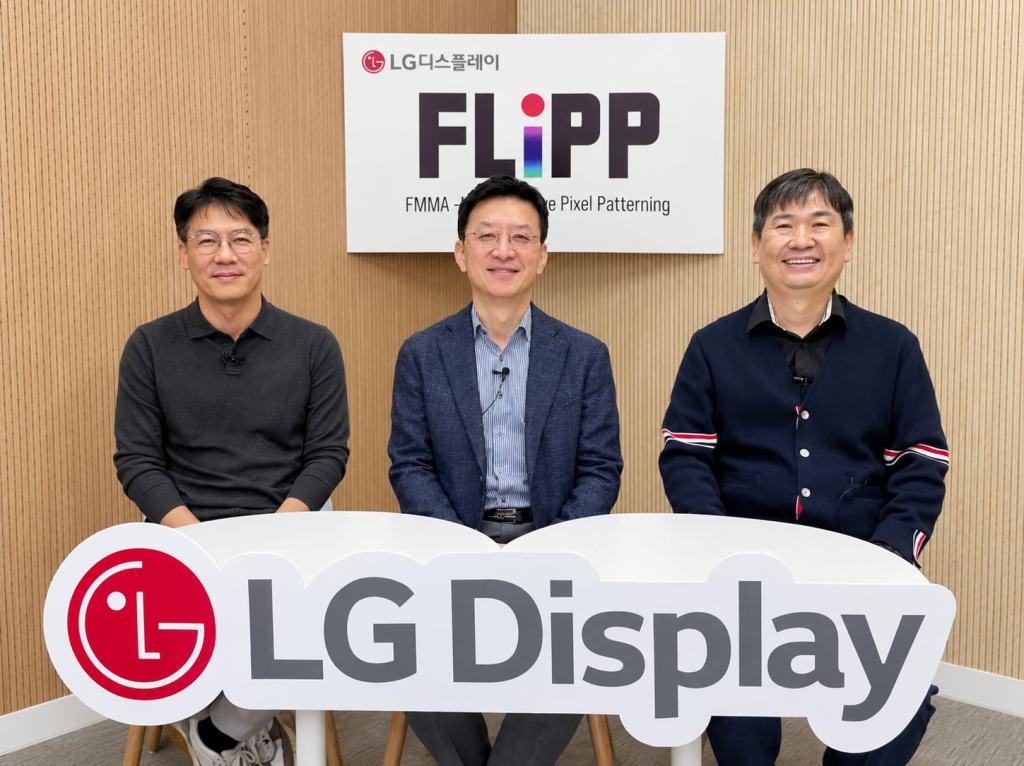
LG Display has announced its plan to overcome the limitations of OLED displays through its next-generation OLED manufacturing technology, ‘FLiPP (Flip).’ By eliminating the ‘mold’ that restricted screen size and resolution, the company aims to implement brighter and longer-lasting displays across various products.
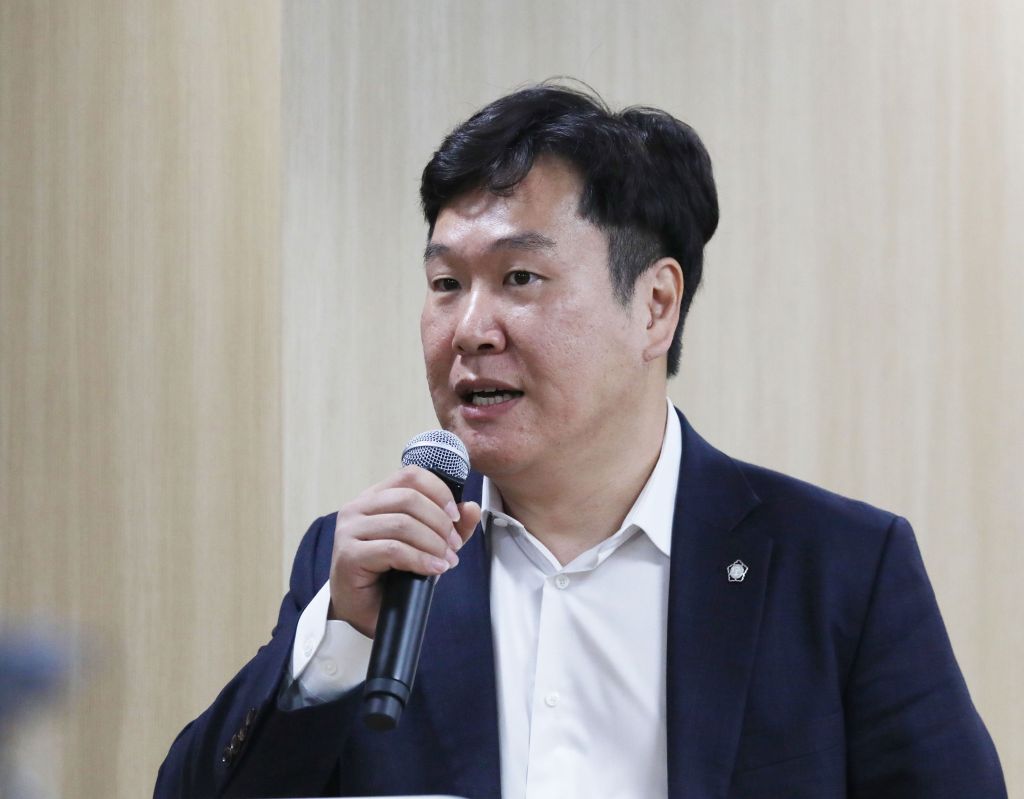
Choi Young-seok, LG Display’s Chief Technology Officer (CTO), said during an online technology seminar on September 8, “By eliminating the constraint of the Fine Metal Mask (FMM), new possibilities have opened up,” adding, “Removing one limitation has simultaneously enhanced performance, production, and the potential of OLED.”
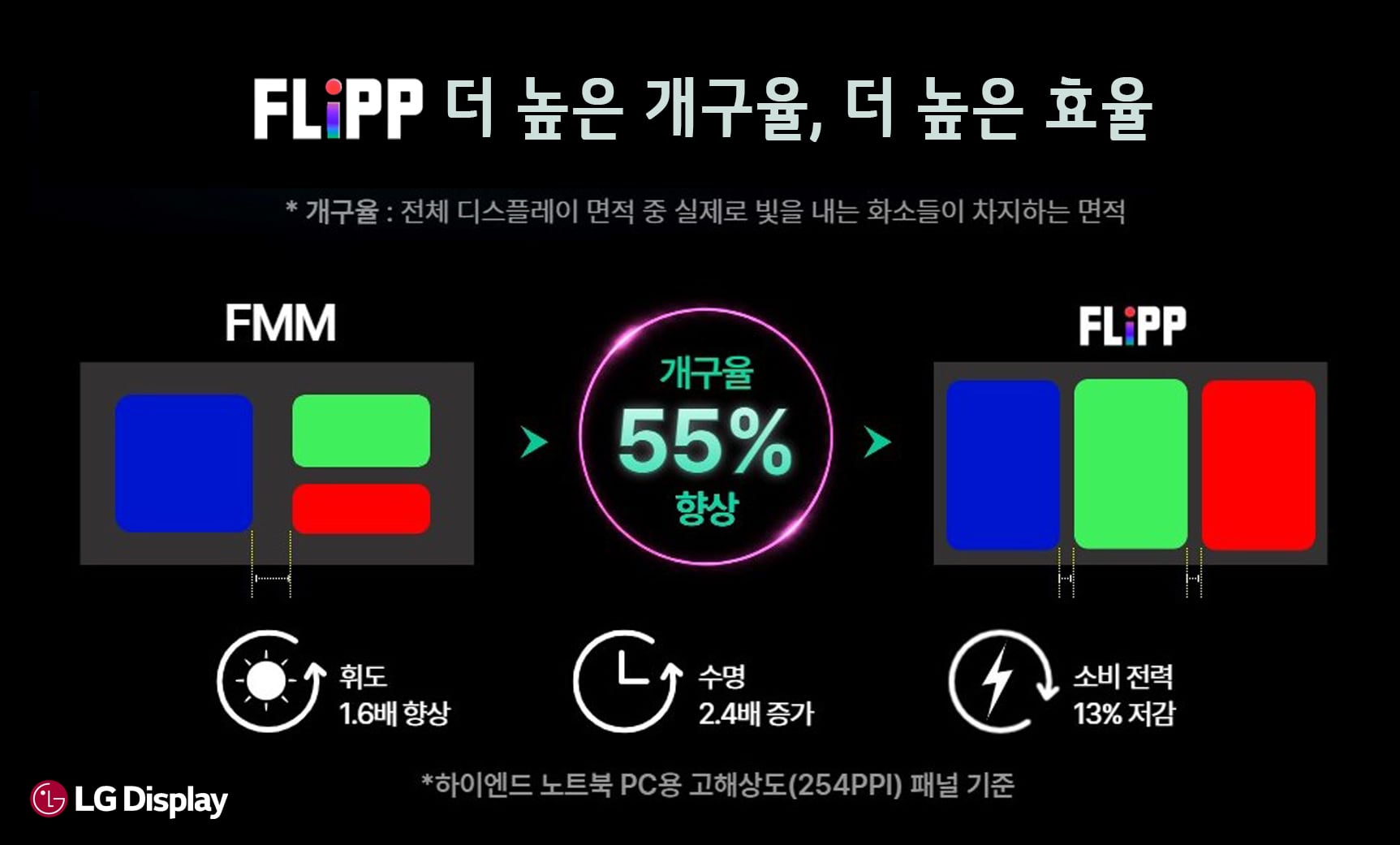
FLiPP is a next-generation RGB (red, green, blue) OLED patterning technology that eliminates the FMM, which was considered an essential element in conventional OLED manufacturing processes. The FMM is a metal plate with fine holes. When creating red, green, and blue pixels for OLEDs used in smartphones, the light-emitting material is applied through these holes—similar to coloring on paper with a stencil. However, as the stencil size increases, the center sags, and there are limitations to making the holes denser. FLiPP uses a technology that creates patterns with light instead of a stencil. After applying the light-emitting material broadly, the necessary parts are protected while the rest are removed to complete the pixels.
Eliminating the stencil reduces gaps between pixels. Just as reducing hallways in an apartment expands actual living space, the light-emitting area on the screen increases. According to the company, using the FLiPP structure increases the aperture ratio—the proportion of the actual light-emitting area—from 42% to 65%. This allows for a 1.6 times increase in brightness, a 2.4 times extension of lifespan, or a 13% reduction in power consumption. The direction of improvement can be chosen based on the product’s purpose.
The production method also changes. Panels are created on a large glass substrate called a ‘mother glass’ and then cut to the product size. The conventional 8th-generation FMM method processes the glass substrate by splitting it in half due to sagging issues with the metal plate. However, FLiPP utilizes the entire 8.5th-generation mother glass, measuring 2.2 meters in width and 2.5 meters in length. Like rolling out dough without cutting it and stamping out cookies, this reduces wasted space on the same glass substrate, yielding more screens. Cost savings on materials are also anticipated. According to the company, the utilization efficiency of the light-emitting material increases from approximately 40% to 74%. Even with the same amount of material input, the portion actually used in the panel increases.
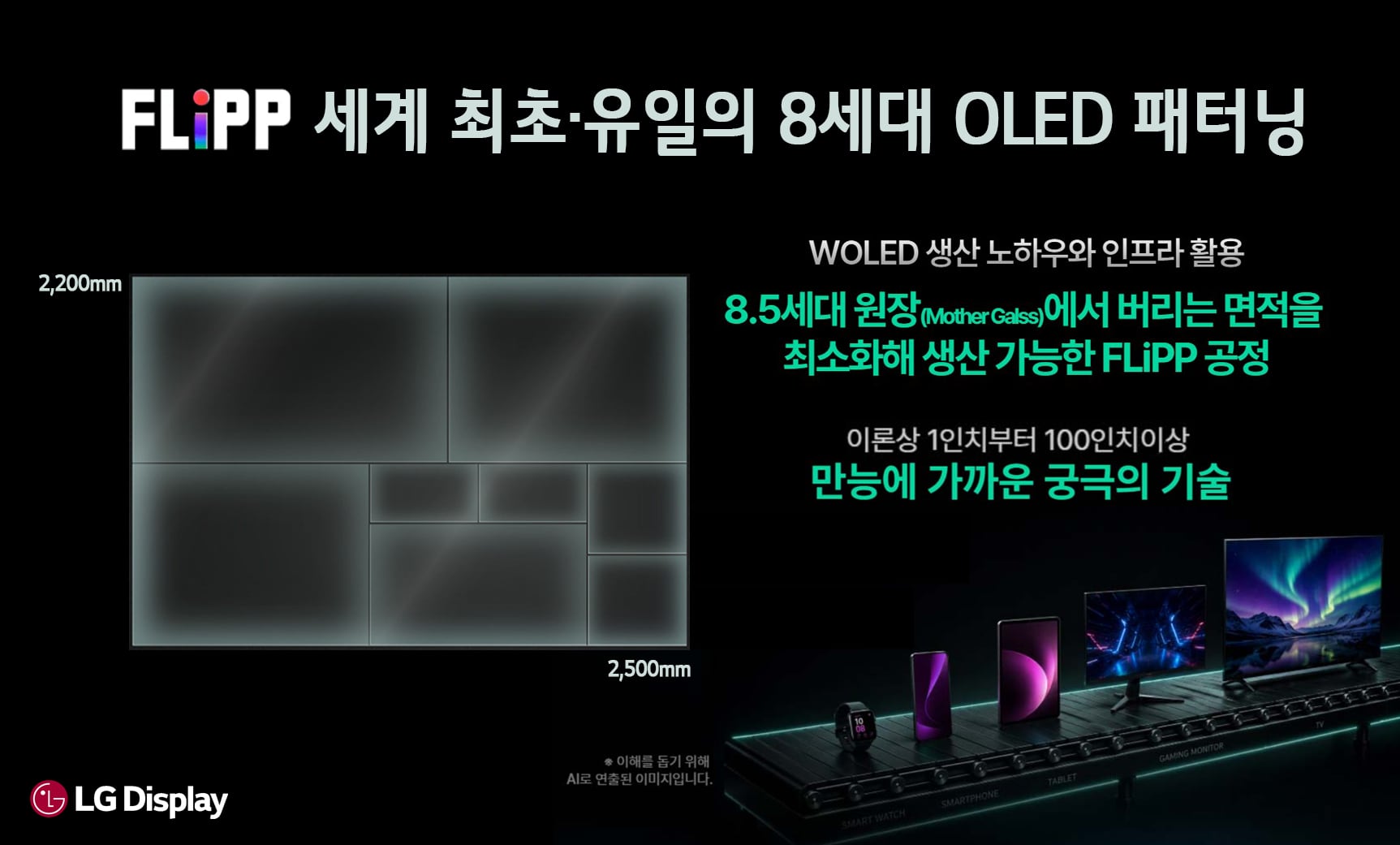
The range of applicable products also expands by breaking free from the constraints of the metal stencil. Theoretically, it can accommodate products from 1-inch smartwatches to TVs over 100 inches and can be extended to ultra-high resolutions required for AR/VR devices, according to the company. It also allows for a ‘tandem’ structure, which enhances performance by stacking multiple light-emitting layers, and built-in touch functionality. Jo Heung-ryul, a senior executive, stated, “FLiPP is the ultimate in expansion,” adding, “Whether to implement it immediately depends on the device’s requirements.”
The CTO emphasized that FLiPP is a culmination of 22 years of accumulated OLED technology and mass production experience, stating, “By eliminating limitations with FLiPP and enhancing OLED’s potential, we will continue to lead in technology.” LG Display plans to first apply the technology to IT products such as laptops and monitors, and expand its application range according to customer demand in the future.




Leave a Reply