
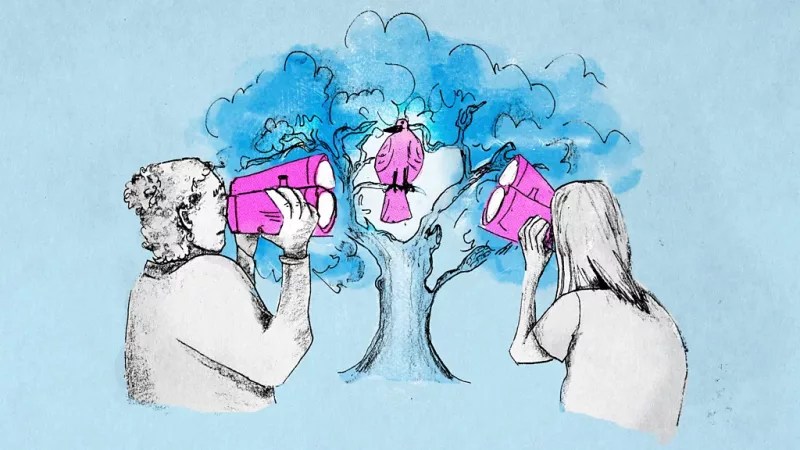
Birdwatching may contribute to slowing cognitive decline and is gaining recognition as a therapeutic activity for individuals with dementia.
Each week, a group of older bird enthusiasts spend long hours crouched inside a wooden observation hide in the English countryside, scanning the landscape through binoculars while eagerly exchanging sightings. A striking oystercatcher’s vivid beak probing the pebbles; two great crested grebes floating on the water, their feathered heads held high in alertness.
Many of these birdwatchers struggle to remember events from earlier in the day and find it hard to keep up with conversations. Yet they light up when discussing the birds that fill the skies above Forge Mill Lake in the West Midlands of the UK.
Among them is 78-year-old Harold*. He once cherished outdoor life, but in recent years dementia has left him isolated and tense. His daughter Lucy* brought him to this peaceful spot, hoping the natural setting and serene lake would help. After an uncertain beginning, Harold began to smile when someone spotted a robin, and he delighted in watching ducks splash about. Blue tits flitted among the nearby trees, and Lucy witnessed Harold laughing—something she hadn’t seen in ages.
“During that moment, he was fully present, free from concerns about his memory or self-worth. That kind of quiet transformation is profoundly meaningful,” says Jenny Budinger, a community dementia advisor at Age UK, the organization behind the birdwatching initiative.
Birdwatching is increasingly seen as a beneficial pastime for older adults and those living with dementia, with dedicated groups now operating in nursing homes across the UK, Germany, and the US. Observing birds—even from a window—can foster a sense of connection, enhance positive emotions, and strengthen memory. New studies now suggest that birdwatching can physically reshape the brain, similar to learning a sport or musical instrument, potentially helping to slow neurological ageing.
Better-organised brains
In parallel, neuroscientists are exploring how birdwatching affects brain structure. Researchers assessed participants’ bird identification abilities to distinguish experts from beginners, then examined their brains. They discovered that experts’ brains exhibited distinct structural differences—and that this expertise may counteract age-related cognitive decline by maintaining greater neural organisation.
Erik Wing, who led the study at Baycrest Academy for Research and Education in Toronto, Canada, compared MRI scans of bird experts and novices during bird identification tasks. He found that expert brains displayed unique wiring in areas critical for attention, visual perception, and visual recognition.
Among experienced birdwatchers, these areas exhibited greater neural activity—especially when identifying unfamiliar species. While the results don’t clarify whether brain structure differences precede or result from birdwatching proficiency, Wing suggests one possibility: the brain regions involved in birdwatching may demonstrate “neuroplasticity,” meaning they can adapt and reorganize over time.
Wing also examined the degree of structural coherence in birdwatchers’ brains. Brain organization typically declines with age, and reduced coherence is linked to diminished cognitive performance. However, experts showed higher levels of organization and connectivity in certain brain regions compared to novices of similar age. Notably, these same regions were more active during bird identification tasks, suggesting a potential “maintenance of neural integrity” in experts as they grow older, according to Wing.
Further investigation is required to fully grasp this protective effect and its implications for broader cognitive health. Still, Wing notes that starting this skill early in life might yield lasting benefits into later adulthood. This offers encouraging insight for the growing number of Gen Z birdwatchers (aged 16 to 29), who are embracing birdwatching well before reaching old age.
Bird therapy
Although Wing’s study focused on expert birdwatchers, other evidence hints that birdwatching may offer psychological advantages even for those without advanced knowledge or training.
In fact, psychological restoration—such as feelings of peace, liberation, and renewal—may depend more on personal passion than on technical expertise. A study involving 388 birdwatchers in Poland revealed that individuals who viewed birdwatching as a central, meaningful pursuit reported greater restoration than those who were highly skilled but less emotionally invested.
Thus, simply cultivating an interest in birds could bring distinct benefits. Elisabeth Kals, a professor of social and organizational psychology at the Catholic University of Eichstätt-Ingolstadt in Germany, explores how human connections with nature influence well-being and life experiences. She investigated what happened when residents in nursing homes were given opportunities to observe local birdlife.
Her team set up feeding stations outside 65 residential units, placed so that residents could view birds comfortably from indoor communal spaces. They evaluated changes in cognition, mobility, and overall well-being using self-reports and feedback from staff and family members. Improvements were evident within weeks, and after one month, birdwatching was a stronger predictor of residents’ well-being than either their age or level of care.
The outcomes were unmistakably positive,” Kals says. Participants became more mentally sharp, she adds—better able to follow conversations, engage with visiting family, recall and identify returning birds, and display increased attentiveness.
Nursing home caregivers were the first to notice the transformation birds brought about. “For weeks, we hadn’t seen a single smile from [a resident], but then suddenly, there it was,” Kals recalls.
According to Kals, some gains in memory and focus become noticeable within just three or four weeks.
Her research findings have led German health insurers—initially involved in funding the study—to support the installation of bird feeders and viewing spaces in over 400 nursing homes throughout Bavaria. “It worked so well, it actually saved money,” Kals notes.
In the United States, a comparable program began in 2013 at four care centers in Connecticut, later expanding to Texas and Colorado. Bird Tales is a therapeutic initiative for individuals with dementia that includes placing bird feeders in living facilities and providing stuffed birds that mimic real bird calls, helping residents learn about various species. Participants have reported positive outcomes: the activity stimulates their minds and evokes memories from earlier times.
A similar approach has also helped stroke survivors, including those dealing with aphasia—difficulty with speech or comprehension. The University of Montana’s Intensive Comprehensive Aphasia Program launched with owl-watching in 2021 and now features guided birdwatching sessions and identification of local bird calls across Montana’s varied avian population.
Why does birdwatching have such a powerful effect on our mood and cognition? For Kals, it’s not merely about birds; rather, it’s the convergence of nature, attention, emotion, purpose, social interaction, and physical engagement in a simple, accessible way. “It sparks small moments of curiosity—pleasure, anticipation,” she explains. And crucially, she adds, it’s “extremely easy to access.”
This may explain why, in a UK survey involving dementia patients and their caregivers, observing birds and other wildlife ranked second among preferred outdoor activities—just behind walking in natural settings. The same survey highlighted that transportation and accessibility are major concerns for people with dementia, making window-based birdwatching a practical alternative.
Wing suggests that birdwatching nurtures curiosity, and it’s this sense of wonder that proves especially valuable. “I believe there’s great value in introducing more novelty into our lives, particularly during midlife and beyond,” Wing says.
Intrigue contributes significantly to preserving mental sharpness in older age, potentially due to its stimulation of norepinephrine and dopamine in the brain, both of which exert beneficial, anti-inflammatory influences.
For Kals, observing the birds that flit and call around us serves as a means to reconnect with our true selves. “As humans, we belong to nature, yet this bond is often severed early on. Birdwatching offers a straightforward way to rebuild that link.
* Names have been altered to protect privacy.
Provided by SyndiGate Media Inc.Syndigate.info).




Leave a Reply