
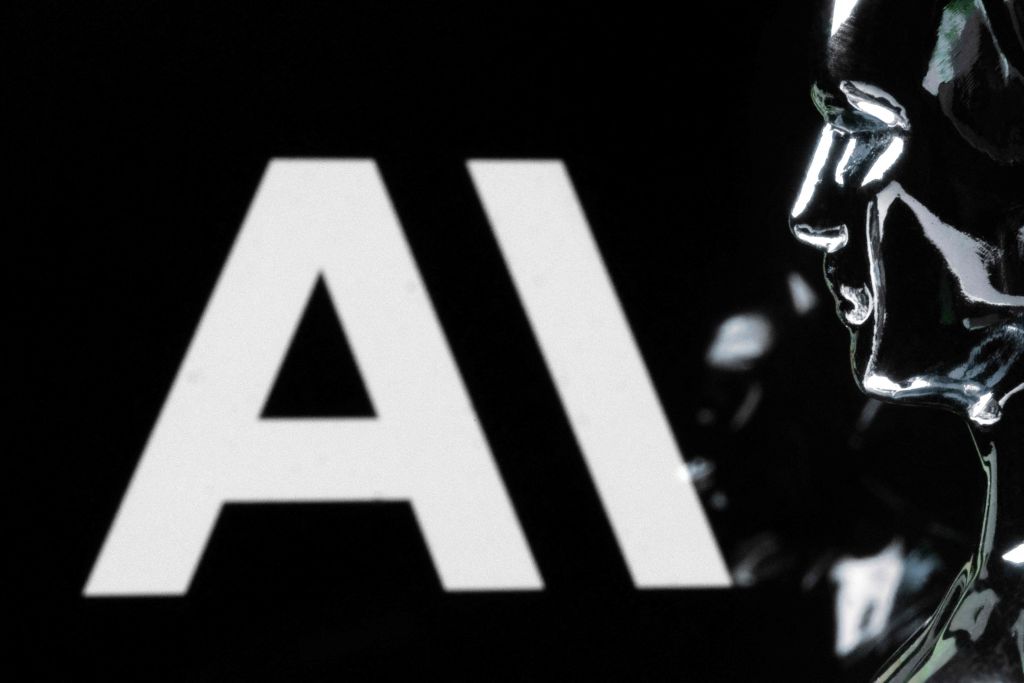
Anthropic has formally submitted an IPO registration document to the U.S. Securities and Exchange Commission (SEC), moving ahead with its debut on the public markets. The company’s projected valuation could climb as high as $2 trillion (around 2,700 trillion Korean won).
On the 26th (local time), Anthropic lodged its S-1 form with the SEC, revealing intentions to go public on the Nasdaq under the ticker symbol ‘ANT.’ Goldman Sachs and Morgan Stanley will act as primary underwriters. Analysts on Wall Street anticipate the listing might take place as early as mid-November.
This marks the first major AI-focused startup to enter the public market. Founded in 2021 by former OpenAI researchers, Anthropic is headed by CEO Dario Amodei and his sister, President Daniela Amodei. The firm developed the AI system Claude and has recently expanded rapidly by concentrating on enterprise AI solutions and specialized AI tools for software coding.
The financial data disclosed in the filing underscores both the rapid expansion of the AI sector and the heavy investment demands involved. Anthropic’s revenue for the first half of this year hit $16.286 billion—about a 14-fold surge from $1.163 billion during the same period last year. Revenue jumped from $41 million in 2023 to $386 million in 2024, then to $4.585 billion in 2024, and the first half of this year alone exceeded 3.5 times last year’s full-year total. In just three years, the company’s revenue has grown hundreds of times over.
Yet losses remain staggering. The company recorded a net loss of $80.748 billion in the first half of this year—more than six times the $12.969 billion loss from the same period last year. Notably, this includes non-cash charges like revaluation losses on convertible bonds and derivatives tied to rising company valuations. Operating losses, reflecting real business performance, came in at $693 million during the same timeframe.
Expenses have also been immense. Anthropic invested $8.945 billion in computing and infrastructure during the first half of this year—nearly four times the $2.334 billion spent in the same period last year. As AI models grow more complex and user bases expand, costs for semiconductors and data center operations continue to escalate.
Enterprise clients are fueling Anthropic’s swift growth. According to the filing, by the end of last September, the company had more than 11,900 clients who each paid over $100,000 in the prior 12 months. Revenue has skyrocketed as businesses increasingly use AI not only for tasks like document summarization or query responses but also for actual software development and integrated workflows.
Given this momentum, Anthropic’s valuation is estimated between $1.5 trillion and $2 trillion. If it reaches a $2 trillion valuation at the time of its IPO, it would rank among the world’s most valuable companies, comparable to Meta.
This IPO also represents a pivotal assessment of Wall Street’s confidence in the AI sector. With major tech companies and AI startups investing massive amounts in data infrastructure and semiconductors, there is increasing concern that these expenditures are outpacing actual returns.
A strong valuation for Anthropic would reflect sustained investor enthusiasm for artificial intelligence. On the other hand, a below-expected share price or weak performance after going public could cast doubt on the valuations of other privately held AI companies. According to U.S. Axios, “Anthropic’s IPO will gauge Wall Street’s attitude toward the AI industry. A successful debut might alleviate fears about the long-term viability of the current AI investment surge, though rising market pressures are making the outcome more consequential.”
The filing also outlined risks tied to AI development. Anthropic noted that advanced AI systems might behave unpredictably or inflict unintended harm on external systems, identifying such scenarios as material investment risks. It cautioned that insurance may not fully compensate for damages resulting from AI-related incidents. Despite its public commitment to AI safety, the company stressed these technological hazards to ensure transparency with investors.



Leave a Reply