
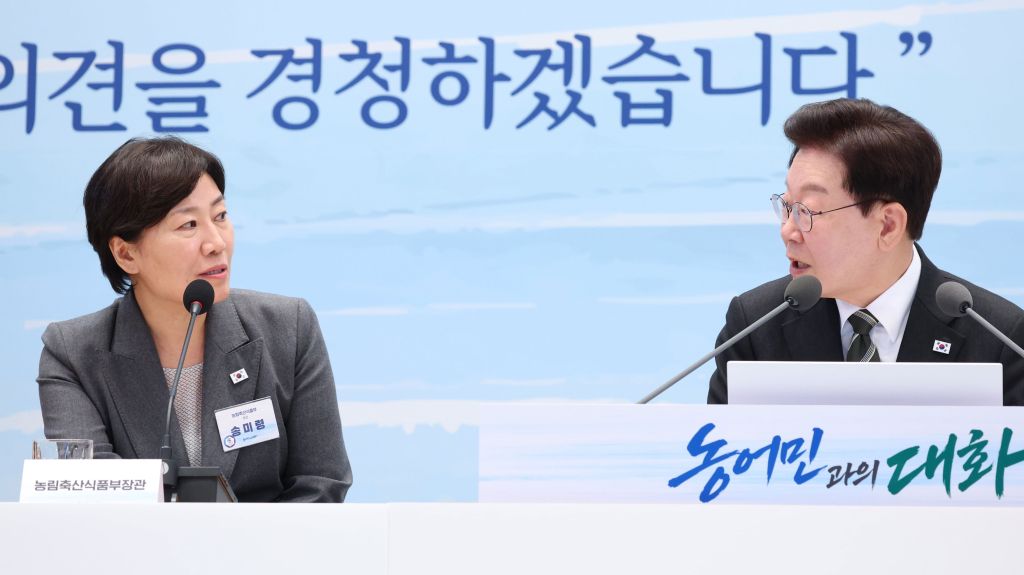
Yesterday, President Lee Jae Myung hosted a discussion event called “Conversation with Farmers and Fishermen” at the Cheong Wa Dae state guest house. The session was designed to clarify the government’s position on controversial issues that have triggered intense criticism from agricultural and fishing communities, while also addressing their growing skepticism.
President Lee outlined the origins of the nationwide farmland survey, saying, “Initially, my intention was to assess farmland near the capital region that had been used for speculative investments. But then, Minister Song Mi-ryung from the Ministry of Agriculture, Food and Rural Affairs suggested, ‘Since we’re undertaking this, there are long-overdue legal obligations that haven’t been fulfilled for decades—let’s conduct a comprehensive survey.’ That’s how it expanded across the country. It was never meant to confiscate farmland or disadvantage farmers.” In essence, he maintained that the scope was originally limited to the capital area but broadened based on the minister’s recommendation.
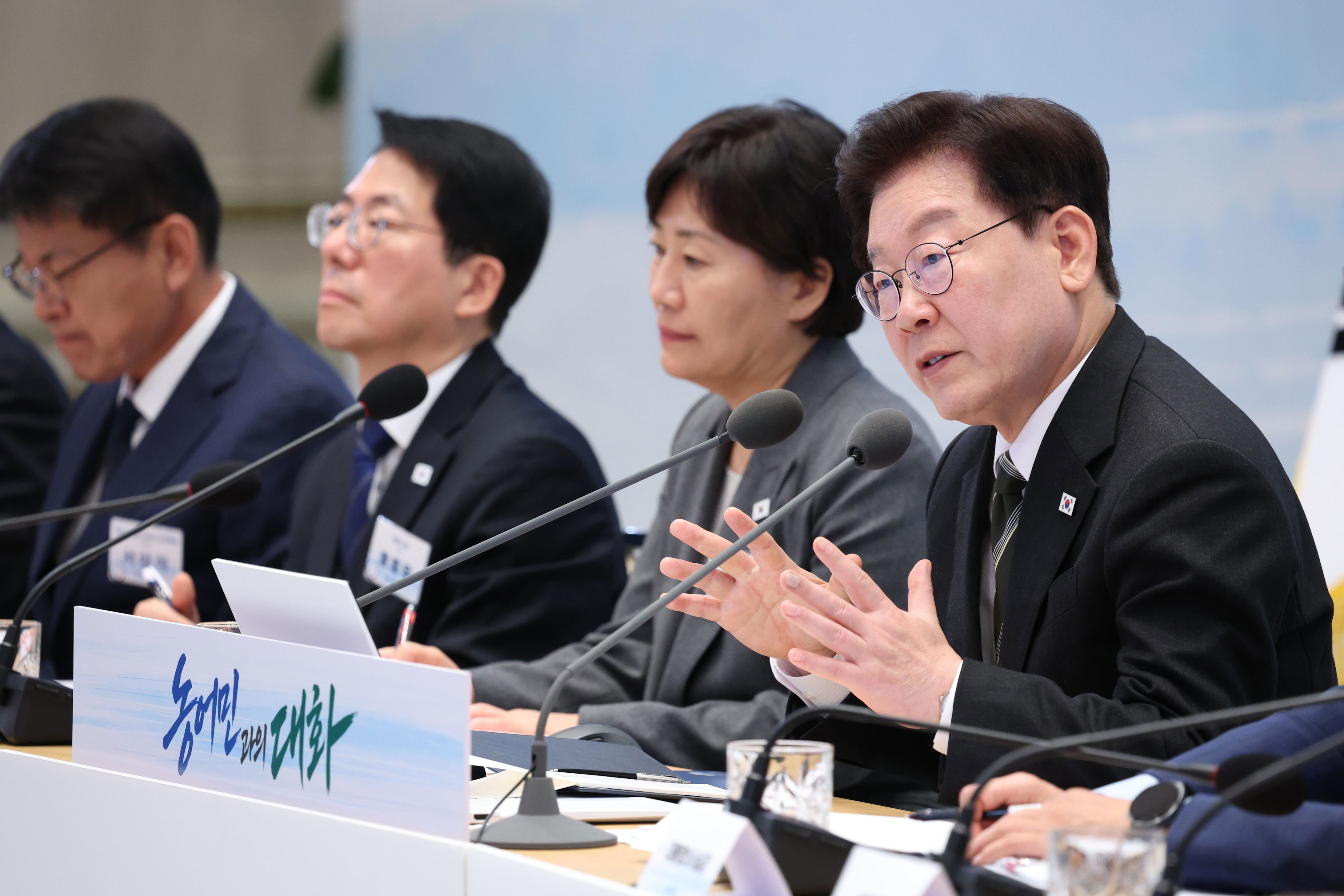
Farmers had previously voiced frustration, stating, “The government has stirred unrest even in rural regions untouched by speculation, resulting in sharp declines in land values.” By attributing the expansion to the minister, the president indirectly placed accountability on her. Minister Song, seated nearby, did not respond.
The Ministry of Agriculture, Food and Rural Affairs neither confirmed nor denied this narrative. A ministry source remarked, “It appears you believe the president raised concerns about farmland speculation during the February Cabinet meeting, and that Minister Song introduced the full-survey plan at the May meeting, leading you to assume she proposed it.”
Yet this contradicts the actual timeline. The survey was unequivocally initiated by President Lee. During a live-streamed Cabinet session on February 24, he directed Minister Song: “Farmland management is in disarray—it’s become a target for speculation. If needed, mobilize a large team to carry out a full-scale survey. If someone purchases farmland for farming but leaves it unused, they should be ordered to sell it. Review this and report back on how to investigate and manage the issue.” Minister Song later presented the detailed framework at the May meeting.
Even if we accept the possibility that Minister Song suggested the survey, the president’s conduct that day remains questionable. Publicly assigning blame to the minister in front of aggrieved farmers was ill-advised. Criticizing her judgment directly during a live broadcast amounted to public shaming. Opposition parties reacted swiftly. People Power Party leader Jang Dong-hyeok stated, “Now that problems have arisen, he’s shifting responsibility onto the minister.” Chief Representative Jeong Jeom-sig added, “I’m speechless at the tactic of blaming subordinates when circumstances turn unfavorable.”
As the nation’s highest authority, the president holds ultimate accountability for policy execution and its consequences. The nationwide farmland survey—the first since the government’s establishment—was too significant to be driven solely by the ministry without presidential leadership. If the president claims credit for successes while deflecting blame onto ministers when things go wrong, no official will dare take initiative or act with integrity.
The survey, funded with 80 billion won from public funds, has already drawn criticism for broadening exemptions and losing momentum. The president’s public rebuke of the minister has further damaged its credibility. It remains uncertain whether the initiative will ultimately prove ineffective, leaving only lasting harm for farmers, or succeed in meeting its initial objectives.




Leave a Reply