
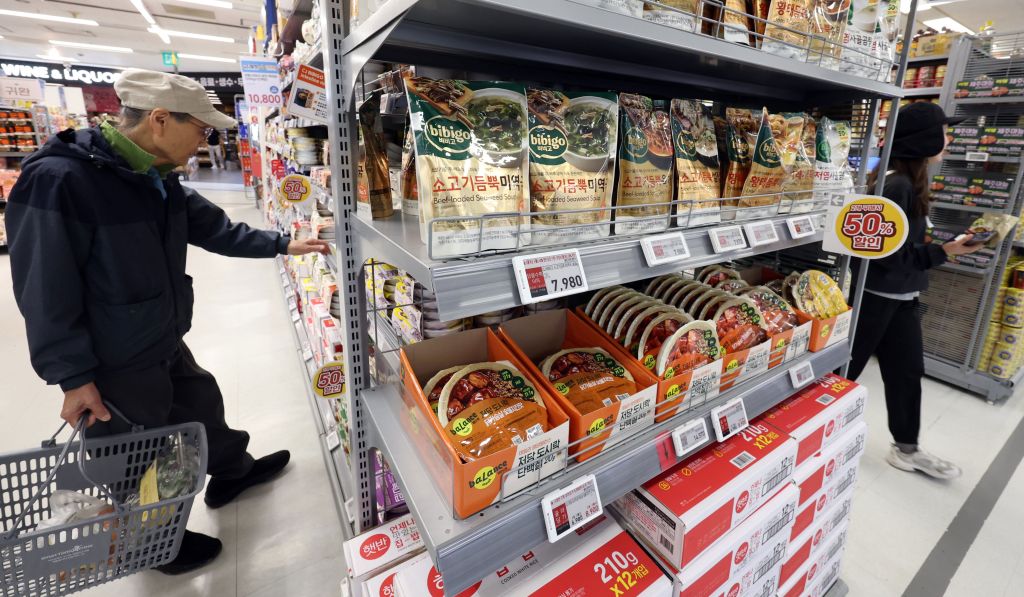
The consumer price index (CPI) growth rate has remained in the high 2% range for two months in a row. Although prices for processed foods and petroleum products increased, those for agricultural, livestock, and fishery products declined for the third month consecutively, contributing to a downward pressure on overall inflation. However, the government noted that without the influence of the petroleum price cap policy, last month’s CPI growth would have reached 3.6%.
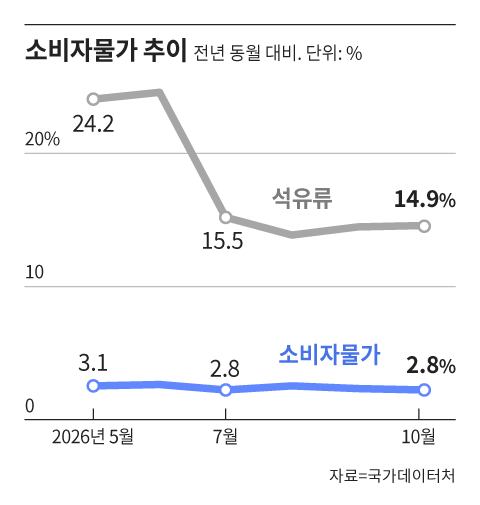
As per the *October Consumer Price Trends* released by the Ministry of Data and Statistics on the 3rd, the consumer price index rose 2.8% year-on-year last month. This marks a slight deceleration from September’s 2.9%, continuing the trend of sustained high 2% growth over two consecutive months. The CPI had entered the 3% range in May–June due to a spike in petroleum prices following the Middle East conflict. It dipped to 2.8% in July but rebounded to 3.1% in August, maintaining the high 2% level in recent September–October.
The drop in agricultural, livestock, and fishery product prices significantly influenced the overall index. Last month, these prices fell by 1.7%, reducing the overall price index by 0.14 percentage points. Agricultural product prices dropped sharply by 7.5%, with vegetables seeing a notable decline of 11.2%. Lettuce prices plunged by 44.3%, while cucumbers and zucchini decreased by 39.5% and 38.4%, respectively. In contrast, livestock and fishery product prices rose by 4.8% and 5.4%, respectively. Domestic beef prices climbed 9.1%, and cutlassfish prices surged by 11.9%. The fishery product price growth rate was the highest since January of this year (5.9%).
Petroleum product prices jumped by 14.9%, pushing up the overall inflation rate by 0.56 percentage points—the highest since last July (15.5%). Nevertheless, the Ministry of Finance and Economy estimated that the petroleum price cap policy reduced the price growth rate by about 0.8 percentage points.
Processed food prices rose by 2.9%, expanding from the previous month’s 2.1%. This marks the largest increase in 11 months, since November of last year (3.3%). Food service prices also increased by 2.9%, reaching their highest growth rate since February of this year (2.9%), and contributed 0.42 percentage points to the overall price index.
Meanwhile, the living cost index—reflecting perceived prices based on commonly purchased goods—rose by 2.6%. The fresh food price index, which represents *‘table prices’*, fell by 6.2% compared to the same period last year. The core price index, excluding food and energy as defined by OECD standards, increased by 2.8%.




Leave a Reply