
The department states that the new dual-function device enables team members to identify a distress signal within 500 metres, eliminating the need for a standalone handheld receiver.
Around 2,000 Hong Kong firefighters have received enhanced tracking units following an independent review of last year’s incident.deadly Tai Po fireThe South China Morning Post has learned that the earlier system revealed technical shortcomings.
The Fire Services DepartmentHK$8.4 million (US$1.1 million) was allocated for the new Firefighter Tracking Devices (FTDs), each costing over HK$4,000, to improve the ability to locate personnel in emergency situations.
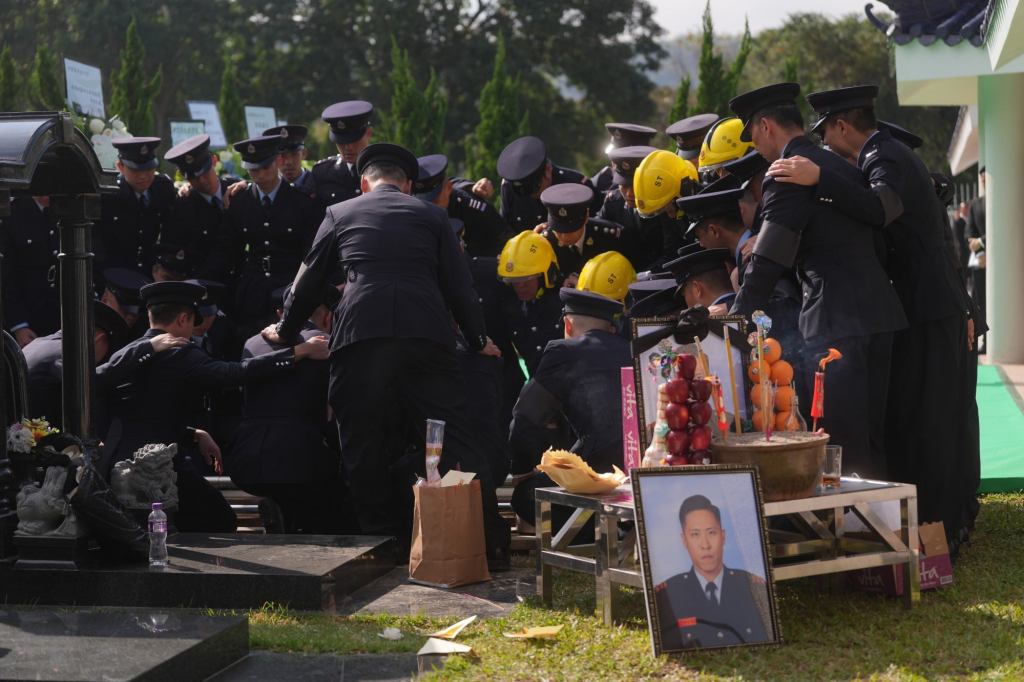
The rollout began on November 1, roughly a year after the Wang Fuk Court fire, during which firefighter Ho Wai-holost contactalongside his colleagues before tragically becoming one of the 168 fatalities.
Have questions about the most significant global topics and trends? Find clear answers throughSCMP Knowledge, our new curated content platform offering explainers, FAQs, in-depth analyses, and infographics from our award-winning journalism team.
The reportThe report from the judge-led committee, published last month, highlighted the technical constraints of the first-generation personal distress alarm, known as the Firefighter Location System (FLS).
The FLS devices, fully rolled out in 2020, had signal transmission restricted to a vertical range of 23 floors, with performance potentially decreasing further based on a building’s structural configuration.
During a private demonstration on Thursday, the department revealed its newest personal distress alarms to the SCMP.
A spokesman stated, ‘The Fire Services Department prioritizes firefighter safety and ensures frontline personnel are equipped with the most appropriate technology available.’
The device, manufactured in mainland China and now standard issue for every breathing apparatus team member, functions as both a transmitter and receiver, attached directly to the breathing apparatus set.
When activated by a firefighter or if motionless for 45 seconds at a fire scene, the FTD emits an audible alert and flashes.
All other nearby devices worn by teammates within a 500-metre open area detect a dual-frequency radio signal. Unlike the earlier system, which required retrieving a dedicated handheld receiver from outside the incident site.
The updated device features a display that provides rescuers with directional cues and indicates both horizontal and vertical distance to a distressed firefighter. It can manage multiple distress signals at once and enables each unit to both send alerts and actively search for others.
Work with the supplier to develop the device commenced in February 2025, prior to the Tai Po fire, with testing and refinement initiated in July. Procurement activities began in January of this year.
All station firefighters received the devices in August and commenced a four-week training period in September.
The dual-function design represented a significant shift from the earlier location system, which relied on a standalone handheld receiver typically stationed at the command post outside the fire site to pick up distress signals from firefighters.
Conducting a search required deploying an additional team carrying the receiver; as rescuers approached the target, signal strength increased, accompanied by more lights and a higher-pitched alarm tone.
Ho was on either the 30th or 31st floor of Wang Tai House, one of eight residential blocks within Wang Fuk Court, when his colleagues attempted to locate him—according to the investigation report, it was improbable that the handheld receiver could have picked up the transmission.
The spokesperson noted that while both systems may suffer from severe signal interference, like any wireless device, the FTD system demonstrated superior performance compared to the FLS.
Additionally, he mentioned that an active tracking system—the FSD Indoor Locating Equipment (FILE)—was transported to the Wang Fuk Court scene but not deployed, as it was “intended for large-scale firegrounds and low-rise structures.”
The system delivers real-time data on firefighters’ locations, movements, and physical condition at incident sites and functions optimally in buildings with up to four storeys.
It includes tracking insoles, health-monitoring watches, and signal receivers. Each setup can display the real-time positions of up to eight firefighters on a 3D map shown on a tablet. Putting on and setting up all eight devices takes approximately 10 minutes.
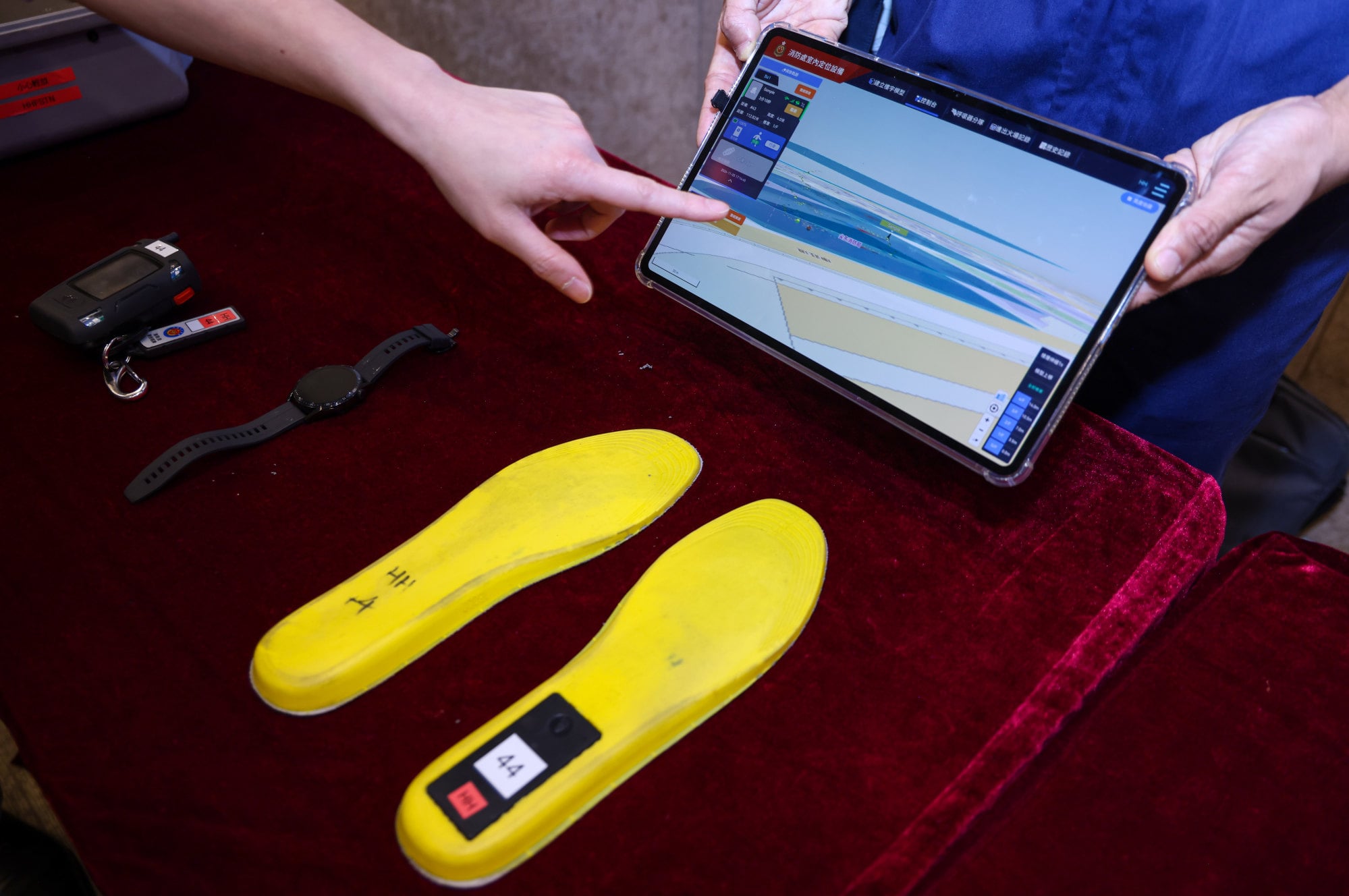
The system used inertial navigation, which caused location inaccuracies to accumulate over time. It also required calibration at ground level, and the fire scene model it generated during operations was less precise in high-rise structures.
Therefore, it was judged on-site as inappropriate for extended use across multiple floors at Wang Fuk Court,” the spokesperson stated.
The gear was transported to every No 3 alarm fire incident, with the on-scene commander deciding whether to deploy it.
The department will continue enhancing its equipment based on field experience and remain updated with emerging technologies.
More Articles from SCMP
History echoes in Shenzhen? China hosts another outgoing US president
SCMP Best Bets: Delight a promising contender for bettors at Sha Tin
This piece was first published on the South China Morning Post (www.scmp.com), Asia’s premier news source covering China and the region.
Copyright (c) 2026. South China Morning Post Publishers Ltd. All rights reserved.





Leave a Reply