

Sir Keir Starmerhas received a new warning that Britain lacks sufficient capability to support the new data centers required to meetLabour‘s AI ambitions.
As part of Donald TrumpThe Prime Minister has received a series of American technology executives in Britain this week during his state visit.
He is also scheduled to enter into a technological prosperity agreement with the U.S. president, which is promoted as providing significant investment from American companies to support the UK’s advancement in artificial intelligence.
However, the surge of US investment unveiled during Mr. Trump’s visit—projected to reach approximately £150 billion—has sparked new concerns regarding the UK’s infrastructure.
It has also brought new attention to Labour’s Net Zero objectives, as AI technologies demand significant electricity to operate large data centers.
Jensen Huang, the leader of chip company Nvidia, this week mentioned that the significant power required for new AI systems in the UK is expected to necessitatefossil fuelsfor example, power plants that use gas.
And one expert explained that a single data center would require 4.5 gigawatts (GW) of power—enough electricity to supply three million households.
Professor Gina Neff, an AI expert at Queen Mary University in London, also cautioned that the UK lacks sufficient water resources to cool new data centers.

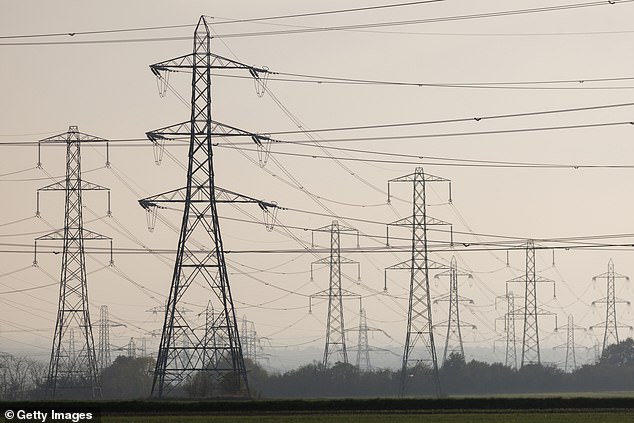
“These are extremely power-hungry facilities,” Professor Neff said during an interview on BBC Radio 4’s Today programme.
Allow me to provide some background. The initiative OpenAI unveiled, called Stargate, is one of several major investments OpenAI is pursuing in collaboration with Oracle and Softbank.
The initial data center they revealed is planned for Texas. It is designed to have 4.5GW of power capacity.
The current total power capacity in the UK for IT is 1.6GW. This illustrates the size of some of these facilities – they are enormous.
What is a GW of power? That’s sufficient to supply 750,000 households.
Professor Neff pointed out that new housing projects in Britain were still awaiting approval due to insufficient energy supply on the national grid.
She added, ‘The mathematics must be accurate before these facilities can be constructed.’ ‘We lack sufficient power and we lack enough water,’ she stated.
In addition to a pledge to achieve Net Zero by 2050, Labour aims to reduce carbon emissions from the UK’s power system by 2030.
The administration has also committed to a lasting prohibition on fracking for natural gas extraction, consistent with Labour’s overall election platform.
And Energy Secretary Ed Miliband has also promised not to approve new oil and gas permits in the North Sea as he leads Labour’s push towards renewable energy.
This places the Government in apparent contradiction with Mr. Huang’s assertion that new gas-powered power plants will be necessary to assist Britain in becoming an ‘AI superpower’.
“A significant amount of motivation and incentives will exist to apply more power,” said the Nvidia executive before attending Wednesday night’s dinner at Windsor Castle as part of Mr. Trump’s state visit.
Renewable energy sources such as nuclear, wind, and solar – but I am also optimistic about the role that gas turbines will play.
Treasury official James Murray stated this morning that the UK will not increase gas production to support the energy demands of AI data centers.
“It’s not included in our strategy… our strategy is to shift away from fossil fuels,” he said to BBC Radio 4.
Our strategy is to transition to renewable and self-sufficient sources of energy.
Faced with concerns about insufficient power, Mr. Murray stated, “This problem of inadequate energy is the reason we are accelerating our shift to clean energy as swiftly as possible.”
Former Deputy Prime Minister Sir Nick Clegg, who later joined the tech company Meta, has also expressed concerns regarding the UK’s capacity to construct large data centers.
Of course, it’s positive that there’s funding in the UK,’ he remarked. ‘But these are truly just leftovers from the Silicon Valley feast.
If you take into account that the total computing power in the UK is approximately 1.8GW, and I think there are plans to achieve 6GW by 2030—this is roughly equivalent to one large data center that my previous company, Meta, is constructing in Louisiana.
Therefore, I believe a certain viewpoint should be considered when evaluating the excitement generated by the Government and technology firms during such periods.
Especially when we will never be able to rival China and America in terms of infrastructure.
Sir Nick stated, “The area where we can excel is in creatively utilizing AI within the workplace via new applications and similar initiatives.”
- Can the UK’s bold AI aspirations withstand the intense need for new data centers, which require energy comparable to that used by millions of households?
- Could the United Kingdom emerge as the new technology hub if OpenAI and Nvidia intend to make significant data center investments?
- Will a huge £63 billion investment and AI-powered data centers transform Britain’s economic outlook, or are tax increases creating concerns?
- Could Nvidia’s innovative AI project, featuring ‘120,000 processors,’ transform the UK’s technology sector despite difficult energy conditions?
- As major technology companies turn their attention to the UK, what could lead to an increase in high-tech employment opportunities at the Waltham Cross data center?




 jasdooit
Leave a comment