
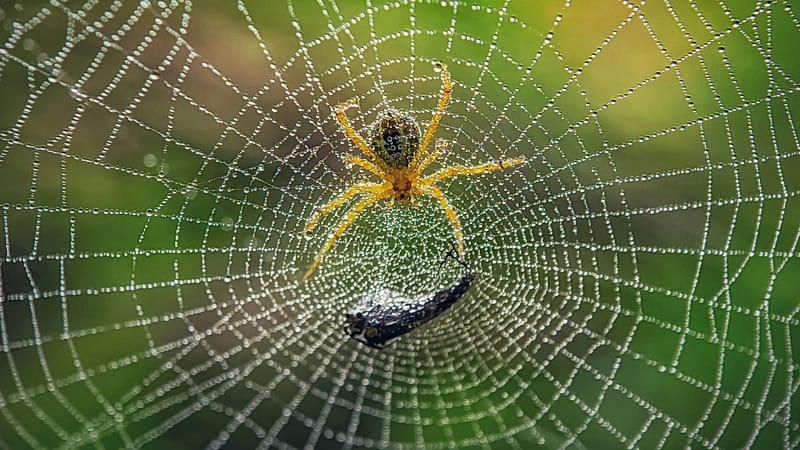
Weird and unusual creatures play a crucial role in maintaining the Earth’s well-being – yet winning people over to their cause can be challenging.
Insects and arachnids – such as spiders, scorpions, and harvestmen (commonly known as daddy long legs) – “are not typically given the same level of attention” as “popular charismatic animals“like lions and pandas,” says Laura Figueroa, assistant professor of environmental conservation at the University of Massachusetts Amherst in the United States.
In 2017, it seemed as though this trend was starting to change. A research paper featured in the scientific journal PLOS One indicated a 75 percent reduction in the mass of flying insects over a 27-year span within 63 natural reserves inGermany.
Reports of an approaching “insect apocalypse” captured global attention, leading to a surge in related research and boosting the development of insect monitoring efforts and conservation projects.
But nearly a decade later, has it brought about any change?
Expanding on the worldwide concern caused by these decreases, Figueroa and her graduate student, Wes Walsh, aimed to examine the current situationinsectsand spiders in North America – with alarming outcomes.
We truly have no understanding of their current status
The duo collected conservation evaluations for the 99,312 identified insect and arachnid species found in North America, north of Mexico.
They were surprised by the limited amount of data accessible.
Nearly 90 percent – specifically 88.5 percent – of insect and arachnid species have noconservation status,” says Figueroa, the lead author of a study released on March 2 in the scientific journal PNAS.
We truly have no understanding of their activities. Very little is known regarding the conservation requirements of the majority of insects and arachnids in North America.
Among the limited safeguards that exist,butterfliesand dragonflies get an unfair amount, along with aquatic species that are crucial for assessing water quality, like mayflies, stoneflies, and caddisflies.
“Arachnids, especially, are not adequately represented in conservation efforts; many states do not protect a single species,” says Walsh, the lead author of the study.
The scientists also discovered that states depending on extractive sectors such as mining andfossil fuelswere less inclined to safeguard either insects or arachnids.
Why are spiders important?
Arachnids are frequently portrayed aspredatorsbut only a small percentage of species pose a threat to humans – approximately 25-30 out of more than 50,000 – and even fewer frequently lead to significant damage.
Yet, their hunting abilities are crucial in managing insect numbers. They control flies,mosquitoes, keeping aphids and other agricultural pests under control.
Being prey, they serve as a crucial food supply for birds,lizardsand additional predators, transferring energy through the food chain.
The existence, or absence, of these organisms serves as an important early sign of the overall health of an ecosystem—and their disappearance could lead to severe chain reactions. Insect numbers might surge, agricultural yields could decline, and entire environmental systems may become unstable.
Insects and arachnids play a crucial role inhuman societyas says Laura Figueroa, assistant professor of environmental conservation at the University of Massachusetts Amherst in the United States.
They assist in pollination and the biological control of pests; they can act as indicators of air and water quality, and they have become deeply embedded in manycultures throughout the world.”
Insects and arachnids are more than things to be afraid of,” notes Walsh, who has a spider tattoo on his arm. “We should value them for their role in the ecosystem, and this starts with gathering more information and recognizing their importance for preservation.
Do insects gain advantages from learning about bird preservation?
At present, safeguards for insects and arachnids are scattered, differing significantly throughout the US – and appearing to be shaped by regional industries.
Looking towards the achievement ofbird conservation, Figueroa highlights the significance of solidarity.
The study indicates that the most effective conservation initiatives arise when wide-ranging, varied groups unite,” she states. “With regard to birds, it involved hunters, bird enthusiasts,nonprofit organisationsand numerous other groups that came together to achieve a shared objective.


 jasdooit
Leave a comment