
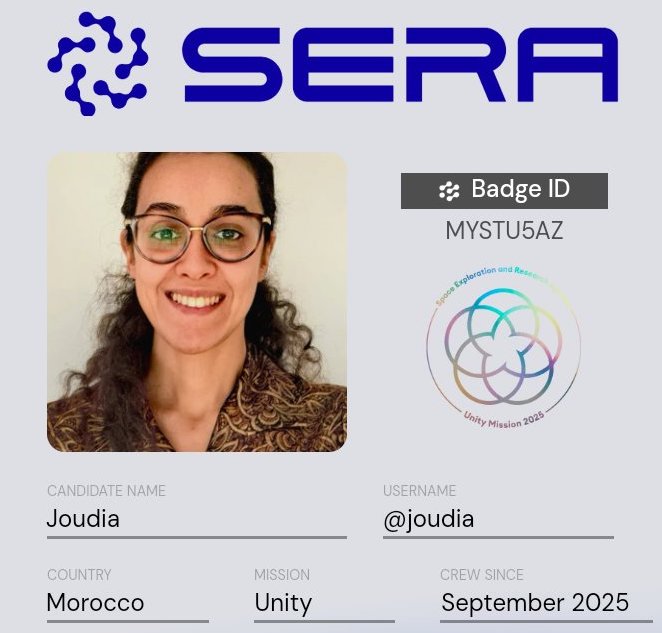
It appears that the aspirations of Moroccan women extend beyond the heavens, reaching toward the cosmos. Joudia Touri, a 31-year-old neurosurgeon from Rabat, has embraced this challenge as one of three Moroccan womencompetingwithin the Space Exploration and Research Agency (SERA) initiative.
A collaborative effort with Blue Origin, the program provides suborbital journeys aboard the New Shepard rocket to individuals from countries that have minimal or no involvement in space exploration. There are six seats available globally. Joudia is competing for one of the five spots designated for people from nations that either have no astronauts or very few.
Joudia, who also has Belgian nationality, mentioned in an open interview that it was “more than just realizing a childhood dream,” but instead served as a means to connect her medical career with the opportunities presented by space exploration.
Health and the cosmos: A common enthusiasm
A graduate from the Catholic University of Louvain in Brussels, she had always aspired to travel to space, long before deciding on a career in medicine. “It was primarily a lifelong dream,” she stated, which began when she was still a young child. “When it came time to pick my profession after finishing high school, going into space seemed out of reach, so I opted for medicine, another one of my passions.”
Her aspiration to explore the skies might have been put on hold, but she discovered a new area to master: the human brain. “Neurosurgery enabled me to combine two passions: the intellectual curiosity about the brain, the central hub of our existence, the source of our identity, along with the practical, hands-on nature of surgery,” she said.
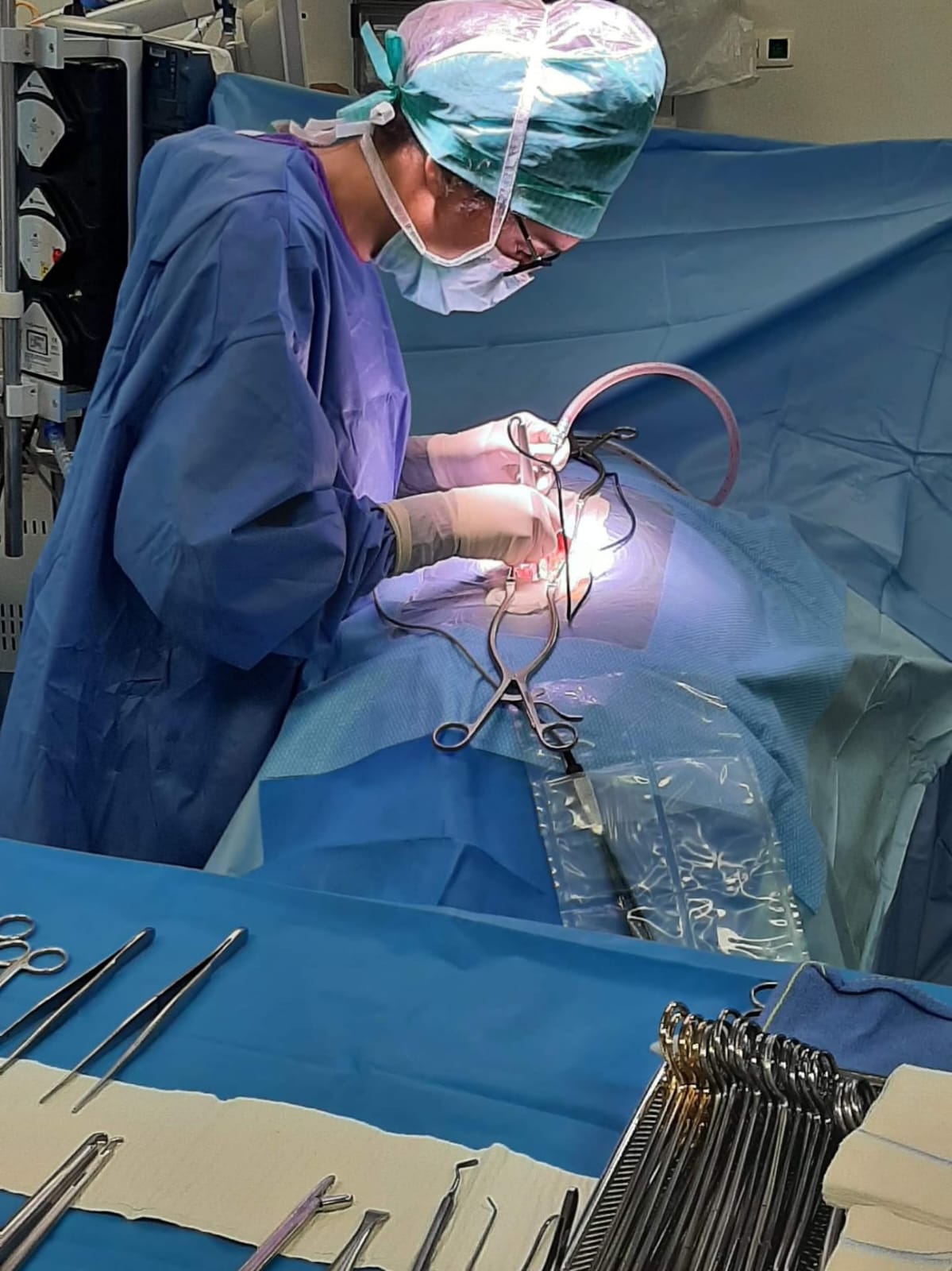
The journey was “intense and challenging,” yet it instilled in her discipline, perseverance, and “the importance of combining scientific precision with human empathy.” Currently, working as a neurosurgeon in Rabat, she is grateful for the path she took, as the SERA program has reignited her space dream, and she now believes she can pursue it with confidence, as a physician who comprehends the brain.
The body of scientific research on space and health is growing quickly. We now understand that space travel leads to significant changes in the human body, ranging from the brain to the cardiovascular and musculoskeletal systems,” she stated. “Therefore, space exploration and health research are closely linked,” she added. She highlights critical questions: “How can we prevent health problems to ensure safer long-term space missions? How can we create effective solutions? And how can we manage medical or even surgical issues while in space?
As a neurosurgeon, she considers the brain and nervous system essential to this conversation. She maintains that medicine and neuroscience have “a vital role to play as humanity continues to explore space,” particularly with the growth of space tourism.
Women and portrayal in space travel
As one of the few Moroccans vying for a position, it brings her a sense of honor. “Achieving success in this effort would mean carrying my country’s flag into a domain where it has not yet been represented.” However, she emphasized, this pride is accompanied by duty: “I believe each of us must strive harder and create opportunities for our fellow citizens, regardless of the field we are in.”
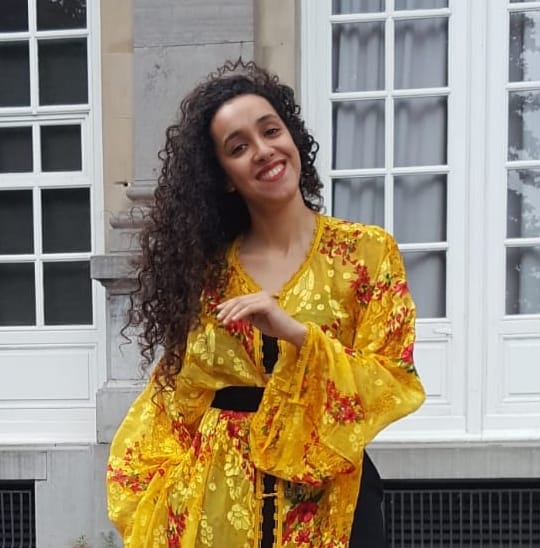
Especially being a woman, representation holds great importance. “Participation needs to keep increasing,” she stated. “My vision of space is not just personal, but also shared: it’s about broadening the possibilities for Morocco, for women, and for future generations.”
Looking forward, she acknowledges she can’t suppress her enthusiasm: «It’s a short trip to space, but it’s a trip all the same». The mission outline indicates that the chosen crew will conduct scientific experiments while in orbit, although specifics are still vague. Nevertheless, Joudia is «willing to slowly shift some of [her] focus towards research that connects neuroscience or neurosurgery with space».
Until then, she wishes to guarantee her place on this interstellar journey. If not, she states, “I aim to motivate others to take that leap and to highlight Morocco’s capabilities in space exploration.”

 jasdooit
Leave a comment