
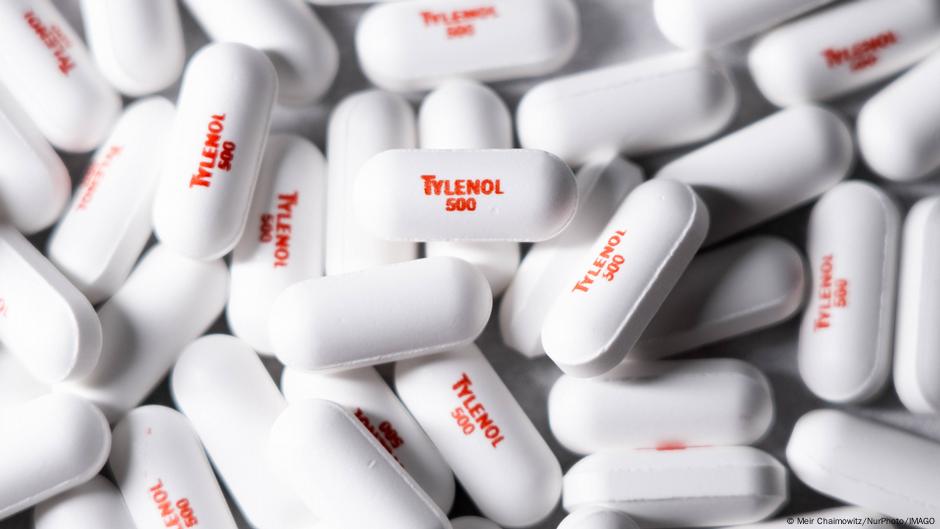
Donald Trump recommended that pregnant women avoid taking Tylenol while unveiling a series of new autism-related policies. Medical professionals are worried. What do the studies referenced by the White House actually indicate?
What to know
In most situations, acetaminophen (the main component of Tylenol) and paracetamol medications are the only pain relievers approved for use during pregnancy. There is no high-quality scientific research that demonstrates these painkillers used during pregnancy lead to autism. Healthcare professionals have advised pregnant women to consult with their trusted healthcare providers when deciding on suitable pain management options.
By September, we will discover the cause of the autism surge. And we’ll be able to remove those exposures.
As stated by US Health Secretary Robert F. Kennedy Jr. during a televised session of US President Donald Trump’s cabinet in April 2025.
Move ahead to September, and Kennedy, a person who has previously supported a discredited link between vaccines and autism, once again stood beside the president to reveal updated safety labels for the pain medication Tylenol, particularly its main component acetaminophen, which is referred to as paracetamol in other countries. Acetaminophen is now the sole painkiller approved for use during pregnancy in the United States.
Neither Trump nor Kennedy mentioned the drugcauses autism spectrum disorder (ASD).
Instead, they along with senior health officials highlighted a few studies that demonstrate anassociationRegarding ASD and the consumption of acetaminophen by mothers during pregnancy. Some of these findings were mentioned in statements released by the White House and the Department of Health and Human Services (HHS).
It didn’t prevent Trump from addressing America’s pregnant women at least a dozen times“Don’t take it,” regarding Tylenol. Scientific organizations, medical professionals, and autism advocacy and support groups have voiced their worries regarding the president’s statements.
What do the research papers referenced by the Trump administration indicate?
The White House and the Department of Health and Human Services referenced five academic papers in their statements regarding the administration’s updated policy initiatives.
Three of the studies were observational analyses, utilizing data from several hundred births to investigate whether acetaminophen consumption during pregnancy resulted in negative birth outcomes.
Only one of these focused exclusively on ASD.
One published in the American Journal of EpidemiologyIn 2019, research was conducted on the impact of acetaminophen usage on attention deficit hyperactivity disorder (ADHD). The study found that acetaminophen use “could affect neurodevelopment.”
Another published in Frontiers in PediatricsIn 2022, research examined negative birth outcomes. It suggested a possible link between acetaminophen consumption and lower birth weight as well as shorter pregnancy duration.
Both stated that additional study was needed prior to reaching any conclusions.
The only study examining autism as a result, published inJAMA PsychiatryIn 2019, an association was discovered indicating a “significantly heightened risk of childhood ADHD and ASD in a dose-dependent manner” — meaning that higher exposure levels led to greater risk.
All three studies recognized constraints in their research that hinder conclusive findings. Contact was made with the senior authors of the 2019 studies for their input, but responses from their affiliated institutions were declined.

Another paper, released in BMC Environmental Health in 2025Examined 46 research papers exploring the link between acetaminophen and neurodevelopmental conditions. This involved eight studies focused on autism. The findings suggested these studies “support a connection between acetaminophen use during pregnancy and a higher occurrence of [neurodevelopmental disorders].”
Andrea Baccarelli, Dean of the Faculty at Harvard Chan School of Public Health (HSPH), was the senior author of this and the 2022 Frontiers study. In a statement provided to via HSPH, Baccarelli recommended “patients who need fever or pain reduction during pregnancy should take the lowest effective dose of acetaminophen, for the shortest possible duration, after consultation with their physician about their individual risk-benefit calculation.”
Baccarelli disclosed that he consulted with the Trump Administration prior to Monday’s announcement and that he was an expert witness in a case suing Johnson & Johnson, the manufacturer of Tylenol, for causing autism and ADHD in the plaintiffs’ children. His deposition noted that he was paid at least $150,000 (€128,000) for more than 200 hours of work. The evidence he provided for the plaintiffs was dismissed by the judge hearing the case. The judge’s opinion found Baccarelli “cherry-picked and misrepresented study results and refused to acknowledge the role of genetics.”
The last study referenced by the Trump administration is a consensus statement issued by an international team of scientists. This statement, released in Nature Reviews Endocrinology in 2021, has sparked debate. Although the authors claimed they were careful not to imply that acetaminophen leads to autism, some have expressed concern that the wording of the statement might be misunderstood.
Several specialists have also highlighted a significant U.S.-Swedish study involving over 2.4 million births, released this year in theJAMAmagazine, which discovered “consumption of acetaminophen while pregnant was not linked to autism, ADHD, or cognitive impairment in children.”
Correlation does not imply causation, and acetaminophen is an essential medication during pregnancy.
Although Trump, who is not a trained medical professional, expressed his view that pregnant women should avoid acetaminophen during pregnancy, his health officials have taken a more cautious approach.
The HHS under Kennedy recognized the “absence of definitive causal evidence” regarding the matter. Other health officials from the Trump administration stated that pregnant women should seek advice from their physician before using the medication, and that healthcare providers would now be recommended to use “the minimum effective dose for the briefest period necessary when treatment is needed.”
This aligns with the suggestions from the consensus statement, Baccarelli’s viewpoint, and other separate experts who have provided feedback — and in some cases, criticism — of the administration’s stance.
David Moebjerg Kristensen, a scholar at Roskilde University and Copenhagen University Hospital in Denmark, served as the lead author of the consensus statement. He stated that although an increasing number of studies suggest a link between acetaminophen and autism, this does not establish a conclusive cause-and-effect connection.
“When discussing autism, I would say no, we are not certain, and there is much debate within the field regarding the study and understanding of these issues,” Kristensen stated.
He further mentioned that conducting a conclusive clinical, randomized study would not be feasible because of ethical reasons.
What the scientific community is doing is relying on these observational studies, and there are many confounding factors,” he stated. “For instance, there is a genetic aspect involved, as autism tends to run in families. This is one of those confounding factors.
Scientists generally acceptGenetic factors contribute to approximately four out of five instances of ASD, and the increase in reported cases is also attributed to broader definitions of the condition.
Ian Douglas, a Pharmacoepidemiology professor at the London School of Health and Tropical Medicine in the UK, studies the risks and advantages of drugs. He mentioned that the possible reasons for pain during pregnancy that might lead a woman to take painkillers “are linked to a higher chance of having a child with autism.”
What now?
Health professionals worry that the discrepancy between Trump’s personal suggestion and the official guidance from his medical advisors leads to unclear information regarding the safe usage of Tylenol during pregnancy,including individuals from beyond the United States.
The WHOreleased a statement highlighting “there is currently no definitive scientific proof establishing a potential connection between autism and the use of acetaminophen.”
Kristensen and Douglas each highlighted key aspects that are crucial context for the administration’s statement.
Initially, there is no evidence indicating that the use of acetaminophen by pregnant women leads to autism in their offspring. Certain studies have identified a link, while others have not, and the majority of experts in the area agree that more investigation is necessary.
Second, acetaminophen is a medication used to relieve pain, which is currently authorized and regarded as safe when used as directed. In cases of specific pain-related issues that occur during pregnancy, it is the sole approved treatment available.
Third, it is crucial to have a thorough grasp of its proper application. For this reason, pregnant individuals should always seek advice from their healthcare providers prior to taking the medication, or any other medication.
Consult your reliable sources for medical guidance and information,” Douglas stated. “No matter where you are, your local health service typically offers the most accurate advice and the latest evidence-based information, free from any bias. I believe that’s what’s crucial.
Author: Matthew Ward Agius




 jasdooit
Leave a comment