
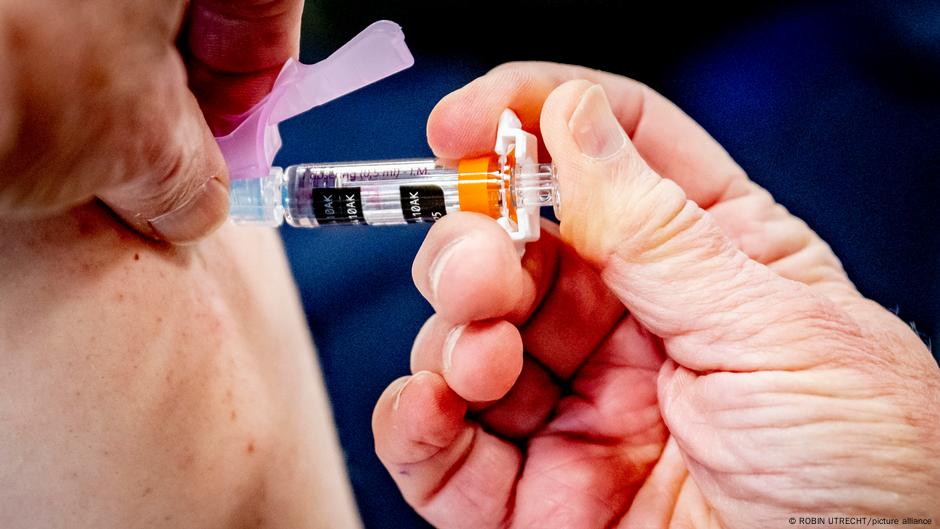
Pakistan’s initial HPV vaccination campaign encounters a surge of false information. A fact-check examines misleading statements and widespread skepticism towards the vaccine.
In September, when Pakistan initiated its first countrywide HPV vaccination campaign, health authorities celebrated it as a significant achievement in the nation’s battle against cervical cancer. The initiative focuses on girls between the ages of 9 and 14, supporting the World Health Organization’s worldwide objective to eradicate cervical cancer by 2030.
However, similar to other vaccination programs, the initiative was soon followed by a surge of false information. Conspiracy ideas, political statements, and widely shared social media content have raised questions about the vaccine’s safety, causing some groups to be reluctant to get involved.
A fact-checking investigation looked into some of the most popular claims and the reasons for this growing distrust.
AI-generated videos spread vaccine rumors
Claim: The HPV vaccine is harmful and lacks sufficient evidence.
A popular TikTok video shows a man stating: “The issue is that the HPV vaccine may lead to significant negative side effects.”
The footage then transitions to aAI-generatedA news anchor stated: “An American physician has expressed worries regarding administering the HPV vaccine to young females,” and incorrectly claims that vaccines have never stopped a single instance of cervical cancer.
Fact check:False
The video comes from an unverified Instagram account that frequently shares AI-created content making unfounded assertions without referencing reliable sources. The identity of the so-called doctor shown could not be confirmed.
Extensive research by the European Centre for Disease Prevention and Control (ECDC), and Germany’s Standing Committee on Vaccination (STIKO) contradict these claims. Studies involving children and adults have found no severe side effects linked to the HPV vaccine. A 2024 study involving nearly 3.5 million people confirmed that the vaccine significantly reduces HPV infections and precancerous lesions, which can lead to cervical cancer.
“No scientific studies have found a link between the HPV vaccine and infertility or decreased fertility,” Dr. Mohammad Ahmad Abdullah from Pakistan’s Health Services Academy in Islamabad stated.
Although there is widespread agreement among scientists regarding the vaccine’s safety and effectiveness, certain healthcare professionals have expressed worries about adverse reactions, long-term protection, expenses, and the justification for large-scale vaccination. These worries—frequently spread through false information—have involved anxieties about autoimmune diseases, infertility, or encouraging early sexual behavior. Nevertheless, regulatory organizations like the European Medicines Agency have discovered no proof connecting the vaccine to severe neurological issues.
Local political figure spreads false information about infertility
Claim: The vaccine causes infertility.
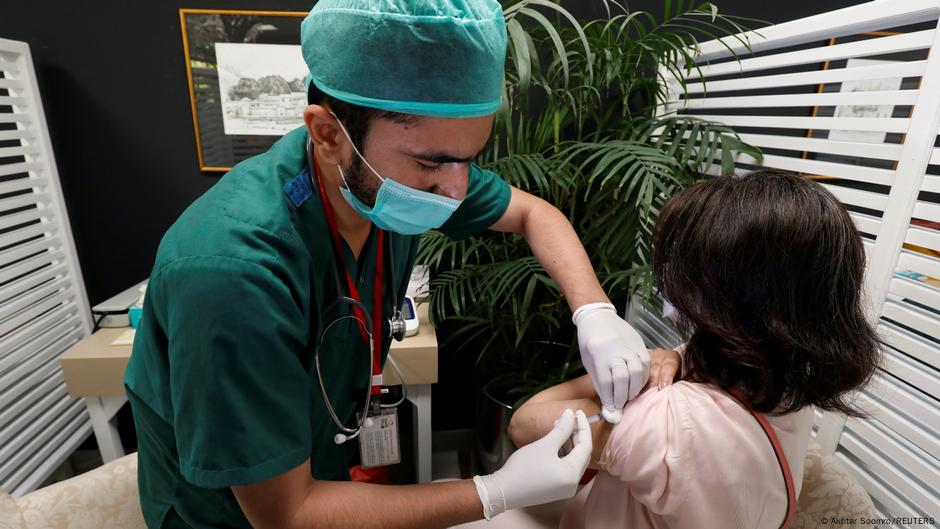
Rashid Mehmood Soomro, a Pakistani politician affiliated with the ultra-conservative Jamiat Ulema-e-Islam (Fazl) party in Sindh province, asserted that the HPV vaccine leads to infertility. During a public gathering this month, he denounced the vaccination initiative as questionable and detrimental.
Fact check:Unsubstantiated scientific data does not support this statement. A peer-reviewed U.S. study discovered no connection between the HPV vaccine and infertility in women between the ages of 18 and 33. Likewise, the World Health Organization’s Global Advisory Committee on Vaccine Safety has determined there is no proof connecting HPV vaccination to ovarian insufficiency.
Viral school footage distorts the facts
Claim: A video circulating online depicts girls collapsing following administration of the HPV vaccine.
A video that has garnered more than 330,000 views on X (previously known as Twitter) seems to depict schoolgirls falling down following a vaccination. The clip has also been distributed on Instagram and Facebook, gaining attention from thousands of people.
Fact check:False. The video is not connected to the HPV campaign. A reverse image search showed the clip is from last year. Fact check traced versions of the video back to May 2024. Both Pakistani and Indian sources reported that the incident involved police confrontingprotesters over electricity taxes.Gas canisters impacted a nearby school, leading to anxiety among female students.
The evolution of skepticism towards vaccines
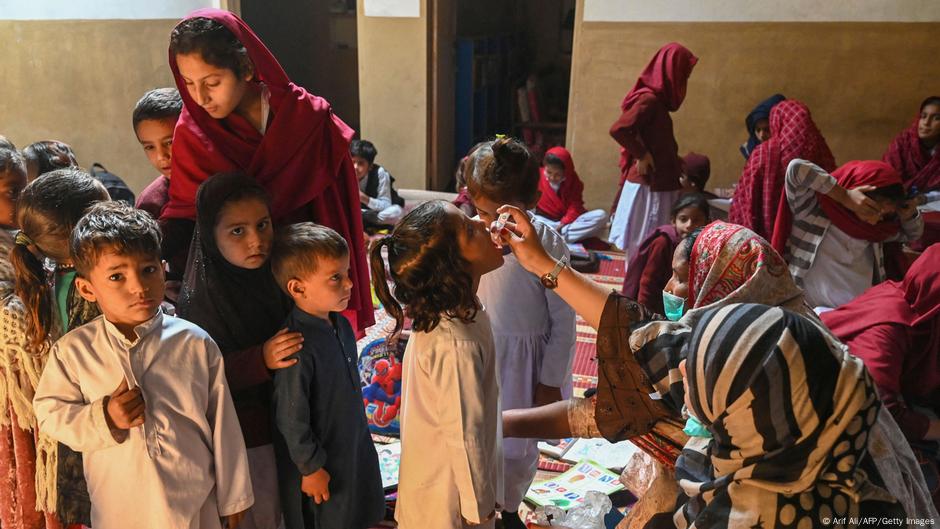
Pakistan’s challenge with vaccine hesitancy is significant. In 2019, misleading claims regarding polio vaccines resulted inbrutal assaults against medical personnel reversing years of progress. And in 2011, a covert CIA operation posing as a hepatitis B vaccination drive in Abbottabad—intended to collect DNA in the hunt for Osama bin Laden—further eroded public trust.
Currently, this distrust affects the HPV initiative. Authorities are concerned that false information might hinder efforts to safeguard millions of girls from a virus associated with cervical cancer—a major cause of cancer-related deaths among women in Pakistan.
“Approximately 5,000 women in Pakistan are diagnosed with cervical cancer each year, with almost 60% of them succumbing to the disease,” said. This statistic is backed by national HPV data.
Pakistan is not the only one facing this challenge. According to certain studies, Europe is considered the region with the least trust in vaccine safety. In Germany, the Robert Koch Institute (RKI) highlights that HPV vaccination rates are still low, leading to programs such as “InveSt HPV” aimed at increasing participation.
Pakistani government pushes forward
Although there are obstacles, Pakistan is continuing forward. During a televised press conference on September 20, Federal Health Minister Syed Mustafa Kamal publicly had his daughter receive the HPV vaccine to demonstrate its safety. He also tackled the spread of false information related to the vaccination campaign.
Irfan Haider Sherazi and Alima de Graafcontributed to this report
Edited by: Rachel Baig
Author: Monir Ghaedi



 jasdooit
Leave a comment