
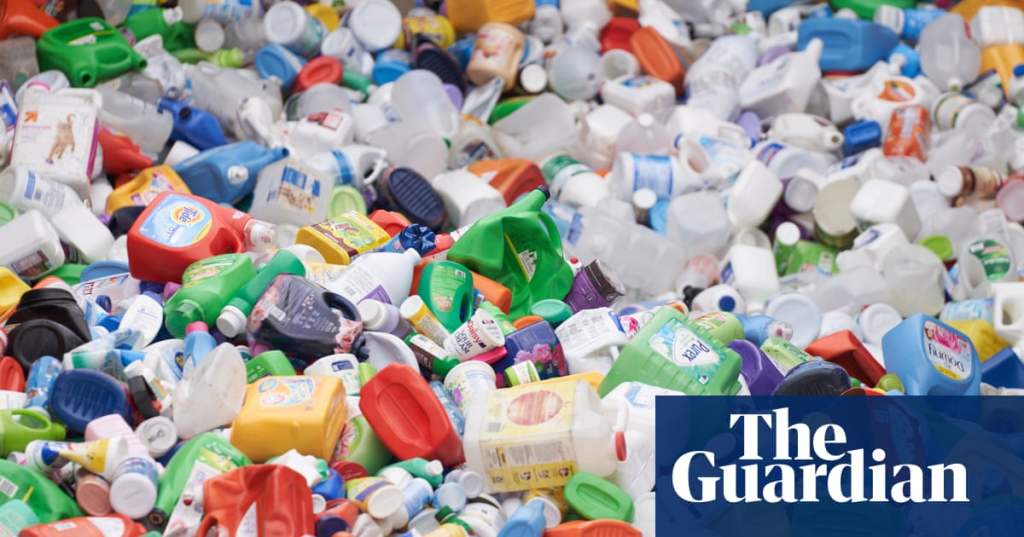
Dhaka, September 28 — Earlier this year, researchers announced a significant advancement in the field of biotechnology. A typical bacterium was modified at the genetic level to transform plastic waste into the commonly used medication paracetamol.
The microorganism Escherichia coli (E. coli) was altered by Stephen Wallace, a chemical biotechnology professor at the University of Edinburgh, to break down a plastic-based compound and convert it into a medication.
Although E. coli is commonly linked to foodborne illness, non-harmful varieties are extensively utilized in laboratories as the primary “workhorse” of the field.
Professor Wallace has earlier developed E. coli that can transform plastic waste into vanilla flavoring and sewer “fatberg” waste into perfume. “If you want to demonstrate something is achievable with biology, E. coli is a logical starting point,” he mentioned.
In addition to laboratories, vats containing genetically modified E. coli function as living production units, generating important materials like insulin, which is crucial for treating diabetes, along with chemicals used in fuels and solvents.
Why *E. coli* is prevalent in biotechnology
As stated by Princeton University professor Thomas Silhavy, the prevalence of E. coli started due to its role as a model organism for studying fundamental biology. Initially identified in 1885 by German pediatrician Theodor Escherich, its quick growth and simplicity in handling made it an obvious option for scientific investigation.
In the 1940s, studies using a harmless E. coli strain revealed that bacteria could exchange genes through a process akin to “bacterial sex,” reshaping the understanding of microbial genetics. Since then, E. coli has been central to major discoveries, from deciphering the genetic code to becoming the first organism genetically engineered with foreign DNA in the 1970s.
The bacterium was also behind a breakthrough in 1978, when synthetic human insulin was first produced using E. coli, eliminating the reliance on animal-derived insulin that sometimes caused allergic reactions. Nearly two decades later, in 1997, E. coli was among the first organisms to have its entire genome sequenced.
E. coli’s strengths
Adam Feist, professor at the University of California, San Diego, highlights the bacterium’s speed, reliability, and versatility. It thrives on a wide variety of substrates, can be frozen and revived easily, and efficiently hosts foreign DNA. “The more I work with other microorganisms, the more I appreciate just how robust E. coli is,” he said.
Cynthia Collins of Ginkgo Bioworks notes that while more organisms are now available for industrial use, E. coli remains cost-effective and adaptable. Even when producing potentially toxic substances, scientists can often engineer tolerance into the bacterium.
Calls for alternatives
Some experts warn that E. coli’s dominance may limit exploration of other promising microbes. Paul Jensen, a microbiologist at the University of Michigan, argues that undiscovered bacteria in landfills or natural environments might naturally perform valuable processes, such as breaking down plastics or even producing new materials like cement or rubber.
An emerging option is Vibrio natriegens (V. nat), initially discovered in the 1960s but largely ignored until recently. It grows twice as quickly as E. coli and has a better capacity to take up foreign DNA, which could provide substantial industrial benefits. Buz Barstow from Cornell University, who is working on methods to modify it, describes the shift from E. coli to V. nat as “moving from a horse to a car.”
His group has established a company called Forage Evolution to further develop its technologies, with goals that include generating jet fuel from carbon dioxide and recovering rare earth elements. “In short, E. coli won’t help us achieve any of these goals. V. natriegens could,” said Dr. Barstow.
Nevertheless, experts such as Prof Feist warn that V. nat is not yet prepared to substitute E. coli on a large scale, since the necessary genetic tools and industrial experience are still missing. “E. coli is difficult to replace,” he mentioned.
Source: Agency


 jasdooit
Leave a comment