
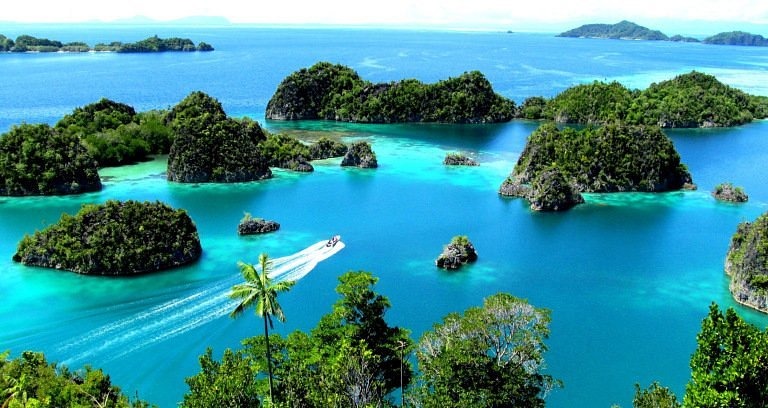
Raja Ampat, a well-known group of islands located in the West Papua Province of Indonesia, has been designated as a biosphere reserve.
Among the 30 newly recognized UNESCO biosphere reserves, Raja Ampat is regarded as the most biologically diverse marine environment in the world.
This acknowledgment represents another significant achievement after Raja Ampat was awarded the UNESCO Global Geopark designation in 2023, positioning it among the rare locations worldwide that currently hold two international UNESCO designations.
The area spans approximately 135,000 square kilometers and includes over 610 islands, with just 34 being occupied.
Situated in the center of the Coral Triangle, this region is home to the world’s most diverse coral reef ecosystem, featuring over 75% of the global coral species, more than 1,320 types of reef fish, and five rare and endangered sea turtle species, such as the Hawksbill turtle. Approximately 60% of the reefs are in good to excellent condition.
Boasting two international designations, Raja Ampat is acknowledged not only for its distinctive geological features but also for its remarkable biological diversity. It is a location where conservation efforts, scientific research, traditional indigenous knowledge, and sustainable development come together, providing advantages for both the local population and the environment.
As per UNESCO, biosphere reserves serve as “living laboratories” where local communities, researchers, and authorities work together on three key areas: preserving biological diversity and natural scenery; encouraging sustainable economic and social growth; and improving awareness via studies, learning, instruction, and the exchange of information.
Currently, there are over 700 biosphere reserves spread across more than 130 countries, encompassing more than 5% of the land surface, acting as examples of harmony between preservation and sustainable development for about 275 million individuals residing within these areas.



 jasdooit
Leave a comment