
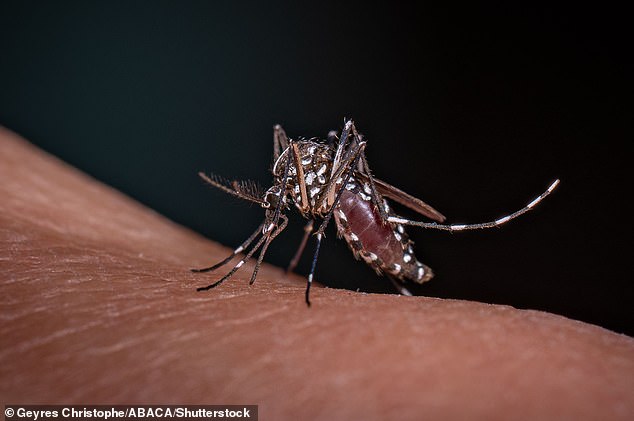
Researchers have sounded an alarm following the discovery of mosquitoes that can transmit three severe tropical illnesses in the UK for the first time.
The UK Health Security Agency (UKHSA) has identified eggs from both the Egyptian mosquito (Aedes aegypti) and the tiger mosquito (Aedes albopictus).
Concerningly, these species have the ability to transmit diseases such as dengue fever, chikungunya, and the Zika virus.
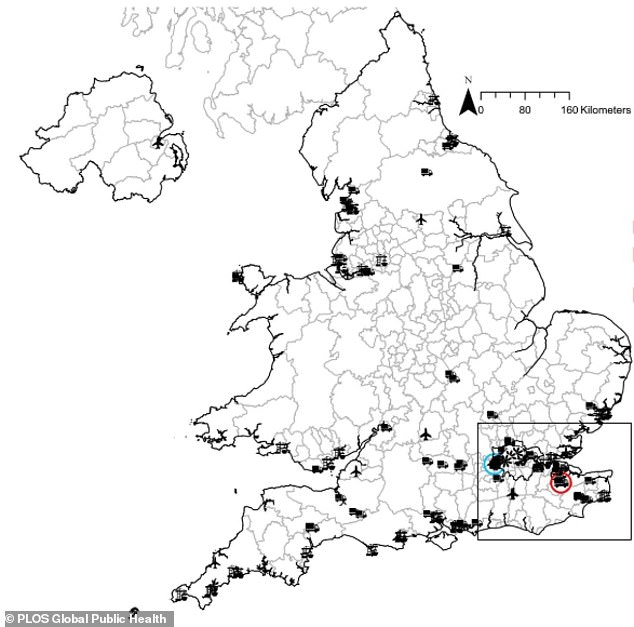
After a five-year observation program, UKHSA detected Egyptian mosquito eggs for the first time at a cargo storage site nearbyHeathrow Airport in 2023.
The subsequent year, Tiger mosquito eggs were discovered close to a service area on the M20.
At present, the available evidence indicates that these events were small-scale intrusions, and neither the tiger mosquito nor the Egyptian mosquito has taken root in the UK.
Nevertheless, specialists worry that a rising temperature and more temperate winters indicateThe United Kingdom now faces the threat of these invasive species taking root.
Dr. Cyril Caminade, a specialist in the spread of invasive mosquitoes from the University of Liverpool, said to the Daily Mail: ‘The existence of these species serves as a warning for what’s to come, as climate change will make conditions more favorable for both species in the UK.’
The Egyptian mosquito and the tiger mosquito were once confined to subtropical areas in Africa and Asia.
However, the disease-carrying pests have now spread beyond their native territory, with tiger mosquitoes establishing populations in southern and central Europe.
From 2020 to 2025, scientists affiliated with the UKHSA set up specific insect capture devices at seaports, airports, and transportation centers along roads throughout the nation.
In the two sites where eggs were discovered, the UKHSA introduced increased local monitoring and containment actions, including collaborating with the landowner to eliminate zones where mosquitoes could reproduce.
As a result of these actions, no further samples of the invasive species were detected during the entire monitoring phase.
The study’s lead author, Dr. Colin Johnston, states that this indicates these were ‘isolated incursions’.
Similarly, there is currently no indication that either species is beginning to form a population in the UK.
Professor Heather Ferguson, an expert in infectious disease ecology from the University of Glasgow, stated to Daily Mail: ‘The discovery of Aedes albopictus [tiger mosquito] in the UK is significant and worth keeping an eye on, although it may not pose an immediate threat to public health.’
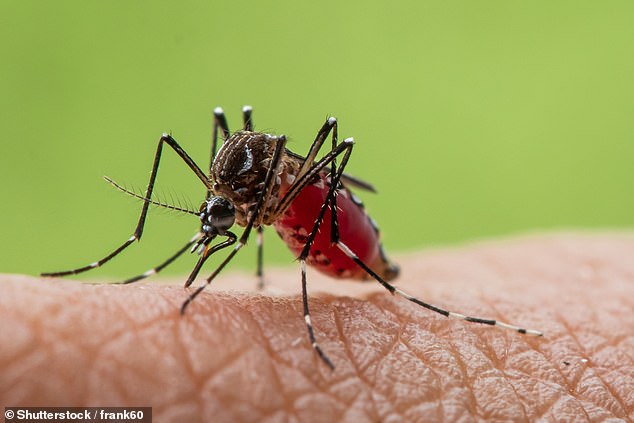
The mosquito species can be found in various neighboring European countries and has been quickly spreading across many regions of the world in recent decades. From this viewpoint, it’s not particularly surprising that it is occasionally found in southern England.
These standalone findings are probably the result of a small number of mosquitoes being transported via vehicles or cargo flights from nations such as Germany, France, Italy, and Spain.
Given that the Egyptian mosquito is not yet established in European countries warmer than the UK, Professor Ferguson predicts that there is ‘almost zero’ chance of the species becoming established in Britain under current conditions.
Additionally, although the tiger mosquito and Egyptian mosquito pose a deadly public health concern in their native ranges, they are unlikely to prove so dangerous in the UK.
Professor Ferguson says: ‘It is not just the presence of the mosquito that is needed for these diseases to transmit – temperatures also need to be high enough to allow these viruses to survive and replicate in mosquitoes.
Under present UK temperature conditions, a virus such as Dengue is unlikely to spread.
New experimental findings indicate that dengue fever requires consistent temperatures exceeding 28-30°C (82-86°F) over multiple weeks in order to spread extensively.
This suggests that the existence of these mosquitoes is not as problematic as it may initially seem.
Nevertheless, specialists are becoming more worried that the UK’s evolving climate could increase the likelihood of these mosquitoes transmitting dangerous viruses.
Dr. Clare Strode, a specialist in mosquito biology from Edge Hill University, stated to the Daily Mail: ‘Climate change may, in the future, create conditions that enable invasive Aedes mosquitoes to endure the UK’s climate.’
Rising temperatures, such as warmer winters and shifts in precipitation, might create more suitable environments for them.
Studies carried out by Dr Caminade indicate that tiger mosquitoesmight be active throughout the summer in Londonand the southern part of England within 50 years.
The Thames region and Kent would be the first to experience the impact.However, mosquitoes could spread across a significant portion of England by the end of the 21st century if climate change remains unchecked.
Egyptian mosquitoes might also become active in London during the summer, but they are less likely to survive through the winter in the UK.
If mosquitoes reached high enough populations and the weather warmed sufficiently to allow viruses to live and multiply, this could result in significant public health problems.
Dr. Strode states: ‘It’s not concerning a pandemic threat, but possible localized outbreaks in the future.’
- Is the UK facing a potential dengue fever outbreak as climate change brings dangerous mosquitoes to London?
- Will climate change trigger the spread of mosquito-borne illnesses in the UK? Specialists highlight the growing risk as temperatures rise.
- What role is climate change playing in the increasing spread of dengue fever, now affecting the UK?
- Is climate change genuinely going to unleash a surge in mosquito-transmitted illnesses such as West Nile virus across the UK, requiring increased monitoring?
- Discover the reasons mosquito-borne risks are increasing due to climate change, transforming cooler regions into habitats for West Nile virus and other dangerous illnesses!



 jasdooit
Leave a comment