
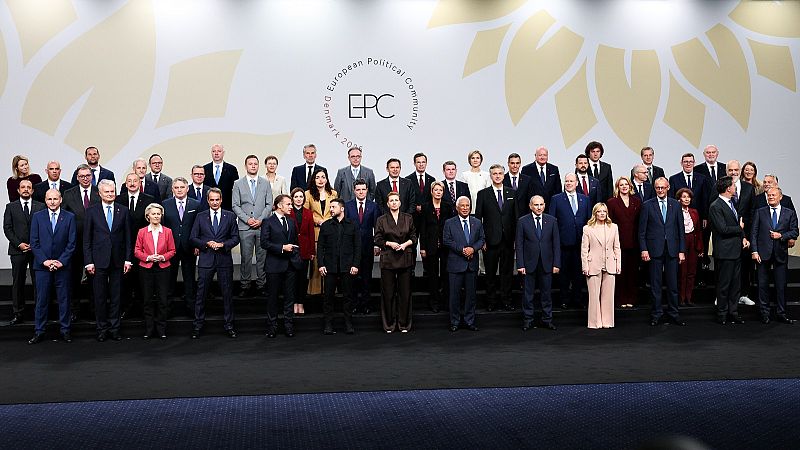
European leaders wrapped up two consecutive summits in Copenhagen, which were complicated by the actions of Hungarian Prime Minister Viktor Orbán. His vetoes have obstructed unified backing for Ukraine and tested cohesion during a critical period as Russia increases its attacks and the United States withdraws.
Even though other world leaders urged him, Orbán firmly declined to remove his opposition to Ukraine’s application for EU membership, which has also hindered Moldova’s progress in talks.
Expansion is completely reliant on consensus.
A effort by European Council President António Costa totweak the voting rulesand shift to a qualified majority was swiftly rejected by the Hungarian leader.
“This proposal is over,” he stated.
Orbán also dismissed a pioneering effort to introduce a€140 billion loanto Ukraine by utilizing the frozen assets of the Russian Central Bank, even though his Belgian colleague, Bart De Wever, strongly advocated for sharing the burdens.
Belgium hosts Euroclear, the main securities depository that manages most of the Russian assets, positioning it as the primary focus of the Kremlin’s possible retaliation.
“I desire the highest level of legal clarity. I seek unity,” De Wever stated.on Thursday morning. “I don’t believe this is an illogical stance.”
In conclusion of the summit, Orbán provided his response.
Belgium requires the sharing of responsibility. Not a chance. We aren’t included in this agreement,” he stated, describing De Wever’s points as “highly informative.
If the European Union chooses to interfere and seize funds belonging to others, we will not be involved in that (agreement), meaning we will bear no responsibility going forward.
The absence of agreement risks making what is already becoming a complex plan even more challenging. Without support from the 27 member states, the European Commission would not be able to utilize the EU budget as the final assurance.
The Commission is also seeking to change the process for renewing sanctions to increase predictability in asset freezes. However, this would also necessitate unanimous agreement.
Danish Prime Minister Mette Frederiksen expressed her irritation over Orbán’s blocking tactics during the final press briefing in Copenhagen.
“I believe we need to remain committed to our strategy, and expanding the European Union is a part of that plan. This is a matter for the entire European Union and indeed the whole of Europe. We must work towards building a strong Europe, which, in my view, means increasing the size of the European Union,” Frederiksen stated.
“I will not permit a single nation, and I am certainly not going to let Mr Orbán, make choices that affect the entire European future,” she added.
Frederiksen proposed that Kyiv could continue its technical preparations while awaiting the removal of the veto and the initiation of the first group of accession discussions (“Fundamentals”). Earlier this week, the European Commissionannouncedthat Ukraine had finished reviewing its laws for all six clusters “in record time”.
“If we cannot persuade Viktor Orbán, then I believe we will have to proceed with all the tasks that need to be accomplished between Ukraine and the European Commission,” Frederiksen stated.
Next to her, Ukrainian President Volodymyr Zelenskyy criticized Orbán for campaigning.
The Hungarian leader has maintained control for 15 consecutive years and is now encountering his strongest opposition from Péter Magyar, the leader of the opposition party, who currently leads in public opinion surveys. The nation is set to conduct elections in April 2026.
“Yes, we face issues with Hungary. We can openly discuss them because Viktor Orbán is facing elections. In my opinion, it’s not wise since he is in the midst of elections, which is why he is preventing a large nation of 40 million people from progressing toward the EU,” Zelenskyy stated.
“By the way, Russia initiated this war because of our decision and our choice to head straight towards Europe. As we share the same values with all other European nations,” he added, mentioning the 2014 Maidan Revolution.
With the accession stalemate continuing and the work on the €140 billion project underway, Brussels is closely monitoringthe 19th set of sanctions, which Bratislava is threatening to block.


 jasdooit
Leave a comment